
Fighting for a future
SINGAPORE — A class at Aikiforest is not what most would expect of a martial arts class. For one, some of the students are so young they appear to be still learning the finer points of walking, let alone the movements of a traditional Japanese fighting style.
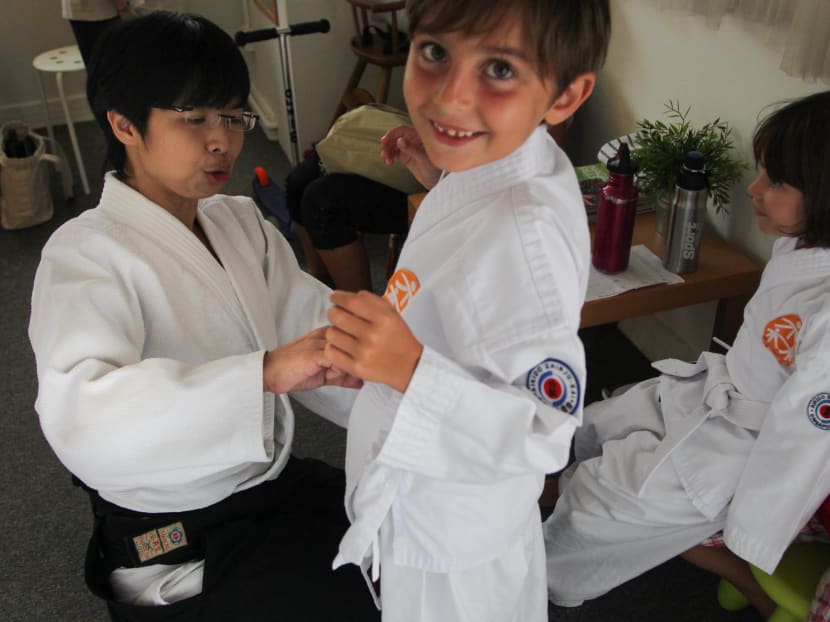
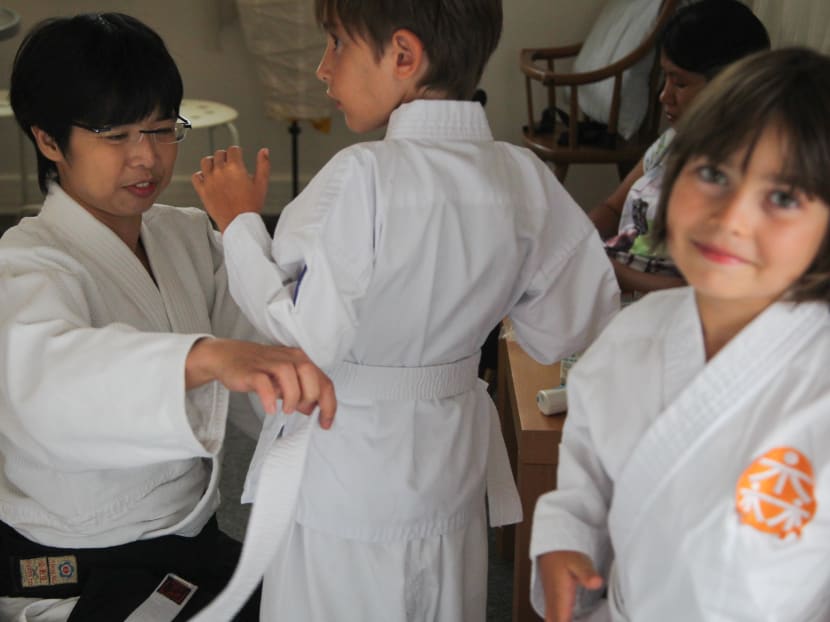
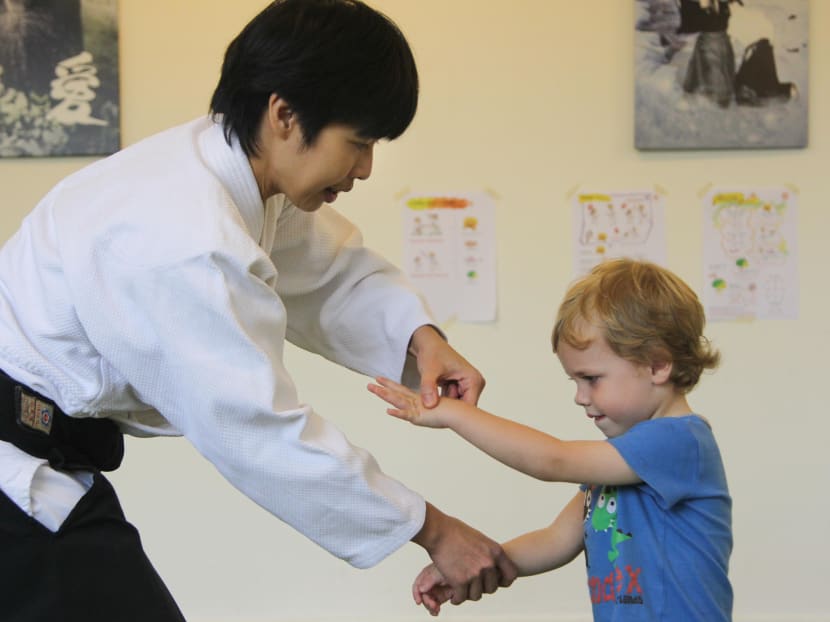
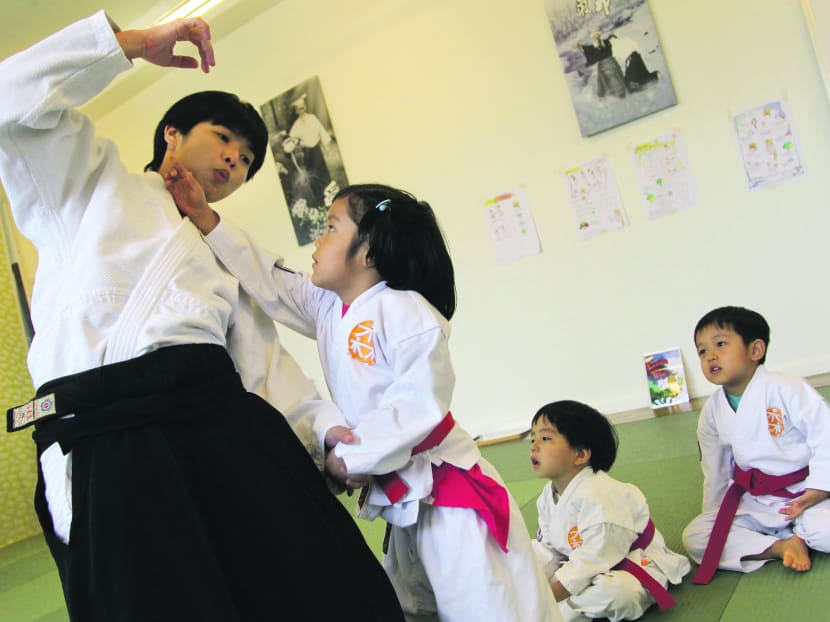

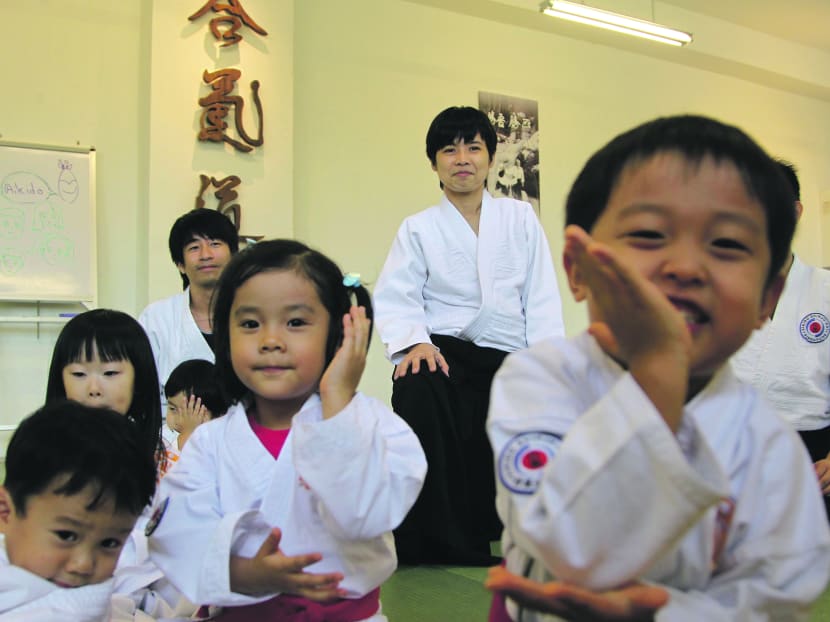
SINGAPORE — A class at Aikiforest is not what most would expect of a martial arts class. For one, some of the students are so young they appear to be still learning the finer points of walking, let alone the movements of a traditional Japanese fighting style.
A typical lesson sees instructors tell stories involving giraffes and lions to engage their pre-school disciples while imparting aikido techniques.
But the unorthodox methods of Aikiforest have been a hit with parents and their children since it opened its doors less than two years ago.
With over 250 students and 26 classes a week, the main dojo located at Outram Road is bursting at the seams. To keep up with demand, a new outlet at the SAFRA Toa Payoh Clubhouse opened last December.
The centre’s instructors also fan out across the island to teach students at over 40 pre-schools.
Aikiforest, which caters to children as young as three years of age, is the brainchild of former architect Lim Cheen Cheen, who realised that aikido — which teaches practitioners to defend themselves while also protecting their attacker from injury — would attract parents keen for their kids to take up a martial art without the violence and aggression.
“I realised that to teach a mass class that had adults and pre-schoolers was not practical. We created a range of syllabuses that were just for children. Kids mostly learn visually, so we created stories that the children will remember,” said Ms Lim, 38, who holds a third-degree black belt in the discipline.
A PASSION DISCOVERED
Ms Lim started learning aikido in 2001 with a friend and her then husband-to-be, and immediately fell in love with it. Training soon became a daily affair, and by 2003, after rising quickly through the grades, she became a teaching assistant to her sensei Philip Lee at Aikido Shinju-kai, which operates over 60 dojos in Singapore and abroad.
“I got addicted to it immediately. The movements were very nice, it was all about action and reaction. When I was able to successfully throw someone, the feeling was great,” she said.
A six-month sabbatical from her architecture job turned into permanent leave of absence, and Ms Lim turned her passion for aikido into a career.
It was at Shinju-kai that she experimented with targeting different demographics, including the elderly (“that didn’t work out very well”) and, much more successfully, pre-school children.
The programmes she created there would eventually form the foundation of Aikiforest. Along the way Ms Lim had two sons of her own, who are now six and three years old.
By 2010, after almost eight years at Shinju-kai, Ms Lim felt a separate operation was needed to fulfil her vision of a dojo catering exclusively to children. She started Aikiforest the following year, with the blessing of her teacher Mr Lee, who holds a stake in the company and serves as its Technical Director.
It grew quickly with almost no major marketing or promotion efforts. New customers mostly learn of Aikiforest through the Internet and by word of mouth. And once they stepped into the dojo on the third floor of an industrial building, almost all signed up.
“We were concerned that people might not come here because it was in an industrial area. But around 85 to 90 per cent of the people who walk in have signed up for classes,” she revealed.
Novel teaching methods aside, perhaps the true attraction of Aikiforest takes place off the training floor, where parents, teachers and students engage in friendly banter; building a rapport that makes the place more family living room than martial arts dojo.
“This is a business, so we want it to be viable, but the real satisfaction is when a parent tells us that her son was very timid a year ago, but since learning aikido he has become more confident,” she said.
GROWING PAINS
As the business grows, the challenge for Ms Lim and her team of over 10 instructors is how to maintain the level of service that has been the hallmark of their success.
“I don’t want to open too many centres, maybe four at the most. But the challenge is to maintain the level of service, the relationships and the interactions between teachers, parents and the children.”
As if to prove her point, laughter erupts from an adjacent group of children and their teacher preparing for class that is about to start.
“This is what we truly value,” she said, pointing to the group.
The business has also become a family affair. Her older son is taking classes at Aikiforest, while her husband teaches one of its classes. Her dream is to be able to stop working one day and travel to Japan with her family just to train at aikido dojos there.
But for now, her hands are full with satisfying a growing horde of children and their parents who look forward to their weekly dose of physical and emotional nourishment at Aikiforest.
Business Adviser
Ms Lim Cheen Cheen, the founder of Aikiforest, explains how she incorporates the philosophy of the Japanese martial art of aikido into her business strategy:
I didn’t have a clear idea of how I wanted this business to grow. I was very philosophical about it, I wanted it to grow organically and to have a life of its own. Like aikido, it was about action and reaction. We would try something, see if it worked and then continue if it did.
For instance, we started giving out free trials, until one parent complained that as a paying customer she wasn’t happy that instructors were devoting their attention to classes to people who were there on free trials. We realised she was right, because you should pay if you have a genuine interest in signing up.
So now we charge for trial lessons. We take every complaint as an avenue to learn and react accordingly.
Stay in the know. Anytime. Anywhere.

Subscribe to our newsletter for the top features, insights and must reads delivered straight to your inbox.
By clicking subscribe, I agree for my personal data to be used to send me TODAY newsletters, promotional offers and for research and analysis.






