
S’pore fires up first LNG-fuelled power plant
SINGAPORE — The Republic took another step towards diversifying its energy sources and curbing its reliance on pipeline imports yesterday, with the opening of the nation’s first power plant to be fully fuelled by liquefied natural gas (LNG).
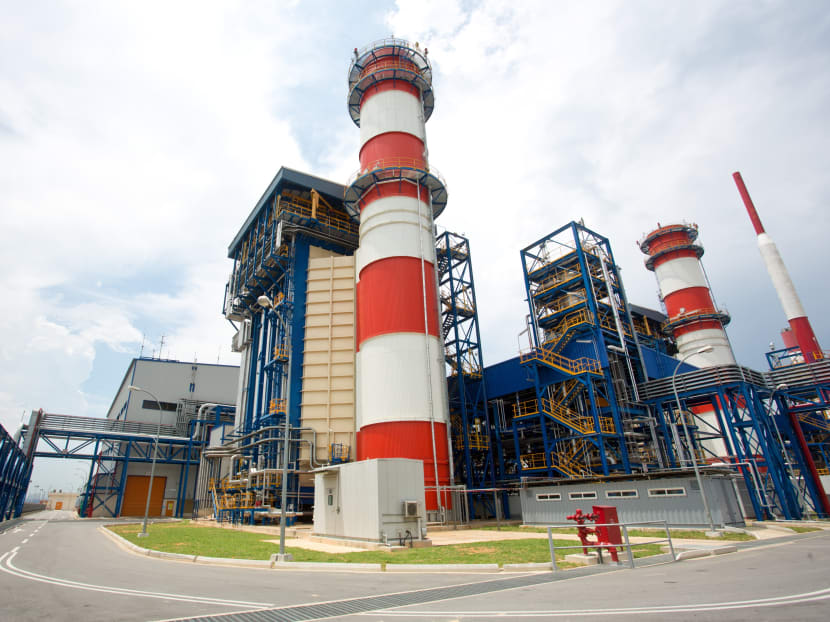
Singapore’s first LNG-fuelled power plant is operated by PacificLight Power, a joint venture between FPM Power Holdings and Petronas Power. Photo: PacificLight Power
SINGAPORE — The Republic took another step towards diversifying its energy sources and curbing its reliance on pipeline imports yesterday, with the opening of the nation’s first power plant to be fully fuelled by liquefied natural gas (LNG).
The S$1.2 billion facility on Jurong Island will contribute about 6 per cent of Singapore’s total power generation capacity, said Mr Chee Hong Tat, chief executive of Energy Market Authority (EMA), at the plant’s launch. It is operated by PacificLight Power (PLP), a joint venture between FPM Power Holdings and Petronas Power.
“Natural gas accounts for more than 90 per cent of the electricity generated in Singapore. A reliable gas supply is thus critical to the power system and to keep lights on for all consumers,”he said. “(PLP’s) entry into the Singapore market has benefited consumers as it adds to the diversity of our generation sector and enhances competition in our electricity market.”
LNG has become an increasingly important part of the Government’s energy security strategy as demand for electricity in Singapore rises.
Prime Minister Lee Hsien Loong announced plans earlier this year for a second LNG terminal, in line with the nation’s efforts to diversify energy sources and reduce reliance on piped natural gas from Malaysia and Indonesia. Singapore’s first LNG terminal, built at a cost of S$1.7 billion, started operations in May last year.
“Energy diversification is an important part of Singapore’s strategy for energy security and resilience. The LNG terminal is a key infrastructure to achieve this objective. It will also contribute to (Singapore’s) development as a regional gas hub,” said Second Minister for Trade and Industry, Mr S Iswaran, at the official start of the terminal in May last year.
Mr Yu Tat Ming, chief executive of PLP, reflected the same sentiment yesterday, saying: “The supply of LNG has no geopolitical constraints — we can effectively import it from any market in the world. We want to tap that to make sure our fuel source is secured and that’s why we signed on (to launch the new plant).”
About a quarter of the LNG supply from the terminal’s exclusive importer BG Group goes to the new PLP plant, which can produce a maximum of 800MW for non-residential clients.
“A township such as Ang Mo Kio needs only about 60MW, but big industrial users consume more than that and our biggest customer consumes up to 100MW,” said Mr Yu.
“We are already supplying to close to 100 industrial customers — particularly wafer-fabrication or pharmaceutical plants — but we are still expanding our retail portfolio to include more smaller companies.”
Under the current regulation, non-residential end users consuming at least an average of 8,000 kilowatt hours (kWh) can purchase power directly from licensed electricity retailers such as PLP or Tuas Power Supply. That threshold will be lowered to 4,000kWh in October.
Stay in the know. Anytime. Anywhere.

Subscribe to our newsletter for the top features, insights and must reads delivered straight to your inbox.
By clicking subscribe, I agree for my personal data to be used to send me TODAY newsletters, promotional offers and for research and analysis.






