
S’pore unveils new rules to strengthen banking sector
SINGAPORE — As part of measures to make the banking sector in Singapore more resilient in the face of a financial crisis, all banks will be subjected to a more stringent set of liquidity requirements, while foreign lenders with a significant retail presence may soon have to incorporate their operations locally.
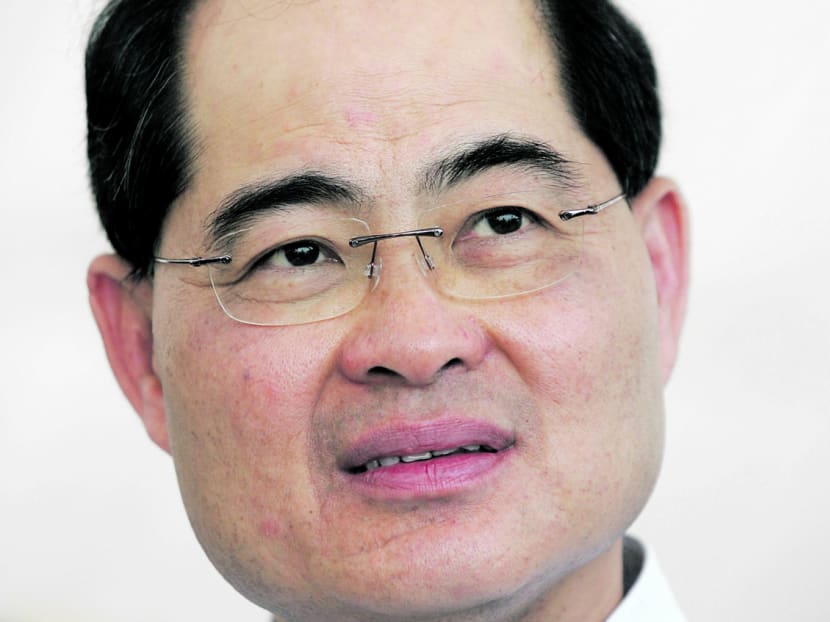
Minister for Trade and Industry Lim Hng Kiang. TODAY file photo
SINGAPORE — As part of measures to make the banking sector in Singapore more resilient in the face of a financial crisis, all banks will be subjected to a more stringent set of liquidity requirements, while foreign lenders with a significant retail presence may soon have to incorporate their operations locally.
The new Liquidity Coverage Ratio (LCR) framework will be implemented next January, beginning with the three local banks, Minister for Trade and Industry and Monetary Authority of Singapore (MAS) deputy chairman Lim Hng Kiang said yesterday at the annual dinner of the Association of Banks in Singapore (ABS).
First proposed by the MAS in a consultation paper last August, the LCR framework is a new standard under the Basel III reforms to ensure banks hold sufficient high-quality liquid assets to match their total net cash outflows over 30 days.
From January next year, the three local banks will be required to have an LCR of 100 per cent for Singapore-dollar liquidity and 60 per cent for all other currencies, to be brought up to 100 per cent by 2019, Mr Lim said. Foreign banks will have to meet a Singapore-dollar LCR of 100 per cent and an all-currency LCR of 50 per cent, beginning in January 2016, he added.
Some banks, such as OCBC, already hold 100 per cent Singapore-dollar LCR and 60 per cent foreign-currency LCR. OCBC head of corporate treasury William Goh said: “We have been holding a comfortable level of high-quality liquid assets. These cushion the bank against any stress scenarios and are eligible to support the new LCR requirements.”
The LCR framework is one of two regulatory initiatives that the MAS is looking to implement in the near term. The central bank is also planning a framework for domestic systematically important banks, or D-SIBs. To assess a bank’s systemic importance, the MAS will use factors such as its size, interconnectedness to the financial system, substitutability of the institution and its overall complexity. More details will be set out in a consultation paper.
“An explicit D-SIB framework will allow the MAS to set targeted and appropriate policy measures for systematically important banks … Such forward planning can reduce the risks posed by a D-SIB to the stability of the financial system and allow an orderly resolution of a distressed institution,” Mr Lim said.
Under the proposal, D-SIB bank branches with a market share of 3 per cent or more of resident non-bank deposits and more than 150,000 small depositors with accounts less than S$250,000 will be required to incorporate their retail operations locally.
Locally-incorporated D-SIBs will continue to hold 2 percentage points of capital above the international Basel III regulatory minimum.
The announcements come as Singapore’s banking sector continues to cope with a fast-changing regulatory landscape. Over the past year, the industry has had to grapple with new rules under the United States Foreign Account Tax Compliance Act (FATCA) — which requires banks to report to the US tax authorities on their American clients — as well as the Personal Data Protection Act at home.
Compliance with these changes will remain a key priority even if it means added costs, ABS chairman and chief executive of OCBC Samuel Tsien said yesterday. “An informal poll of six of the larger retail banks in Singapore revealed that the total cost of putting in systems to meet the requirements of FATCA alone came close to S$30 million,” he added.
Stay in the know. Anytime. Anywhere.

Subscribe to our newsletter for the top features, insights and must reads delivered straight to your inbox.
By clicking subscribe, I agree for my personal data to be used to send me TODAY newsletters, promotional offers and for research and analysis.






