
The work-life balance dilemma in China
BEIJING — The public disclosure by one of China’s best-known technology entrepreneurs that he has cancer and how that has changed his view of life, has led some business people to re-evaluate their aggressive pursuit of wealth and success.
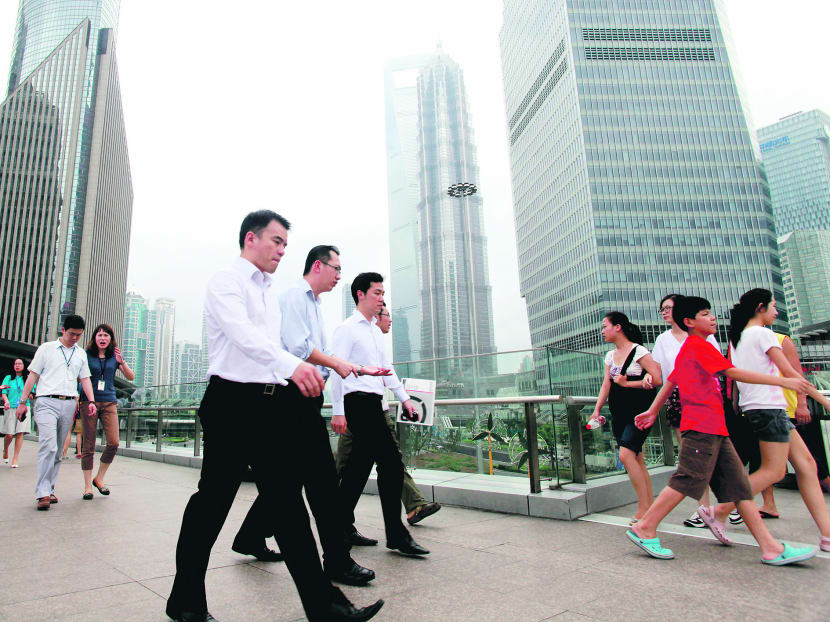
Many office workers in China get only five vacation days a year. Photo: Bloomberg
BEIJING — The public disclosure by one of China’s best-known technology entrepreneurs that he has cancer and how that has changed his view of life, has led some business people to re-evaluate their aggressive pursuit of wealth and success.
Mr Kai-Fu Lee recently revealed his lymphoma diagnosis in a message to his 50 million followers on Sina Weibo. But what has resonated far wider is his repudiation of the work-comes-first mentality that drives so many Chinese business people.
“It’s only now, when I’m suddenly faced with possibly losing 30 years of life, that I’ve been able to calm down and reconsider,” wrote the 52-year-old founder and CEO of technology incubator Innovation Works and former President of Google China. He said macho efforts like seeing who could sleep less were naive.
The number of people diagnosed with cancer every year in the country is expected to almost double to 6.6 million in 2020, according to the Chinese Academy of Medical Sciences. Pollution and unhealthy lifestyles are among the main culprits, research shows.
The long working hours in the region has something to do with the Asian culture, said Ms Justine Campbell, a counsellor and coach at Mindquest Group.
“There is a hidden rule that you can’t leave the office until your boss leaves. Work-life balance is hardest for middle management. It is about how to fit it all in.”
Her advice for these workers is “to delegate and outsource work, schedule relaxation time and try not to be so hard on themselves”.
Chinese workers report that they are feeling increasingly stressed out, with 75 per cent saying their stress level has risen in the past year.
In the rest of the world, an average 48 per cent of workers said they felt more stress, according to a survey by temporary-office-space provider Regus.
One factor that works against the Chinese is many workers get only five vacation days a year, among the fewest in the world, according to Mercer, a human-resources consulting company.
Those who work for private companies find it hardest to take leave because the entrepreneurs who have devoted all their energy to work feel their employees should do the same, according to surveys.
For Mr David Yu, a partner at Shanghai law firm Llinks Law Offices, working until midnight is routine.
“I really feel what happened to (Mr Lee) can well happen to me tomorrow,” Mr Yu said.
And spending time with his wife and two daughters is a luxury, he added. “It is exhausting to be a successful businessman in China.”
Although many Chinese have to work long hours just to get by, it is a lifestyle choice for many middle-class people. Fortunes are made so quickly in China’s fast-expanding economy that some people work all the time just so they do not miss that one golden chance.
Ms Lydia Li, General Manager for Design at gift-maker Xiqi Art, said that upon waking every morning, she feels that she is drowning in WeChat messages and work e-mails. A lot of the requests are from friends or business associates who want to be connected to other people or work together on new projects.
“Although I feel anxious in the morning, at night I get a real sense of accomplishment,” she said. “There are just so many opportunities in China, and everyone seems to be working on several things at the same time.”
But as China gets richer and its population ages, goals have started to shift. Mr William Wang, a former executive at PricewaterhouseCoopers and General Motors in China, has stepped off the corporate ladder.
He was travelling so much for work, he often spent only one month a year at home. In the past few years, he has been running his private-equity firm in Shanghai while commuting every weekend to Hong Kong to see his wife, who works at a bank, and his daughter.
He decided to quit after he returned from a long trip and his three-year-old looked at him as if he were a stranger.
“She is at the cutest stage of life and I want to be a part of it,” said Mr Wang. “A few years later, when I want to play with my daughter, she might say ‘go away’.”
Now, he will be a trailing spouse on his wife’s new assignment in London and plans to study history at Cambridge University. “When I was young, my goal was to study for an MBA at a top US school and earn a lot of money. Now, I believe we will be happy as long as the whole family is together — doesn’t matter if we have to lead a modest life.” Dow Jones
Stay in the know. Anytime. Anywhere.

Subscribe to our newsletter for the top features, insights and must reads delivered straight to your inbox.
By clicking subscribe, I agree for my personal data to be used to send me TODAY newsletters, promotional offers and for research and analysis.






