
Confessions of a P1 parent: ClassDojo, chat groups, and when less is really more
The March school holidays are here, and I have been looking forward to them with bated breath. We are going to play the week away.
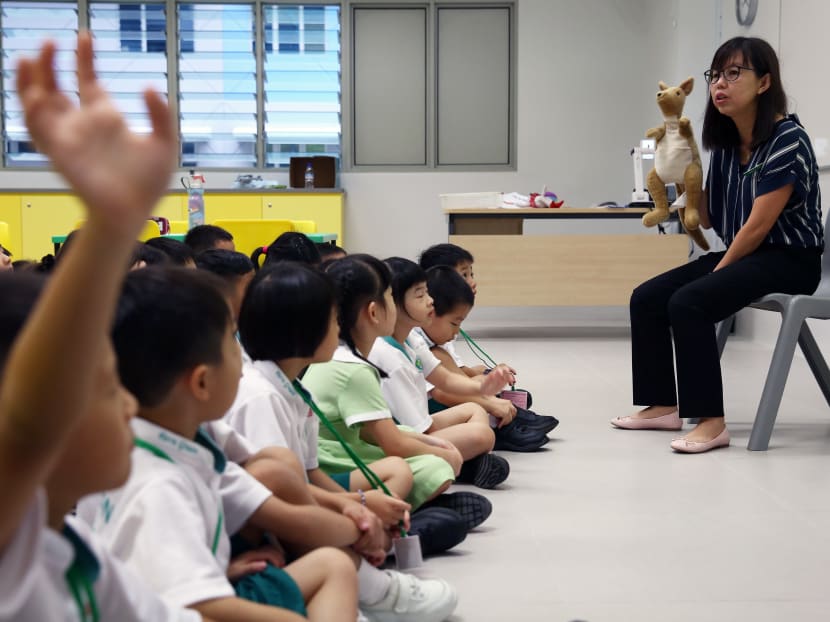
A teacher conducting a class at Fern Green Primary. Photo: Nuria Ling/TODAY

The March school holidays are here, and I have been looking forward to them with bated breath. We are going to play the week away.
It has been a transitory past few months for my family, with our firstborn entering Primary 1. For one, our sleep-deprived bodies were not primed for waking before sunrise in order to avoid the epic traffic jams. For the first few mornings, my son was adequately excited by the early hour.
“Look, the sky is pink and orange. It’s so pretty!” he would exclaim. The simple joys of life, however, were soon replaced by the humdrum of the morning routine.
As days go by, I am convinced that my notion that going to Primary 1 was no big deal was simply the wishful thinking of a misguided mum.
Someone once told me that there are no examinations in Primary 1. That is true, but I realised soon enough that there are year-round holistic assessments for each subject. The assessments are well-designed and balanced – students get a shot at oral, show-and-tell, and paper tests – so whether your child is a natural-born public speaker or a worksheet-cruncher, there are equal opportunities to flex their strengths (and reveal weaknesses). Each assessment yields a total score for the year, and apparently the top three students are recognised. Old wine in new bottles, another mother and I quipped.
But despite this and some other holdovers from the past, schools are changing, and the factor that is having a disruptive impact on them is the same one that is forcing change: Technology.
When it comes to schools, technology really is a double-edged sword. My parents hardly had the chance to speak to teachers, but parents today have unfettered access to teachers via publicly available emails, calls and apps.
Having access is one thing, being very accessible is another. I was more than slightly surprised when an innocent question over email to a teacher turned into a 20-minute conversation – at 8.30 pm! Talk about stakeholder engagement and quality service coming to life!
The “trouble” was, I got much more insights than I expected or was ready for. For example, the teacher commented that my son was one of the quieter ones in class. Is that good or bad? Was he not making friends or appropriately responsive? I found myself probing my son about the feedback, and his answers were dutiful, but came with a tinge of impatience, no doubt a result of the relentless questioning.
Another platform that is used by the school to facilitate communication is the ClassDojo app, which allows teachers and parents to text message each other privately, in addition to open sharing. It is amazing how responsive teachers are in replying to text messages - even after working hours.
What amazes more is the rating feature in the app, and how teachers find time to score an individual student’s behaviors based on aspects such as attentiveness, timeliness, neatness, obedience and ability to answer questions correctly, on an almost daily basis, to generate a dashboard of sorts.
I beam with pride on the days when my son scores 100 per cent, and worried on days when he does not. On those occasions, I fret about what had gone wrong, and feel the need to address the gaps. After all, what use is feedback if one does not act on it?
Yet, is this not piling more pressure on a child, who, at age seven, should be learning in other ways, including by making mistakes.
On one hand, the scoring system does encourage good behaviour; on the other, parents may have unrealistic demands of how their children should perform in daily class affairs.
Without taking away any credit from the highly diligent teachers, I often wonder if I needed such granularity and frequency in feedback. Is there such a thing as too much of a good thing?
And then there is the class chat group among parents that is meant to help everyone stay abreast of what is going on.
For working mums like me, the chat is the channel for you to learn about the day’s homework or new school instructions from other, presumably stay-at-home, parents as they corroborate updates by their children in the early afternoon, right after school.
There is a sense of playing catch-up but nonetheless a good preview of what needs to be done before I check on my son in the evening. Yet, he would have a different version of the update sometimes, and through experience, I have learnt to trust him and focus on what he is saying rather than on what others are.
Once in a while, a parent would share an innovative approach or resource that helped her child learn better. Responses from members of the chat group vary. Some are truly impressed, others less so, and then there are those who express envy, or thinly-disguised sarcasm, over how much time the parent in question must have on his or her hands. The unspoken challenge, then, is: Can you do more as a parent, as much as others, and how much more? It becomes a mental competition.
Do not get me wrong. I am all for connectedness, sharing and feedback. Visibility is great and information is power. But information is useless unless it is harnessed wisely. Otherwise, it can be a mental burden — for parent and child. At the end of the day, as parents, we will need to learn to ruthlessly prioritise what truly matters.
Sometimes, less is really more.
The writer, a working mother, has two children.
Stay in the know. Anytime. Anywhere.

Subscribe to our newsletter for the top features, insights and must reads delivered straight to your inbox.
By clicking subscribe, I agree for my personal data to be used to send me TODAY newsletters, promotional offers and for research and analysis.






