
Diary of a Punggol resident: How bad is it, really?
I moved from Redhill – prized for its connectivity and amenities in a mature estate – to Punggol last year and found myself repeatedly having to explain that it was a conscious decision to relocate to a new estate with much infrastructure in the pipeline, active waterfront living and a vibrant demographic profile.
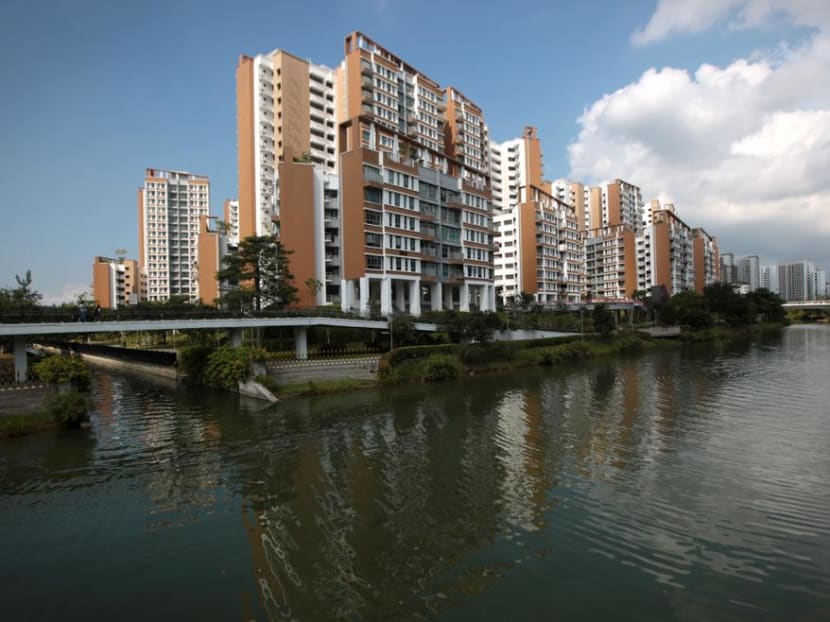
Paths along the 4.2km waterway are linked to other park connectors in the area, making it easy for residents to run and cycle.

“Punggol? Is that even in Singapore,” said a friend when I told her a year ago that I would be moving there.
Another friend jested: “We are trying so hard to move out of Punggol. But here you are running towards it!”
These were some of the initial reactions I got when my friends learned that I would be uprooting from Redhill – prized for its connectivity and amenities in a mature estate – to the North-eastern corner of Singapore.
Repeatedly, I found myself having to explain that it was a conscious decision to relocate to a new estate with much infrastructure in the pipeline, active waterfront living and a vibrant demographic profile.
This past week, following TODAY’s Big Read on the “growing pains” in Punggol and the traffic congestion that residents face, there has been much discussion online on the pros and cons of living in one of Singapore’s newest towns.
“Jam 30 minutes to get out of Punggol. Too many cars and too many traffic lights,” a Facebook user complained.
Another Facebook user declared: “The biggest woe, by far, is the horrendous noise from aircraft taking off and landing. Please don't tell me about defence. It was poor planning.”
Others were more sanguine. “To be fair, it is not that bad. I admit that I hated Punggol when I first moved in... Now I love this place! As for the driving part, I set off earlier for work. Skip the traffic jam and ERP (electronic road pricing),” said another Facebook post.
My move to Punggol happened during the school holidays, which briefly insulated me from the infamous traffic snarl that many residents complain about.
The honeymoon came to an abrupt end in January, when my daily commute became a battle against other drivers. A 30-minute drive from Punggol East to my office in One-north suddenly transformed into a nightmarish drag of over an hour or more.
I realised that part of the problem was because Punggol and Sengkang – two large towns with a combined population of more than 300,000 people – were planned in a mirror image fashion.
Dissecting the two estates are the Tampines Expressway (TPE) and Kallang-Paya Lebar Expressway (KPE). With residents reliant on these roads to get to other parts of the island, chokepoints are inevitable.
Residents say that the authorities should have known better when the masterplan for the area was first drawn up, rather than to have to design the roads to play catch up.
Come this weekend, a new link road connecting Punggol Central to KPE and TPE will open, almost a year ahead of schedule.
In June last year, the Land Transport Authority also brought forward the opening date of Punggol Coast MRT Station from 2030 to 2023 — a good seven years — to beef up transport infrastructure in the area.
Going forward, I hope that my morning commute will be less stressful. However, this is far from guaranteed as the town continues to grow. Guess I have to wait and see.
Another issue I faced was food. Being a foodie, the fact that Punggol did not have any hawker centre weighed heavily on my mind before the move.
I soon found out that access to hawker food wasn’t really a problem. There is a network of food courts and coffeeshops in the estate.
It was the quality of the hawker food that I found wanting. Many of the stalls in Punggol are new establishments. While the hawkers try to do a good job, very often, their standards fall short when compared to their more established counterparts.
During the weekends, my wife and I found ourselves seeking out popular hawker centres in the nearby estates.
When family and friends visit my “kampong” during the weekends, I insist that they pack the best dishes from their neighbourhood’s hawker centres.
I can't wait for the Punggol Town Hub - which includes a hawker centre and library among other things - to be ready by 2021.
As for the aircraft noise, it took some getting used to. At times, I found myself increasing the television volume to drown out the noise, said to be due to military aircraft that operate from Paya Lebar Air Base having to make an abrupt turn immediately after take-off, so that they will not enter Malaysian air space.
There have been occasions of the manoeuvers happening well into the evening.
I am now less bothered by it. For my seven-month old son, he seems to regard it as merely background noise.
So does Punggol have any redeeming qualities?
Plenty I would say.
Personally, I enjoy the young vibe in the estate. As of June 2018, Punggol had the highest proportion of children aged below five years in Singapore, at 10.3 per cent, or 16,700 children.
During weekends, the town comes alive as young families throng the public spaces, something I didn’t quite see in Redhill.
For me, the best part of my move is getting to live along the Punggol Waterway.
Paths along the 4.2km water feature are linked to other park connectors in the area, making it easy for residents to run and cycle.
A foldable bicycle sits proudly in my balcony. I plan to use it more often.
Punggol is also a stone’s throw to Coney Island, with its array of biodiversity.
There are also ambitious plans in the pipeline.
Punggol Digital District is slated to open progressively from 2023, creating some 28,000 new jobs expected to span areas such as cyber-security, data analytics and artificial intelligence among others.
Along with it will be new amenities for the community, as well as a business park and a university — the Singapore Institute of Technology.
I hope that in time to come, my young child will enjoy the nature and greenery in our estate along with the vibrancy these new facilities will create.
And no one will ask him then why his dad decided to move from Redhill to Punggol.
ABOUT THE AUTHOR:
Albert Wai is an editor with TODAY.
Stay in the know. Anytime. Anywhere.

Subscribe to our newsletter for the top features, insights and must reads delivered straight to your inbox.
By clicking subscribe, I agree for my personal data to be used to send me TODAY newsletters, promotional offers and for research and analysis.






