
Helping Singapore businesses and workers weather Covid-19 and beyond
Deputy Prime Minister and Finance Minister Heng Swee Keat will deliver a ministerial statement on Thursday (March 26) on the Government’s additional support measures for workers, businesses and households in response to the Covid-19 pandemic.
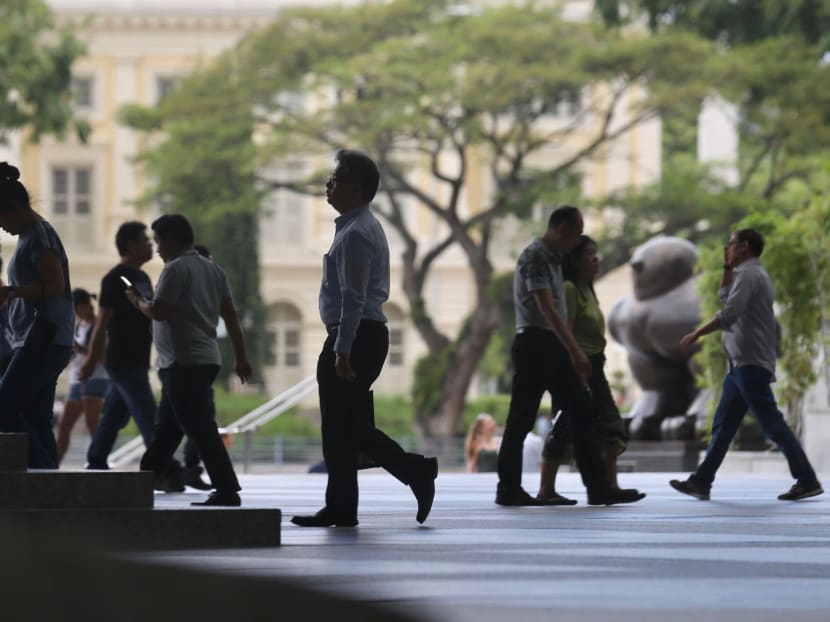
The authors say the severity of the economic disruption caused by Covid-19 means that getting rebates alone may not be enough for businesses struggling with ongoing operational costs such as wages and rental.

Deputy Prime Minister and Finance Minister Heng Swee Keat will deliver a ministerial statement on Thursday (March 26) on the Government’s additional support measures for workers, businesses and households in response to the Covid-19 pandemic.
This will come just five weeks after he unveiled Budget 2020, which included a S$4 billion Stabilisation and Support package to help workers and businesses affected by the Covid-19 outbreak.
Measures in the package, such as rebates for wages (Jobs Support Scheme) as well as corporate income tax and property tax, were intended to provide a near-term financial boost to local firms.
By reducing their costs, it was hoped that companies would continue to maintain their workforce and avoid massive retrenchments.
However, the damage to the Singapore economy is still evolving as we write. The fallout from Covid-19 will be worse than the impact of the severe acute respiratory syndrome in 2003 for the following reasons:
First, the Singapore economy entered 2020 battered in the aftermath of a depressed global trade situation. Singapore’s full-year GDP growth of only 0.7 per cent in 2019 marked the slowest growth in a decade.
Second, Singapore’s economy is far more dependent on China in 2020 than what it was in 2019. As China’s economy slowly recovers, the drag on Singapore’s economy will be prolonged especially if the Republic’s other exports to Europe and the United States remain sluggish.
Third, the health and economic impact of Sars in 2003 was largely confined to Asia. With the rapid spike of Covid-19 infection rate worldwide in March, an extended global recession is now a near-certainty.
Fourth, the use of quantitative easing (QE) by developed countries to cope with the 2008 global financial crisis has resulted in a low interest rate environment till today.
Economists have been hoping for the central banks of developed countries to initiate QT (quantitative tightening) so that we can re-start QE when there is another crisis.
Now, before QT could occur, another round of QE is on the cards, with diminishing marginal returns. There is only so much low interest rates can do to boost the economy when supply chains are disrupted and borders are locked down.
The news that the second economic stimulus package will be unveiled on Thursday is therefore timely.
We would argue that the second package would need to go further than the first given the adverse impact the coronavirus pandemic will have on the economy.
The severity of the economic disruption caused by Covid-19 means that getting rebates alone may not be enough for businesses struggling with ongoing operational costs such as wages and rental.
It is hence crucial to drastically lower such costs for businesses to save jobs and to expand the safety nets to those segments of the society most at risk.
WHAT MORE CAN BE DONE?
Wages account for a significant portion of business costs and serious consideration should be given to reducing the Central Provident Fund (CPF) contribution rates.
While unpalatable to many Singaporeans, such a measure was taken during significant economic downturns in 1986, 1999 and 2003 before the cuts were gradually restored.
Another tool is the lowering of the salary ceiling for CPF contributions from the current S$6,000 to a lower sum. This would again help reduce overall wage costs.
Again, there was a precedent for this. It was cut from S$6,000 to S$5,500 in 2004, then S$5,000 in 2005 and S$4,500 in 2006, before being restored to S$6,000.
Finally, in 2010, for 1.5 years, the Government used past reserves to help pay 9 per cent of employers’ CPF contribution rate. This helped to prevent a drop in overall income for employees yet provided relief to employers.
We think that it is a matter of time before the Government will again use past reserves to pay for part of employers’ CPF contribution rate as an enhancement to the Job Support Scheme.
Freelancers and gig workers, largely left out of the original Budget, should stand to gain some income support as well.
Another issue we would like to discuss is making good use of excess labour during downturns by sending these workers for training and skills upgrading.
Today, a company can tap the Skills Redevelopment Programme to defray the wage cost of 80 – 95 per cent of workers for certain training.
However, these are subject to wage caps. Increasing the wage cap or removing it altogether for a fixed period of time would greatly incentivise employers to send their excess workers for training rather than retrenching them.
That said, the Singapore Government should also ensure that there are sufficient training resources to absorb the increase in training demand.
We feel that this is also a good time to think about our strategy on wage reform. In the aftermath of the 1985 recession, the National Wages Council (NWC) had urged firms to move from a seniority-based wage system to a flexible wage system.
Following the 1997 Asian financial crisis, NWC urged firms to move from a flexible wage system to a Monthly Variable Component (MVC) and Annual Variable Component (AVC) system.
But the MVC seldom exceeds the recommended 10 per cent of the wage cost on a monthly basis as employees generally resist having a high percentage of their pay based on variable components.
The basic idea of a MVC is that when there is a downturn, employers can remove the MVC to protect jobs.
Currently, the most employers can remove is 10 per cent of the wage cost. This is not enough to deal with the current Covid-19 crisis.
Going forward, we should continue to urge firms to adopt the MVC/AVC system and to increase the MVC/AVC proportion of salaries.
This would enable the Government and the NWC to reduce labour cost by recommending the removal of part or whole of the MVC during a crisis.
We believe that the experience of Covid-19 would nudge employees to accept a higher percentage of MVC to prevent retrenchments in future crises.
Nowadays, we seldom talk about wage reform, perhaps because employees and employers believe that in a major crisis like the present one, the Singapore Government would save jobs through rebates and wage support schemes.
With the last significant report on wage restructuring in 2003, it may be a good time to rethink ways of wage competitiveness and factor in safeguards in view of the rise of freelancers and gig workers in the economy.
There is no easy cure to the impending global recession and Singapore would need drastic measures to ride out the storm but doing more to save jobs is the correct first initiative.
It is very important for employers to maintain employment now as Singapore’s fundamental economic structure is sound.
Once the Covid-19 situation is over, we believe that demand for our goods and services will be restored rapidly.
Employers who keep their workforce intact will reap the benefit of a fast economic recovery. Investing in wage cuts and sending workers for training on absentee-payrolls will ultimately pay good dividends for Singapore.
ABOUT THE AUTHORS:
Chew Soon Beng is Adjunct Senior Fellow at the S. Rajaratnam School of International Studies, Nanyang Technological University (NTU), where he was previously professor of Economics and Industrial Relations. Wong Kuo Yheu Keith is pursuing a Masters of Public Administration at NTU’s Nanyang Centre for Public Administration.
Related topics
Heng Swee Keat Covid-19 coronavirus Budget 2020 economyStay in the know. Anytime. Anywhere.

Subscribe to our newsletter for the top features, insights and must reads delivered straight to your inbox.
By clicking subscribe, I agree for my personal data to be used to send me TODAY newsletters, promotional offers and for research and analysis.






