
How do innovators stay innovative? Here's a look at how SIA does it
The invites to last month’s glitzy product launch at Apple’s California headquarters were emblazoned with the motto “By Innovation Only”. Despite the clever play on words and the hype, much of the news coverage on the launch was decidedly lukewarm.
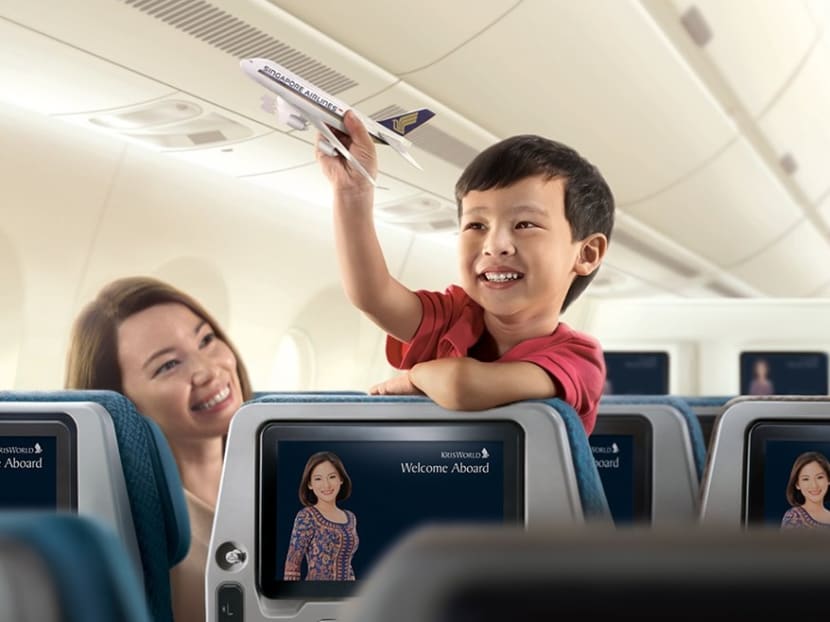
SIA has established four broad innovation-related capabilities, says the author, who studied more than three decades of innovations at the airline.

The invites to last month’s glitzy product launch at Apple’s California headquarters were emblazoned with the motto “By Innovation Only”.
Despite the clever play on words and the hype, much of the news coverage on the launch was decidedly lukewarm. There were a series of updates to existing product lines, including three updates to the iPhone alone — but where, many asked, was the game-changing innovation Apple was previously renowned for?
Recent years have seen more iterations than innovations, leading some commentators to question whether Apple might have lost some of its innovative mojo.
In today’s business climate, driven by a seemingly insatiable appetite for innovation, it also raises a far wider question: How do innovators keep producing innovative products?
As the speed of business cycles escalates, the demand for innovation becomes ever more intense. With every success and wow product comes the expectation — among both consumers and shareholders — for something as good or even greater down the track.
Here in Singapore, one of the nation’s most iconic brands has developed a similar reputation as a leading innovator in its industry — and faces similar challenges in maintaining it.
Since it was founded in 1972, Singapore Airlines (SIA) has won dozens of awards and remains one of the most consistently profitable airlines in the world, a success founded on its ability to deliver innovations in its service and cabin products.
In a research study at NUS Business School, working with colleagues in Australia and the United Kingdom, we looked through more than three decades of innovations at the airline to find some of the elements that have made SIA a serial innovator.
Our study revealed three key institutional factors at SIA that have served as foundations that enabled the airline to generate a constant stream of industry-leading innovations. These include:
- Developing an innovation climate, with a leadership and culture focused on innovation;
- Investing in human capital, such as through training and incentives and
- Having a configuration of resources that enables and encourages departments and individuals to take ownership of their innovations and hence be more motivated.
On top of these foundations, SIA has established four broad innovation-related capabilities.
First, the airline embraces ambidexterity, focusing for example not only on service innovations but also on innovations that deliver cost savings.
Back in 2006, when SIA launched what was then the widest business class seat in the industry for its Boeing A380 and 777 aircraft, it designed the seat to transform into a bed manually. This reduced the number of heavy motors needed, resulting in significant savings in manufacturing, fuel, repair and maintenance.
Second, SIA has institutionalised learning and knowledge integration. For example, it constantly monitors customer feedback, tracks competitors’ activities and uses surveys and benchmarking tools extensively. This enables the airline to share knowledge across units and use it to sense opportunities and problems early.
Third, it has orchestrated collaborative relationships, making innovation a process conducted jointly by key internal stakeholders and a network of external partners, including technology suppliers, aircraft manufacturers, airports and, of course, customers.
And finally SIA has made reinventing customer value central to its innovation culture, leading not just to innovative products and services but to developments like its ultra-premium Suites class that have redefined industry standards.
In the various interviews we did for our study, one SIA vice president summed up airline’s the constant quest for innovation as follows:
“Whatever we do, we are in search of excellence and are never willing to settle for what we have already achieved. We have to be able to tell ourselves that, ‘I love this new thing that I’ve developed and we’ll make sure that it’s well implemented’.
"However, we also have to kill it with a better product in X number of months. It could be six months, it could be 12 months, it could be 20 months; but you have got to kill it because the lifestyles of our customers are continuously evolving.”
Amidst a rapidly changing aviation industry, a particular innovation challenge SIA now faces is that the lifecycle for many products is becoming shorter and shorter, meaning that the pace of developing new products from initial idea to market readiness needs to be sped up.
One response to this has been for the airline to adopt a startup-style internal incubator to develop new ideas. This has led to a particular focus on accelerating tech-based initiatives such as its recently unveiled KrisPay digital wallet.
However, the risk with this approach is that it redirects innovative drive away from SIA’s core product — namely the travel experience — and it remains to be seen what lasting returns it will bring to the airline.
SIA and Apple are of course not the only companies with reputations as serial innovators. The United States-based conglomerate 3M, for example, was one of the first companies to give staff a percentage of their working time to dedicate to new ideas.
It has an organic, decentralised management structure designed to encourage innovations that are both incremental as well as radical. It also has hard key performance indicators that a proportion of revenue should come from new products, so in order to be successful, managers have no choice but to drive and support innovation.
Likewise, Google, a company much younger than 3M, encourages its staff to devote a proportion of their working time to new projects. Its innovation culture places a strong emphasis on ideas that are be scalable without adding headcount and with technology that is so perfect and intuitive that it requires no support service — in other words that it is always self-service.
So what can other companies and industries learn from this?
First, most successful serial innovators have spent many years if not decades building and refining their innovation culture, so managers cannot expect to reorient their firms overnight.
High-quality talent and deep pockets are also naturally important factors in driving innovation. Apple and Google, for example, are fortunate to be awash with both. But other organisational factors play an essential role in creating serial innovators — those who are able to generate a stream of innovations, lead their industry and prevail in a highly competitive market.
Managers in high-velocity markets such as tech and services face both the external pressure of constant competition and the internal challenge of maintaining the elements that determine its ability to achieve new forms of competitive advantage.
It is common for firms to focus their efforts on short-term, episodic innovations. But to achieve sustained innovation, businesses need visionary leaders who can inspire employees, cultivate an organisation-wide climate of innovation whilst also aligning its skills, motives and processes.
ABOUT THE AUTHOR:
Jochen Wirtz is Professor of Marketing and Vice Dean (Graduate Studies) at the National University of Singapore (NUS) Business School. The opinions expressed are those of the writer and do not represent those of NUS.
Related topics
Singapore Airlines Apple Google innovation businessStay in the know. Anytime. Anywhere.

Subscribe to our newsletter for the top features, insights and must reads delivered straight to your inbox.
By clicking subscribe, I agree for my personal data to be used to send me TODAY newsletters, promotional offers and for research and analysis.






