
Why my attitude towards free speech has changed
The terms “free speech” and “Singapore” don’t exactly go hand in hand. That’s something that, as a Western-trained (former) journalist who worked at The Straits Times, the International Herald Tribune and Newsweek, among others, I have had a hard time reconciling for the past three decades.
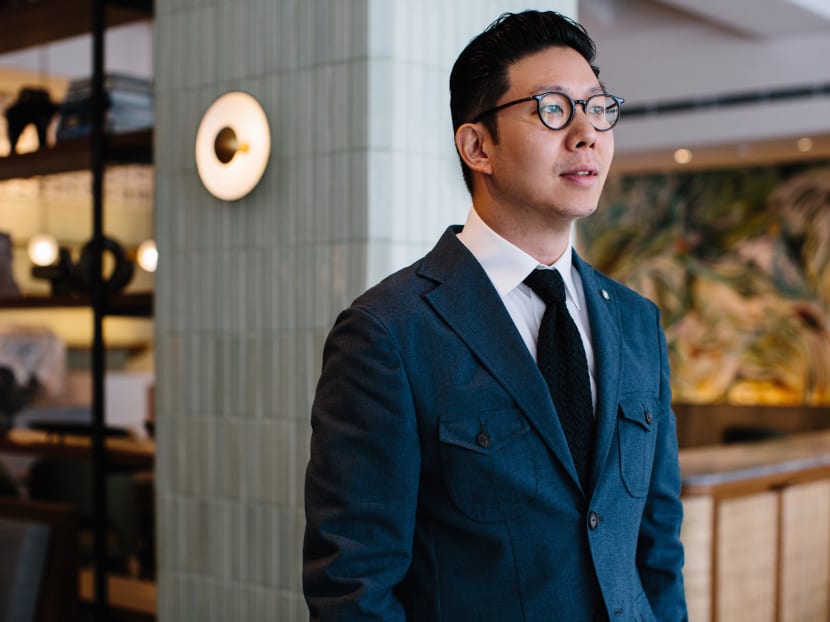
The author (pictured) says he "can’t blindly rally for, or defend, free speech entirely anymore".

The terms “free speech” and “Singapore” don’t exactly go hand in hand. That’s something that, as a Western-trained (former) journalist who worked at The Straits Times, the International Herald Tribune and Newsweek, among others, I have had a hard time reconciling for the past three decades.
Today, I remain a big believer in civil liberties, press freedom and free speech. But certain circumstances have made me adapt my thinking and slightly amend my belief system. One of these is becoming a parent.
Once you have children, you start to think about how you want your kids to be raised and the influences that will affect them as they mature. You try your best to educate them, teach them how to appreciate, understand, and digest information and opinions.
In many ways, building and running a country is akin to parenting millions of people.
You set up rules to keep the peace, ensure resources are fairly shared, and provide a sense of direction and vision, especially if you’ve had to endure an acrimonious familial split.
Becoming a father allowed me to better appreciate some of the policies instituted in Singapore by Sir Stamford Raffles and successors from the East India Company, as well as Mr Lee Kuan Yew and the founding generation of leaders.
And given the sheer size of any population, be it a small island trading post or a large metropolitan city, engineering rules to “raise people” is far more difficult than creating rules for raising children in a single household.
Any parent will also tell you that when establishing rules for kids, it’s far easier to err on the side of strictness generally, and dole out occasional treats and special privileges, than the other way around. I don’t think anyone would argue against the notion that Mr Lee was a very strict parent.
Singapore can still do much better, especially when it comes to social freedoms and the treatment of fringe groups, but it has produced some results we can be proud of.
Fifty four years of unflinching parenting has given us economic prosperity and a highly educated citizenry.
The one outcome that really sets us apart, of which I’m most proud, and which most visitors or newly arrived expatriates swiftly recognise, is how multiculturalism is normalised here.
It’s something that many native Singaporeans, having not been raised elsewhere, often take for granted.
My wife and I used to live on Waterloo Street, around the corner from Kwan Im Thong Hood Cho Temple, which sits next to the Sri Krishnan Temple. We would always bring foreign friends who came to visit us for a look.
What really amazed them was that the sight (to this day) of worshippers visiting both temples, asking for fortune or luck at both a Chinese Buddhist and Indian Hindu place of worship.
That the devotees were sitting peacefully side by side was already startling. Seeing people comfortable hedging their bets by praying at both temples really blew our visitors’ minds.
I have a friend from the United States who has settled down here. He’s half-African-American and half-Chinese.
He told me he always felt alien in his hometown, and spoke often about racial problems in the places he lived. He said Singapore was the first place where he felt that no one was judging him by his race, and where he didn’t feel discriminated against.
In my own neighborhood today, just between Novena and Little India, there’s a little mosque — in fact, I have read it is the smallest in Singapore.
Masjid Tasek Utara has been sitting on a small piece of land on Bristol Road since 1907. Today, it caters to my Muslim neighbours as well as to Muslim employees of nearby KK Women's and Children's Hospital and the Land Transport Authority.
Also within the neighbourhood are two churches, both significant in that one is the first (Chinese and English) bilingual church in Singapore while the other is a Tamil church. We also have two Chinese temples in the ‘hood, but these are sadly now no longer in use.
I love how as I drive by these places of worship almost daily — and mind you, I am an atheist — it reminds me of Singapore’s diversity.
My comfort at our ability to get along (by and large) is reinforced by the current state of the world, which is the other circumstance that has made me, for lack of a better word, more conservative.
Honestly, contemporary events are frightening. Hate crimes are on the rise globally.
Hence my belief that sometimes, you need to draw a line in the sand and say: “Enough is enough.” And I think the world has reached that stage.
Which is why I can’t blindly rally for, or defend, free speech entirely anymore.
That said, there is a thin line between censoring hate and censoring artistic works that may offend those of us who don’t understand irony, satire, political commentary, or who simply lack a sense of humour.
Singapore has a long history of censoring material and media that was deemed defamatory or hurtful towards groups of people.
Part of the problem was that for too long the authorities focused on excising content that was not really harmful but perceived by the more conservative as a tad deviant or morally questionable.
But when it comes to weeding out hate, their work is important. And this is where they should be focused.
I still believe in civil liberties and, for the most part, free expression. But I don’t believe in hate. Hateful rhetoric should never be supported or given a platform.
And I am happy I live in a country that proactively rejects it.
ABOUT THE AUTHOR:
Aun Koh is a journalism-trained entrepreneur who previously owned a magazine company as well as a content and communications agency. He has also worked in the civil service, the charity sector and the hospitality industry. This is adapted from a longer piece which first appeared in The Birthday Book (2019), a collection of 54 essays on “narratives, undiscovered and underway” in Singapore. TODAY will be publishing other essays from the book.
Related topics
free speech hate speech religion mediaStay in the know. Anytime. Anywhere.

Subscribe to our newsletter for the top features, insights and must reads delivered straight to your inbox.
By clicking subscribe, I agree for my personal data to be used to send me TODAY newsletters, promotional offers and for research and analysis.






