
Why Singapore should compel employers to give workers some sick leave without MCs
The issue of whether employees should be granted sick leave without submitting medical certificates (MCs) has come up from time to time and I would like to share my perspective as a general practitioner (GP) of six years.
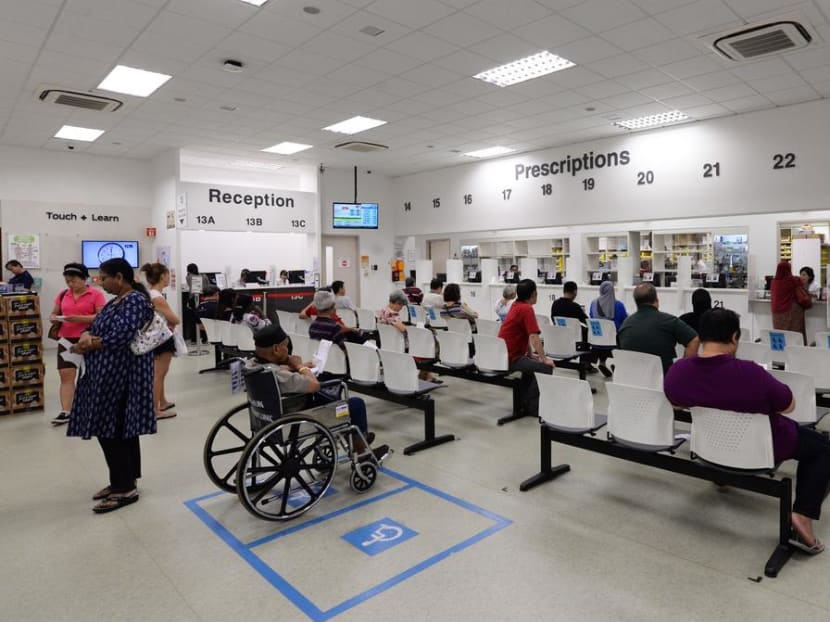

The issue of whether employees should be granted sick leave without submitting medical certificates (MCs) has come up from time to time and I would like to share my perspective as a general practitioner (GP) of six years.
In late 2018, Nominated Member of Parliament Irene Quay called for employers to allow workers to take up to three days of non-consecutive sick leave each without submitting medical certificates (MCs).
This would help build trust and boost morale at the workplace as well as reduce the risks of infections spreading at clinics, she said.
Public opinion on her suggestions was mixed. Some lauded the idea as long overdue, but others said it could be abused.
I think it is timely to revisit this issue.
Most employers currently offer 14 days of medical leave per annum as long as it is backed by a MC from a registered doctor.
Few companies offer employees honour-based sick leave, which means an MC from a doctor is not required.
This should change, for the benefit of Singapore and its healthcare system.
I would suggest that all companies in Singapore be mandated to provide honour-based sick leave with some limits.
For instance, caps can be placed on both the total number of days per annum where this is permitted (say, seven out of 14 days or half of the total annual sick leave allowance) as well as the duration of sick leave that does not require an MC (say, no longer than two consecutive days).
Before I explain the rationale for my proposal, let me first address the reflexive criticism that it enables malingering.
Requiring an MC is not a particularly strong deterrent to malingerers.
Most doctors will give their patients the benefit of doubt since an illness can affect individuals differently.
For example, someone with a common cold might feel well enough to work; whilst someone else might not.
There is - to date - no completely accurate and objective measure of someone's fitness to work when they are acutely unwell.
Hence, providing an MC if the patient expresses an inability to work is the ethical thing to do.
On the other hand, a particularly suspicious doctor can be easily circumvented by simple doctor-hopping.
As medical records are not linked, the "new" doctor will be none the wiser and might decide to issue an MC.
In addition, most companies cover — in part or in full — the costs of acute visits to the GP through insurers and/or third-party administrators.
Absent that, polyclinics provide heavily subsidised healthcare for Singaporeans. The financial outlay for GP visits to obtain an MC is therefore not a significant concern for many.
Taken together, it means that the argument to maintain the sick leave status quo in order to deter malingering is weak.
Furthermore, persistent employee absenteeism is usually a combination of challenging employee circumstances and/or incompatible company policies that result in an employee-job mismatch.
Gatekeeping absenteeism is therefore the purview of human resource departments and not GPs.
Implementing limited honour-based sick leave can benefit Singapore’s healthcare system.
First, it frees up GPs to spend additional time on preventive health and chronic disease management by decreasing their acute case load.
Figures show that the Government’s health expenditure has more than doubled from S$3.9 billion in 2010 to S$9.3 billion in 2016. Much of this increase is in tandem with an ageing population which suffers from more chronic conditions such as diabetes, high blood pressure and high cholesterol.
GPs need time to counsel patients to help them manage their chronic conditions. It is exceedingly difficult to convince someone to take life-long medications for a condition that is not physically perceptible.
Time is needed for a doctor-patient relationship to develop, and a strong relationship provides the trust that a patient needs to recognise that his health issues are real and will have consequences if not looked after properly.
Moreover, excellent care at the GP level will mean that more patients have well-controlled conditions that do not develop complications. This will necessitate less specialist referrals to treat advanced diseases, which again eases the burden on the healthcare system.
Second, the proposal allows Singapore to better utilise ancillary healthcare resources - specifically, pharmacists.
Pharmacists are well-trained medical professionals who are licensed to treat simple ailments. They are conveniently situated in most shopping centres and usually operate into the late evenings.
Patients with minor illnesses should make pharmacists their first port-of-call. The pharmacist can provide treatment if appropriate or refer the patient to see a GP if necessary.
A visit to the pharmacist is also more cost effective as there is currently no charge for consultation - patients only have to pay for medications.
TPAs and insurers should be strongly encouraged to allow claims for pharmacy visits, though the amounts should be lower than for GP visits.
This is because GPs, by virtue of more intense training, should be providing more complex and higher value care that costs more.
Third, a limited honour-based sick leave system encourages greater personal responsibility and promotes health literacy in the general population.
The option of not requiring an MC to call in sick correspondingly implies that the patient has to be able to manage his illness to a reasonable degree.
This means knowing what disease he has, how long he can expect to be sick before recovering, what medications he should take and when he should abandon self-medication to visit the doctor.
It also means that someone who knows he is a transmission risk is not ashamed to stay at home in order to not spread his disease to others.
In summary, mandatory limited honour-based sick leave is a reasonable solution to a few issues that our healthcare system faces today. It warrants a thorough evaluation by the relevant authorities and should not be dismissed as unrealistic.
With luck, it might even pave the way for a more health-literate populace that is better prepared to tackle chronic diseases that if left unchecked could be a huge burden for Singapore society.
ABOUT THE AUTHOR:
Lee Yuan Hwa is a general practitioner in private practice.
Stay in the know. Anytime. Anywhere.

Subscribe to our newsletter for the top features, insights and must reads delivered straight to your inbox.
By clicking subscribe, I agree for my personal data to be used to send me TODAY newsletters, promotional offers and for research and analysis.






