
Changes in nature affect colour perception
LONDON — Humans see colour differently in summer, with yellow appearing more green than in the winter months, scientists have shown for the first time.
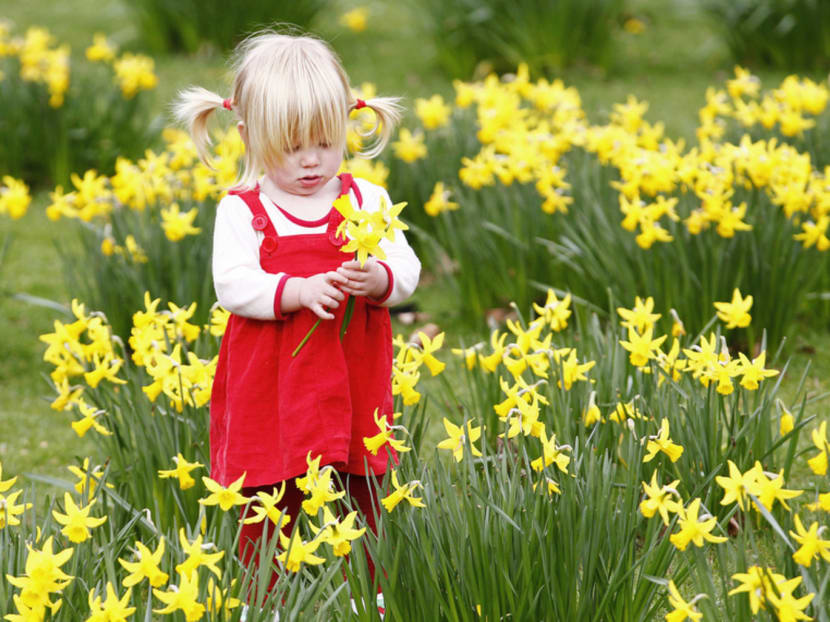
Research has shown that humans see colour differently in summer, with yellow appearing more green than in the winter months. Photo: Reuters
LONDON — Humans see colour differently in summer, with yellow appearing more green than in the winter months, scientists have shown for the first time.
The researchers at York University looked at how colour perception changes between seasons and, in particular, how people process the colour known as unique yellow.
Humans identify four unique hues — blue, green, yellow and red — that do not appear to contain mixtures of other colours.
Unique yellow is particularly interesting to scientists as perception of it is stable across large populations — everyone agrees what unique yellow looks like, despite the fact that people’s eyes are often very different.
The researchers at the Department of Psychology wanted to find out the reasons for such stability and what factors might make it change.
They thought unique yellow might depend not on the biology of the eye, but on the colour of the natural world.
“What we are finding is that between seasons, our vision adapts to changes in the environment,” said PhD student and lead author Lauren Welbourne. “So, in summer when there is a much larger amount of foliage, our visual system has to account for the fact that on average, we are exposed to far more green.
“In York, you typically have grey, dull winters and in summer, you have greenery everywhere. Our vision compensates for those changes and that, surprisingly, changes what we think ‘yellow’ looks like. It’s a bit like changing the colour balance on your TV.”
The researchers tested 67 men and women in January (winter in the United Kingdom) and June (summer). Participants were put in a darkened room, allowed to adjust to the light and then, on a machine called a colorimeter, asked to adjust a dial backwards and forwards until they felt they had reached the point where it had reached unique yellow — with no hint of green or red.
They found that in June, volunteers adjusted more green out of yellow than in January; and added more in January to get back to yellow, suggesting that their eyes were viewing the colours differently.
Ms Welbourne said the research sheds new light on the complex workings of the visual system. “This is the first time natural changes in the environment have been shown to affect our perception of colour,” she said.
“This can have knock-on effects on the way we diagnose and treat visual disorders.” The research was published in the journal Current Biology.
THE DAILY TELEGRAPH
Stay in the know. Anytime. Anywhere.

Subscribe to our newsletter for the top features, insights and must reads delivered straight to your inbox.
By clicking subscribe, I agree for my personal data to be used to send me TODAY newsletters, promotional offers and for research and analysis.






