
More efficient DNA tech to detect and treat cancer, diseases
SINGAPORE — A more efficient DNA technology to detect and treat infectious diseases, such as dengue and malaria, as well as cancer has been developed by researchers at the Institute of Bioengineering and Nanotechnology (IBN) of A*STAR.
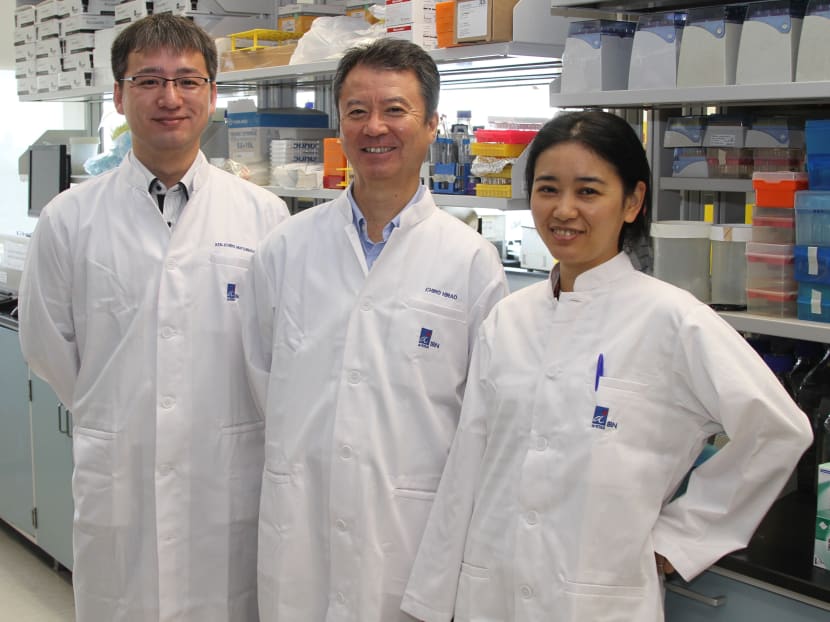
The Institute of Bioengineering and Nanotechnology (IBN) researchers who invented the more efficient DNA aptamer technology. From left: Mr Ken-ichiro Matsunaga, Dr Ichiro Hirao and Dr Michiko Kimoto. Photo: IBN
SINGAPORE — A more efficient DNA technology to detect and treat infectious diseases, such as dengue and malaria, as well as cancer has been developed by researchers at the Institute of Bioengineering and Nanotechnology (IBN) of A*STAR.
By improving on existing technologies, the researchers have created a modified single-stranded DNA molecule, said IBN in a media statement today (Feb 1).
Known as DNA aptamers, they are ideal for pharmaceutical applications because they can specifically bind to any molecular target in the body, such as proteins, viruses, bacteria and cells, and inhibit its activity.
While this makes them a promising technology for disease detection and drug delivery, no DNA aptamers have been approved for clinical use thus far. This is because current aptamers do not bind well to molecular targets and are easily digested by enzymes.
By adding a new artificial component called “unnatural base” to a standard DNA aptamer, the research team at IBN has enhanced its ability to bind to the molecular target by 100 times as compared with conventional ones. To prevent it from being digested easily by enzymes, “mini-hairpin DNA” has been added to the aptamer. These DNA have an unusually stable and compact stem-look structure of tiny DNA fragments that strongly resists disgestive enzymes and act as a protective shield.
IBN principal research scientist and team leader, Dr Ichiro Hirao, said: “Usually DNAs are digested within one hour in blood at body temperature. With the mini-hairpin DNA, our DNA aptamers can survive for days instead of hours. This is important for pharmaceutical applications, which require the therapeutic to remain in the body for a longer period.”
“We hope to use our DNA aptamers as the platform technology for diagnostics and new drug development,” said IBN executive director, Professor Jackie Y Ying.
If successfully commercialised, IBN said that these DNA aptamers could replace or complement the existing use of antibodies in drugs for targeted disease treatment. Like aptamers, antibodies bind to targets in the body, but often cause undesirable immune responses and are not easy to mass produce.
“Our aptamers are more efficient, and lower in cost and toxicity compared with conventional methods. The next step of our research is to use the aptamers to detect and deactivate target molecules and cells that cause infectious diseases,” added Dr Hirao.
The results of the IBN study were published recently in the journal Scientific Reports.
Stay in the know. Anytime. Anywhere.

Subscribe to our newsletter for the top features, insights and must reads delivered straight to your inbox.
By clicking subscribe, I agree for my personal data to be used to send me TODAY newsletters, promotional offers and for research and analysis.






