
Data plan
SINGAPORE — It’s the evergreen national craze that marches steadily on, thrice weekly, inspiring (and inspired) by everything from traffic accident jams to aquarium sales, and even surreptitious cemetery visits. We are, of course, talking about the lottery known as 4D.
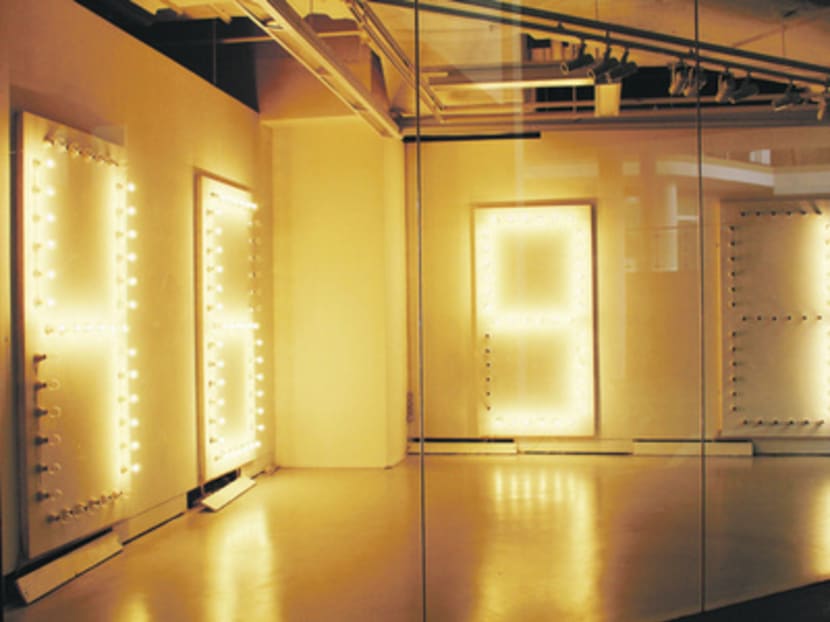
And now, 4D has found its way into a gallery in the form of Kray Chen’s larger-than-life installation of incandescent lightbulbs displaying the latest winning number. Titled 1st Prize, the work currently on show at the Institute Of Contemporary Arts Singapore, presents an altogether different take on the magic numbers.
The numbers themselves take centre stage, towering and blazing bright. The sheer physical presence of it suggests a need for reflection on our obsession with material fulfillment. Or you can use it to check if you’ve won a load of cash.
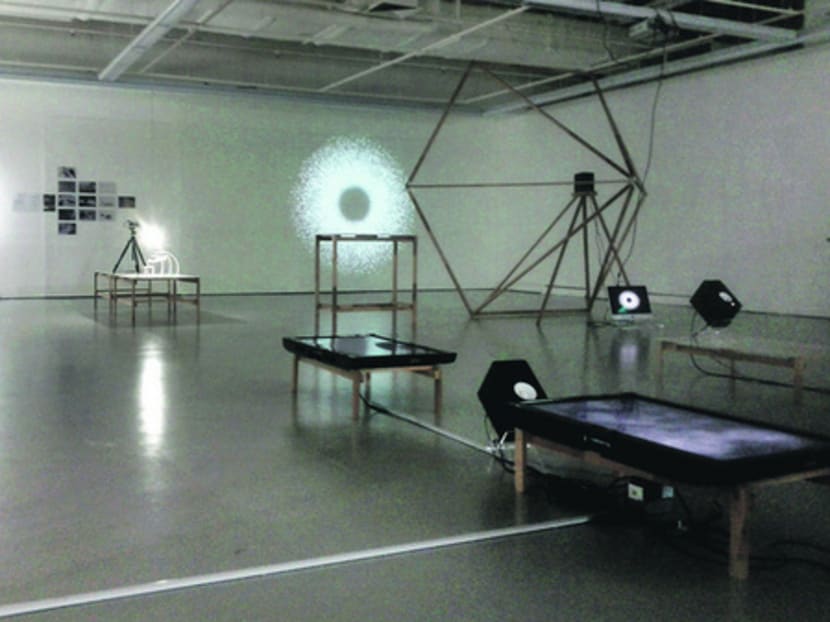
Right next door to 4D is Coded Transformations, a group exhibition curated by Andreas Schlegel, the coordinator of the college’s Media Lab. Unlike the immediate relatability of Kray Chen’s solo exhibition, this one takes place in between the digital and physical realms. But the data-driven artworks reveal that present-day life is very much enmeshed with complex digital structures.
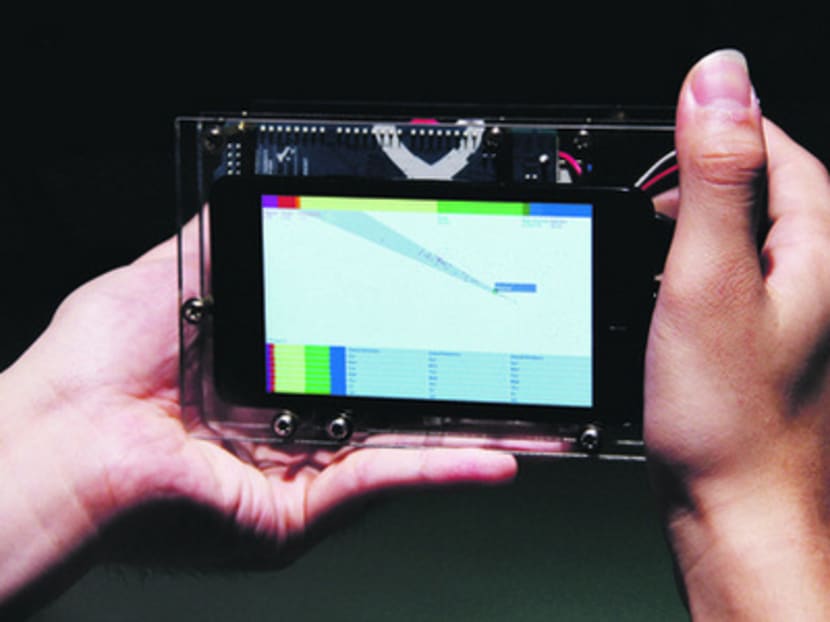
Mithru Vigneshwara’s Aleph Of Emotions, for instance, plugs data from Twitter into a portable device, allowing the user to generate “emotional” snapshots of areas and places. Judith Lee’s Painting Trees compares ambient temperatures in the city centre, residential and industrial estates, as well as the coastal areas of Singapore, painting a reflective, yet rigorous picture of how rapid development affects our daily lives.
Interrupted only by the pop and sizzle of the sound and media installations, the works of Coded Transformations are sensibly arranged like an eerily immaculate laboratory-workshop. However, an oddity was a well-lit table in a corner with neat rows parts and tools used in the works on show, ranging from rolls of tape to microcontroller boards. While contemporary art has a fine tradition of transparency in process and technique, the display seems almost to serve the opposite aim, as if crowing, “Look at all this stuff that mystifies you!”
Still, the works themselves do an excellent job of grounding — and rendering understandable — all the technical wizardry. In this regard, special mention goes to Schlegel’s own Plasma, which presents a simplified wireframe of the main antenna of the Voyager 2 space probe, currently hurtling out of our solar system — fast enough to zip past Singapore in three seconds.
With its emphasis on all the amazing things you can do with DIY hardware and software, Coded Transformations seems to point out that we’re sort of living in the future already, it’s just easy to ignore because we don’t all have jet-packs and flying cars.
Rating:
1st Prize: 3.5 stars
Coded Transformations: 4 stars
1st Prize and Coded Transformations run until Feb 1 and 3, respectively, from 10am to 6pm (except 1.30 to 2.30pm) at TriSpace and ICA Gallery, respectively, at the Lasalle College Of The Arts, 1 McNally Street. Closed on Mondays and public holidays. Free admission.
Stay in the know. Anytime. Anywhere.

Subscribe to our newsletter for the top features, insights and must reads delivered straight to your inbox.
By clicking subscribe, I agree for my personal data to be used to send me TODAY newsletters, promotional offers and for research and analysis.






