
Go back to the 1960s with new musical inspired by famed nightclub Tropicana
SINGAPORE — The idea of Tropicana Niteclub, Singapore’s first world-class cabaret, was conceived in 1966. Bankrolled by the late property developer Shaw Sung Ching, Tropicana opened in 1968 on Orchard Road (where Pacific Plaza now stands), with The Straits Times in the 1970s naming it “a pioneer in fine show business” as well as a premier venue for topless shows.
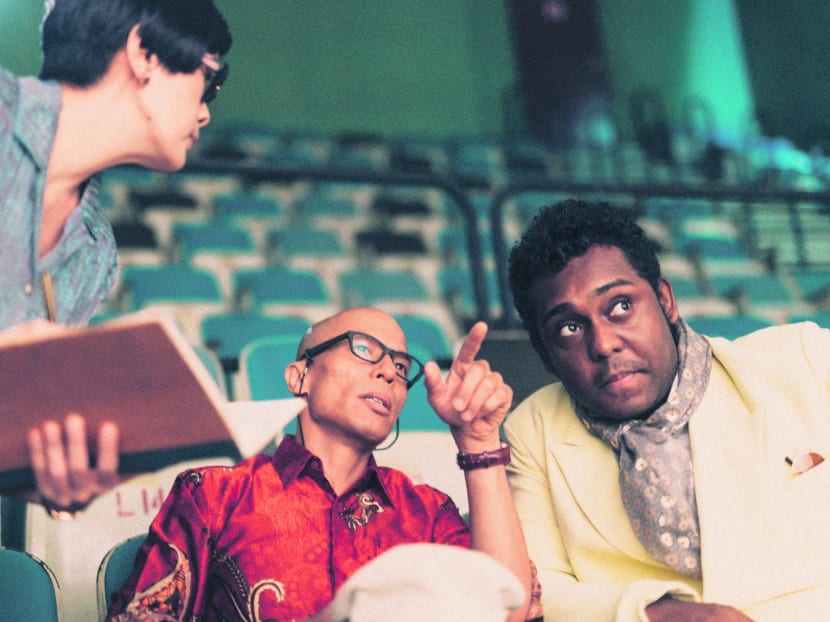
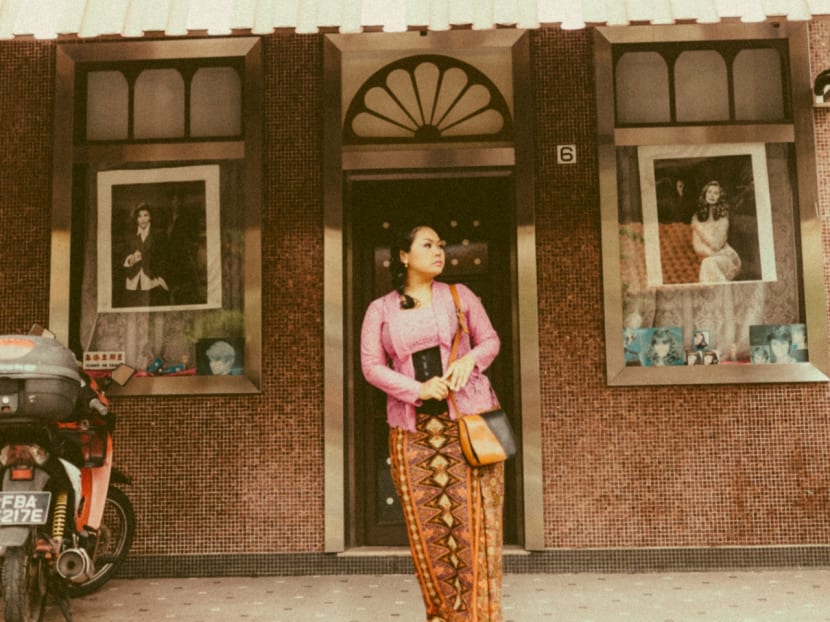

SINGAPORE — The idea of Tropicana Niteclub, Singapore’s first world-class cabaret, was conceived in 1966. Bankrolled by the late property developer Shaw Sung Ching, Tropicana opened in 1968 on Orchard Road (where Pacific Plaza now stands), with The Straits Times in the 1970s naming it “a pioneer in fine show business” as well as a premier venue for topless shows.
Tropicana closed in 1989 but, half a century after its conception by Shaw, independent theatre producer Tan Kheng Hua is reviving both the nightclub and the spirit of the 1960s in an eponymous musical slated to open at Capitol Theatre in April next year.
Just as how the Tropicana Niteclub made history by famously bringing in Count Basie and his Orchestra in 1971 (with tickets for the one-night performance priced at S$85, the most expensive show in Singapore’s history then), Tan, 53, has conceived an ambitious, large-scale production, assembling a team of theatre heavyweights and marquee names.
First on board was Beatrice Chia-Richmond, fresh from directing the opening and closing ceremonies of the South-east Asian (SEA) Games in 2015. As director of Tropicana the Musical, Chia-Richmond, 42, promptly recruited her collaborator from the SEA Games, Haresh Sharma — 2015 Cultural Medallion winner and resident playwright at The Necessary Stage — to write the book for the musical.
Tan and Chia-Richmond described the musical as following a group of people working at the Tropicana in the 1960s who were “reaching for dreams when there was no guarantee, no road maps ... and with courage and passion that have been unrivalled until today”.
Sharma said he joined the production because he enjoyed working with Chia-Richmond, even though he was more “used to black box theatre and studio spaces” than Chia-Richmond’s more ambitious productions. He also said, laughing, that he was “probably the worst person to ask” as he had “no musical theatre experience” — this was the first time he was trying his hand at a musical.
Well, this was where composer Julian Wong and lyricist Joel Tan came into the picture.
Wong, 28, and Sharma, 51, started working together in April. To prepare for the show, Wong said they listened to a lot of songs from the 1960s, bearing in mind that they “had to evoke the sense of that era without (the musical) being a pastiche”.
He added: “We drew inspiration from each other. Sometimes he would come in with a scene and say, ‘I’m a bit stuck here, I don’t know what to do. I just wrote some poetry and some prose, can you find a way to musicalise them?’ We would look at his work together and see if it’s appropriate and I would say, ‘Okay, let’s try to create something’. And from there he gets further inspired by the music, and I get further inspired by his new ideas.”
Wong also described the different “sonic worlds” that they created: “First of all, there was the Tropicana Club itself, which was very unique for a club at that time, it had a 12-piece orchestra with brass ... The story also takes place in other performing venues in Singapore, like Sparks, so what was the sound of Sparks in those days?”
“And then there are also the character songs, the ones that ... are a bit more Asian, and the language of the lyrics that Joel Tan has written really reflects their manner of speaking.”
Joel Tan, who is also a playwright and director, joined them in September to write the lyrics. Both he and Sharma agreed that lyric-writing was a special skill: “You have a lot less space when you write lyrics, it’s more concentrated,” said Joel Tan. “Every song in musical theatre is like a small play, every line like a small theme ... Add to that the extra challenge of making it rhythmic and making it rhyme — that’s why I enjoy it, it’s like a game.”
The 29-year-old also said that he planned to emphasise the multilingual element and to “work more languages” into the next draft of the lyrics, even though “working Singlish in is notoriously difficult (because) it has a different rhythm to standard English”.
Wong has faith in him though, pointing out, “He was my first choice (to write the lyrics). I truly believe he’s one of the best lyricists in Singapore.”
Tan Kheng Hua has also managed to persuade some of Singapore theatre’s most recognisable names to anchor the production: The cast includes her husband Lim Yu-Beng, Karen Tan, Siti Khalijah Zainal, Brendon Fernandez and Sharda Harrison.
The theatre veteran and actress also wants to change the way local theatre-goers buy tickets in Singapore, starting with Tropicana the Musical — in order to build a stronger financial model for her cast and production. She has partnered Sistic to offer a new incentive ticket pricing scheme, where early ticket-buyers are given a steep discount and prices rise closer to the opening night.
Incentive pricing has similarities with the dynamic pricing practised by airlines and Broadway and West End theatres, she explained.
The difference is that dynamic pricing allows for price fluctuation in both directions (i.e. you could get cheap, last-minute tickets), whereas incentive pricing does not (i.e. prices only go up).
Both she and Chia-Richmond were clear about the focus of the musical. Chia-Richmond said: “We realise that Tropicana the club was really an inspirational starting point to a far more fascinating subject, which was Singapore in the 1960s and 1970s.”
Tan Kheng Hua added: “In the 1960s, Singapore was truly a global city of the arts and people were led not by government grants or agenda but by fearlessly independent vision. We had a thriving movie-making scene, our local bands outsold even the Beatles ... We had a nightclub, unparalleled in the region, from which this musical is drawing inspiration ... Where is that spirit today? – is what we want to ask.”
The musical will surely suggest some answers when it opens on April 13, but perhaps all is not lost: Today, the marquee names are not Count Basie or Duke Ellington but Beatrice Chia-Richmond, Haresh Sharma and Lim Yu-Beng; a new ticketing pricing scheme proposes local theatre tickets can sell like Broadway ones; and an independent producer is committed to paying her cast professionally — these reflect how far the industry has come.
If we are lucky, when the curtain raises, we will find that some of that 1960s mojo still lives — both onstage and off it.
Tropicana The Musical will play at Capitol Theatre from April 13 to 30, 2017. Tickets are available now from Sistic.
Stay in the know. Anytime. Anywhere.

Subscribe to our newsletter for the top features, insights and must reads delivered straight to your inbox.
By clicking subscribe, I agree for my personal data to be used to send me TODAY newsletters, promotional offers and for research and analysis.






