
Run Run Shaw: The kung-fu master
HONG KONG— Once asked what his favourite films where, Run Run Shaw replied: “I particularly like movies that make money.”
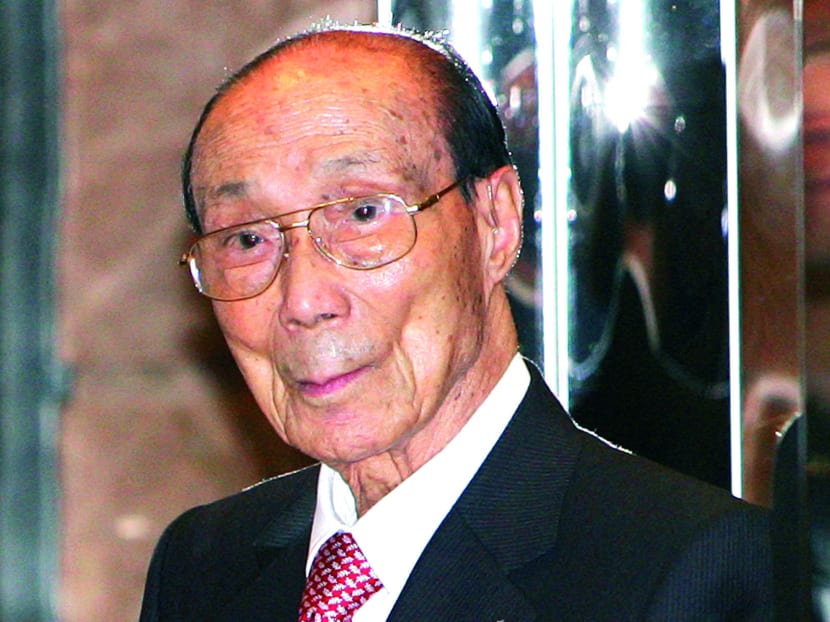
Hong Kong media mogul Run Run Shaw. Photo: Reuters
HONG KONG— Once asked what his favourite films where, Run Run Shaw replied: “I particularly like movies that make money.”
Make money, he did. And along the way, he influenced cinema greatly — in Asia and beyond.
The colourful Hong Kong media mogul, whose name was synonymous with low-budget Chinese action and horror films — and is credited with inventing the kung fu genre — died yesterday in his home in Hong Kong at the age of 107.
The news was announced by Television Broadcasts (TVB), which Shaw helped found in 1967.
His Shaw Brothers Studios churned out nearly 1,000 movies, popularising the kung fu genre that influenced Hollywood directors such as Quentin Tarantino. He also produced a handful of American films including the sci-fi classic Blade Runner.
Both his movie and television empires would eventually launch the careers of Asian cinema A-listers like directors John Woo and Wong Kar Wai, and actor Chow Yun-Fat. One notorious “miss”, however, was the late Bruce Lee. He went to rival, breakaway studio Golden Harvest after Shaw Brothers refused to bankroll the future kung fu superstar, eventually delivering Fists Of Fury.
The son of a textile businessman in Shanghai, Shaw and his brother Run Me eschewed the family business and turned to entertainment, producing a play titled Man From Shensi, which they later turned into their first film in 1924. Due to civil unrest, the brothers moved to Singapore three years later, simultaneously producing and importing films as well as building up a string of theatres, up until World War II.
With the rise of Hong Kong, Run Run Shaw moved there in 1959, while his brother stayed behind looking after their Singapore business.
In Hong Kong, Shaw went to work, creating a studios and residential complex called Shaw Movietown that upped the stakes with big-budget, long movies, something unheard of in the local industry.
After commercial success with the so-called dragon-lady genre in the ’60s, Shaw discovered a bigger cash cow: Martial arts films in modern settings. Among his hits were Five Fingers Of Death (1973) and Shaolin Avenger (1976). Critics panned the films, but spectators cheered or laughed, as Shaw’s cinema chain grew to more than 200 houses in Asia and the United States.
“We were like the Hollywood of the 1930s,” he said. “We controlled everything: The talent, the production, the distribution and the exhibition.”
The studio’s logo — the initials SB on a shield — was inspired by the Warner Brothers emblem, in a nod to its Hollywood aspirations. It came full circle when Quentin Tarantino appropriated the Shaw Brothers logo for use in his two Kill Bill movies, which were in homage to the studio and other Hong Kong martial arts movies.
Shaw entered television in 1972 with TVB and soon gained 80 per cent of the Hong Kong market, churning out 12 hours of shows, mostly soap operas and costume dramas, that found a strong audience in mainland China and South-east Asia.
Shaw also turned to philanthropy, donating generously to hospitals, orphanages and colleges in Hong Kong, for which he was awarded the Commander of the Order of the British Empire in 1974 and a knighthood in 1977.
In 2004 he established the Shaw Prize, an international award for research in astronomy, mathematics and medicine.
Shaw enjoyed the zany glamour of the Asian media world he helped create. He presided over his companies from a garish Art Deco palace in Hong Kong. Well into his 90s he attended social gatherings with a movie actress on each arm. And he liked to be photographed in a tai chi exercise pose, wearing the black gown of a traditional mandarin.
In later years, the aging mogul himself seemed in need of help to keep his media empire intact. Concerned with the rise of cable and satellite television, he sold a 22 per cent stake in TVB to Rupert Murdoch’s News Corporation in 1993. He continued to lead TVB until his retirement as Chairman in December 2011 at the age of 104.
Shaw’s business situation was also hindered by his inability to groom credible successors. His sons, Vee Meng and Harold, were at one time heavily involved in the family enterprises, but their relationship with him had become strained.
Even after turning 90, Mr Shaw maintained a powerful presence in the Hong Kong film world through his control of Shaw Studios. But a newer generation of independent producers came to dominate the Hong Kong market with their own violent brand of police and gangster films. AGENCIES
Stay in the know. Anytime. Anywhere.

Subscribe to our newsletter for the top features, insights and must reads delivered straight to your inbox.
By clicking subscribe, I agree for my personal data to be used to send me TODAY newsletters, promotional offers and for research and analysis.






