
SpongeBob continues to muscle up
NEW YORK — SpongeBob SquarePants began airing on Viacom’s Nickelodeon in 1999. Since then, significant changes—the advent of Netflix, the rise of YouTube, the proliferation of DVRs, smartphones, tablets, etc.—have upended the home-entertainment market.
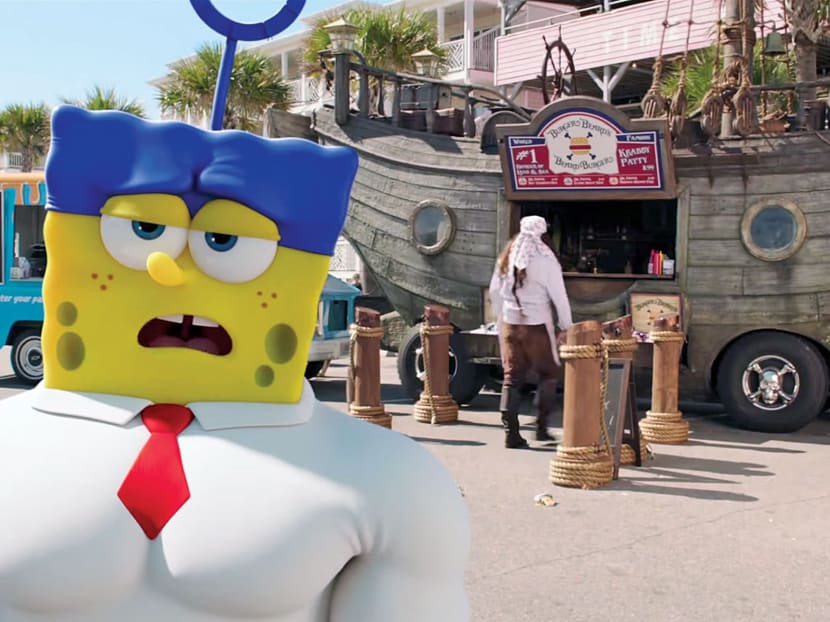
A screenshot out of the new SpongeBob movie trailer. Photo: YouTube
NEW YORK — SpongeBob SquarePants began airing on Viacom’s Nickelodeon in 1999. Since then, significant changes—the advent of Netflix, the rise of YouTube, the proliferation of DVRs, smartphones, tablets, etc.—have upended the home-entertainment market.
Two years ago, media observers predicted that these myriad shifts would kill the sponge along with other stars from the days of linear children’s television. Yet SpongeBob has thrived. “It’s still, hands down, the most watched animated show on television,” says Ms Cyma Zarghami, the president of Nickelodeon Networks Group. “Now it’s also viewed on every screen, everywhere around the world.”
Come Friday (Feb 6), Viacom will release The SpongeBob Movie: Sponge Out of Water in theaters nationwide. The film tells the story of a conniving pirate, played by Antonio Banderas, whose theft of a beloved recipe wreaks havoc in SpongeBob’s world. To save their undersea community, SpongeBob and his cohorts have to travel onto—gulp—dry land, where they transform into superheroes, develop muscular bodies, battle with pirates, and meet the guitarist Slash.
Then in the summer of 2015, Nickeloden will begin airing new episodes of SpongeBob on TV. For now, repeats of the show remain some of the most popular telecasts in all of pay TV. On Jan 3, four of the top 35 shows on cable were episodes of SpongeBob, according to Nielsen. Each rerun attracted from 1.8 million to 2 million total viewers.
Part of the franchise’s success has to do with its cross-generational humor. “When you outgrow a show like Barney & Friends, something happens where you go from loving Barney to having Barney drive you absolutely crazy,” says Mr Robert Thompson, director of Syracuse University’s Bleier Center for Television & Popular Culture. “But with SpongeBob, you watch it when you’re 3 and enjoy the goofy slapstick. You watch it when you’re 8 and enjoy the narratives. You watch it when you’re 21 and start seeing themes from your comparative literature courses.”
While the larger culture has become more ironic, SpongeBob feels like a throwback to the earnest comedy popularised by Buster Keaton and Charlie Chaplin. The humour arises from watching an indefatigable naif try to maintain his goodwill despite a barrage of indignities from a relentlessly cruel world.
“One of the geniuses of SpongeBob is that, while it was designed for preschoolers, it’s always thrown out delicious bones to the parents,” Thompson says. It’ll soon reach the point where parents who grew up watching SpongeBob will be introducing the show to their children. “Once you make that first generational jump, it becomes somewhat self-perpetuating,” he says. Only an animated program with a brand-name title character—Bugs Bunny, Mickey Mouse, Rudolf the Red-Nosed Reindeer—can typically pull this off.
The film, which marks the character’s first foray into theaters since the original SpongeBob SquarePants Movie racked up US$140 million (S$189 million) in ticket sales in 2004, mixes animation with live-action sequences. Viacom executives are likely hoping to ape the success of 2014’s breakout hit, The Lego Movie. It also premiered in February, mixed animation with live action, and capitalized on a brand with tons of international fans.
As with The Lego Movie, which went on to gross US$468 million worldwide, according to Box Office Mojo, the SpongeBob film is designed not just to entertain, but also to trigger a cavalcade of toy and apparel sales. The coming onslaught includes SpongeBob comforters (US$29.88), junior novels (US$5.99), watches (US$9.99), post-apocalypse figure packs (US$19.99), cuddle pillows (US$15.96), Mega Bloks “photo booth time machines” (US$9.99), beach towels (US$10.97), tumblers (US$19.99), calendars (US$14.99), fruit-scented pencils (US$7.99)—and pretty much any other SpongeBob doodad you could imagine a hyper child badgering her caretaker into buying.
Somewhat improbably, given the show’s mass appeal, the character has recently become trendy among luxury brands. Later this year, the London-based designer Beatrix Ong, formerly the creative director for Jimmy Choo Couture, will roll out a SpongeBob-inflected line, including wallets and bikinis. Ms Ong points out that Marc Jacobs — who has the character tattooed on his right biceps — and Karl Lagerfeld are likewise big fans. Last year the Italian label Moschino dedicated an entire runway show to SpongeBob, featuring US$599 handbags and US$962 leggings. “Fashion traditionally has been very serious,” Ms Ong says. “There’s a trend of cartoons and things that are a little bit lighter coming into luxury.”
From 2012 to 2014, according to the financial information firm SNL Kagan, the network’s estimated advertising dollars grew from US$930 million to US$1 billion; overall operating revenue increased from US$1.9 billion to US$2.2 billion.
And so the network will keep cranking out SpongeBob episodes for the foreseeable future. “The consumers will tell us when they’ve had enough,” Ms Zarghami says. “So far, they haven’t.” BLOOMBERG
Stay in the know. Anytime. Anywhere.

Subscribe to our newsletter for the top features, insights and must reads delivered straight to your inbox.
By clicking subscribe, I agree for my personal data to be used to send me TODAY newsletters, promotional offers and for research and analysis.






