
Music albums mark their anniversary
It looks like 2014 is turning out to be a great year for music anniversaries. And we’re not just talking about music milestones such as the 50th anniversary of The Beatles’ appearance on The Ed Sullivan Show, or the fact that 30 years ago, Michael Jackson became the first singer to make a big sweep at The Grammys, with seven wins for his work on Thriller.


It looks like 2014 is turning out to be a great year for music anniversaries. And we’re not just talking about music milestones such as the 50th anniversary of The Beatles’ appearance on The Ed Sullivan Show, or the fact that 30 years ago, Michael Jackson became the first singer to make a big sweep at The Grammys, with seven wins for his work on Thriller.
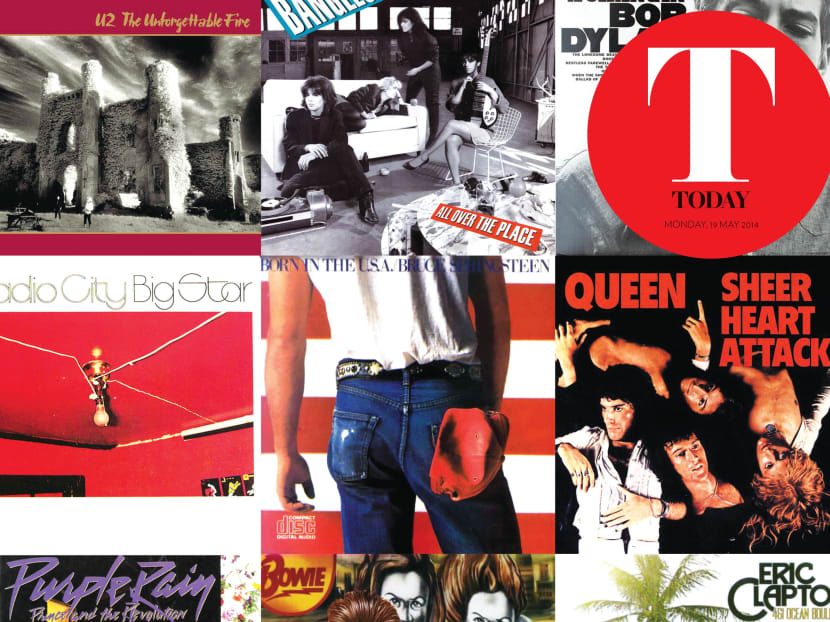
No, we’re talking about classic albums that are celebrating key anniversaries this year: For instance, did you know that Madonna’s Like A Virgin is celebrating its 30 anniversary, as is Depeche Mode’s Some Great Reward? At any rate, we look at our favourite albums marking milestones this year.
50 YEARS AGO: 1964
The swinging ’60s, was going into full swing. The British Invasion was a roaring success: The Rolling Stones , The Kinks, The Swinging Blue Jeans, The Yardbirds, The Dave Clark Five, The Searchers and more all stormed into the United States, even as America’s homegrown R&B artistes were holding their own, with Sam Cooke, The Supremes, The Ronettes, The Temptations, Dionne Warwick all gave the Brit bands a run for their money.
The year also saw a new music style coming into bloom. The Stan Getz-Joao Gilberto album, Getz/Gilberto, helped fuel the bossa nova craze in the US and internationally. Notably, it featured Antonio Carlos Jobim on piano, who wrote most of the songs on the album; and Astrud Gilberto, who sang on The Girl From Ipanema and Corcovado, and whose career saw a boost after this album. The album became one of the best-selling jazz albums of all time, winning Grammy Awards for Best Album of the Year, Best Jazz Instrumental Album — Individual or Group and Best Engineered Album, Non-Classical. The Girl From Ipanema also won the Grammy for Record of the Year. It was the first time a jazz album received the Album of the Year gong (and it would be the last to do so — until Herbie Hancock’s 2008 effort River: The Joni Letters).
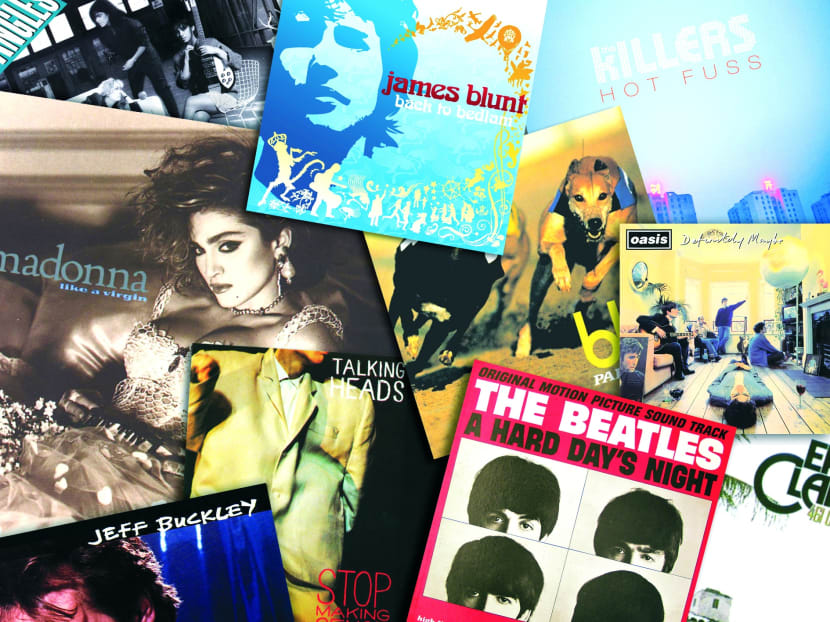
But 1964 belonged to one band from Liverpool. Can anyone say Beatles? That was the year The Beatles took the top five positions on the United States’ singles charts; appeared in their debut movie, A Hard Day’s Night; and had five albums released on both sides of the Atlantic - A Hard Day’s Night, Beatles For Sale, Meet The Beatles, Beatles 65 and Something New (seven, if you count the movie soundtrack by United Artists and the documentary album, The Beatles’ Story). But it was A Hard Day’s Night that really encapsulated what the swinging ’60s was all about. It was more than just a soundtrack for their movie, it was the soundtrack for the year. Filled with bright jangly pop songs (with a brace of ballads thrown in for good measure – And I Love Her, If I Fell), the album is the only one The Fab Four ever released that’s filled only with Lennon-McCartney compositions.
40 YEARS AGO: 1974
It seems like 1974 was quite a rockin’ year. Where do we start? How about alphabetically, with Bad Company’s eponymous album? Containing rock classics such as Ready For Love, Can’t Get Enough and Rock Steady, if there’s one Bad Company album you ought to own, this would be it. Then there’s David Bowie, who retired his Ziggy Stardust persona in 1973, and came up with Diamond Dogs, a concept album of sorts that incorporated shades of George Orwell’s 1984 — with glam-rock bent. Ziggy’s influence was still very much alive, as heard on the track, Rebel Rebel; and Bowie experimented with different styles, such as a song suite, Sweet Thing/Candidate/Sweet Thing (Reprise), and shades of what would be end up being his “plastic soul” phase.
1974 was also a pivotal year for Eric Clapton, who released 461 Ocean Boulevard, his “comeback” album of sorts. This was the first solo studio album after overcoming his heroin addiction. Given a demo tape by former Derek And The Dominoes bassist Carl Radle, Clapton was inspired to head back to the studio again. He formed a band and found himself in Florida — yes, in a house at 461 Ocean Boulevard — where they recorded among other tracks, a cover of Bob Marley’s I Shot The Sheriff. Interestingly, Clapton didn’t want to include that song on the album, as it had been released by Marley only the year before. However, the other members of the band persuaded him to leave it in. I Shot The Sheriff was eventually released as a single and became Clapton’s only chart-topper on the Billboard Hot 100.
Rockers Queen offered two albums that year, Queen II and Sheer Heart Attack. Although the former has since become a cult favourite, the sheer force of Sheer Heart Attack broke Queen into the mainstream. With songs like Killer Queen, Stone Cold Crazy and Now I’m Here, Queen built on what would eventually become their trademark — albeit a very fluid and constantly evolving trademark — sound: Multi-layered overdubs, vocal harmonies and varied musical styles.
And let’s not forget alternative favourite Big Star’s Radio City. Though not a commercial success at the time, it has since been hailed a milestone album in the history of power pop music. The album included September Gurls and Back Of A Car, which remain among the most famous Big Star songs.Radio City has grown since its release, with many critics and listeners positing that it is not only the definitive power-pop album but one of the finest rock-music albums.
30 YEARS AGO: 1984
If there was one phrase that could describe the music of 1984, it would be “all over the place”. From New Wave to synth-pop to metal to soul-funk to good ol’ hard-edged rock, 1984 saw a proliferation of music that was hard to beat.
Incidentally, All Over The Place also happens to be the title of The Bangles’ debut album. The band — sister s Vicki and Debbie Peterson, Susanna Hoffs and Michael Steele — had already gained success being part of Los Angeles’ Paisley Underground scene but they really took off with this album. The album featured a lovely blend of Beatles/Beach Boys/Byrds/Big Star musical sensibilities, heard on songs like Hero Takes A Fall, Going Down To Liverpool and Dover Beach, quite possibly the best track on the album. All Over The Place captured The Bangles ’ ’60s-influenced roots as well as paved the way for the band’s future.
The Bangles also had a fan in Prince, who contributed Manic Monday to their next album. However, in 1984, Prince, together with his band, The Revolution, scored the biggest hit of the year with Purple Rain. The soundtrack for the film of the same name, the album was propelled by its soaring eight-minute ballad of a title track (complete with a blitzing guitar solo), as well as beat-driven funked-up numbers like When Doves Cry and Let’s Go Crazy. Despite its short tracklist — there are only nine songs — the album went on to become one of the biggest albums of all time.
Dance-pop diva-dom was truly born with Madonna’s Like A Virgin. Fuelled by singles Material Girl, Angel, Dress You Up and the title track, this sophomore effort by Madge had the word “mega-hit” written all over it, and, thanks to the accompanying music videos, turned Madonna into a fashion icon as well.
Rockers Van Halen and Scorpions showed that hard rock wasn’t going to roll over in the face of new musical trends. Scorpions struck with Love At First Sting, noted for two of the band’s biggest hits ever — Rock You Like A Hurricane and Still Loving You. Van Halen put out 1984, the final album with all four original members, which proffered singles like Hot For Teacher (with its racy music video) and the punchy No 1 single, Jump, which features one of Eddie Van Halen’s most recognisable keyboard riffs ever.
Working class hero Bruce Springsteen also scored with his effort, Born In The USA, which looked at shades of American life. Almost every song is a veritable gem — Glory Days, I’m Going Down, Downbound Train, No Surrender, I’m On Fire — but the two songs that bagged headlines were the pop ditty, Dancing In The Dark, noted for featuring a then-unknown Courtney Cox in the music video and being his biggest hit to date; and the crunching title track, which is often misinterpreted to be a passionate nationalistic anthem. Across the Atlantic, working class Irish rockers U2 were discovering a new sound. The Unforgettable Fire would mark a transition from the their familiar post-punk rock to atmospheric musical textures. Haunting tracks such as A Sort Of Homecoming and Bad — anchored by The Edge’s echo-drenched guitar and Mullen’s distinct percussive style — would signal the band’s new musical intentions, even as they churned out hard-hitting hits like Pride (In The Name Of Love).
The indie/alternative scene was picking up steam, with laudable efforts from the likes of The Smiths (Hatful Of Hollow), The Cure (The Top), Echo And The Bunnymen (Ocean Rain), Depeche Mode (Some Great Reward) and Nick Cave (From Her To Eternity), but the one album that stood out was Stop Making Sense by Talking Heads. Like Purple Rain, it was a soundtrack, but although the original release features only nine of the songs from the movie, many of them edited, Stop Making Sense still spent a whopping 118 weeks on the Billboard 200 chart. Make sense of that.
20 YEARS AGO: 1994
You could say that 1994 was the year where the alternative really became the mainstream. Weezer’s debut album had a happy-sad vibe, thanks to songs like Undone-The Sweater Song and Buddy Holly. Nine Inch Nails’ The Downward Spiral, a concept album that looked a man’s descent into his own psychosis, was led by the brutally lovely — but controversial, thanks to the disturbing music video — tune, Closer. At the same time, the American rock of that era, often termed “grunge”, was being fortified by the likes of Pearl Jam (Vitalogy), The Offspring (Smash), Soundgarden (Superunknown), Green Day (Dookie), Live (Throwing Copper), Stone Temple Pilots (Purple) and Alice In Chains (Jar Of Flies). Rap and hip-hop were also taking over the airwaves, with Beastie Boys and Nas leading the way. Curiously both released albums with the word “ill”: Nas had Illmatic, while Beastie Boys gave us Ill Communication.
The terms “emo” and “Britpop” became buzzwords. The first is wonderfully captured in Jeff Buckley’s Grace. The only complete studio album by Buckley, it initially had poor sales (peaking at No 149 in the US), but it gradually acquired critical and popular acclaim, and often lands in many “best album” lists. (It was announced in April this year that Buckley’s performance of Leonard Cohen’s Hallelujah would be inducted into the Library of Congress’s National Recording Registry in America.)
Britpop began with two of the coolest albums that year: Parklife by Blur and Definitely Maybe by Oasis. The incredibly perky Blur album, bearing shades of the Madchester scene (heard in songs like Girls & Boys, End Of A Century and Parklife) stands in stark contrast with the gritty Oasis offering – featuring tracks such as Cigarettes & Alcohol, Rock ‘n’ Roll Star and Shakermaker — but both are gleaming examples all the same.
10 YEARS AGO: 2004
Two things marked the music scene of 2004: Pumpy indie-style music that fused pop and dance elements, and emo-ridden heart-on-sleeve offerings by singer-songwriters. Nothing captured the former more than The Killers’ Hot Fuss. Songs like Mr Brightside, Somebody Told Me and All The Things I’ve Done were brilliant examples of how Brendan Flowers and gang made party-pop work: Blend the percolating style of Blur 10 years earlier, combined with a touch of the edge that Oasis brought. Other bands would try that formula to varying degrees of success — Franz Ferdinand, The Libertines, Kasabian — but Hot Fuss was head and shoulders above the rest.
Meanwhile, solo singer-songwriters were giving bands a run for their money with their heartfelt tunes that spanned the genres, whether it was the gritty A Grand Don’t Come For Free by The Streets or the decidedly poppy The Sound Of White by Missy Higgins. But one man managed to capture that whole vibe with one song: You’re Beautiful. Off his Back To Bedlam album, ex-soldier James Blunt took the world by storm with his lilting voice and musical narrative of not being able to be with the one you want. Despite its downbeat take, this sort of self-reflection attitude would continue to dominate much of the output for many singer-songwriters to come.
Stay in the know. Anytime. Anywhere.

Subscribe to our newsletter for the top features, insights and must reads delivered straight to your inbox.
By clicking subscribe, I agree for my personal data to be used to send me TODAY newsletters, promotional offers and for research and analysis.






