
TV50 Special: Raising The Singapore Star
Celebrities. They’re just like us, only taller, thinner and more beautiful. They are who we could be if we dared to get up off the couch and chase our dreams. But how can we turn off the TV when those celebrities look so darn good?
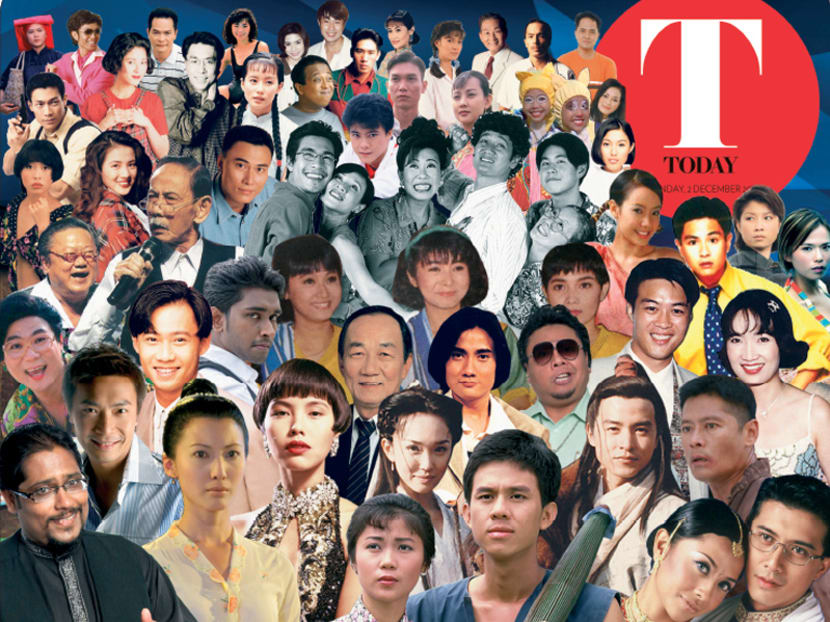
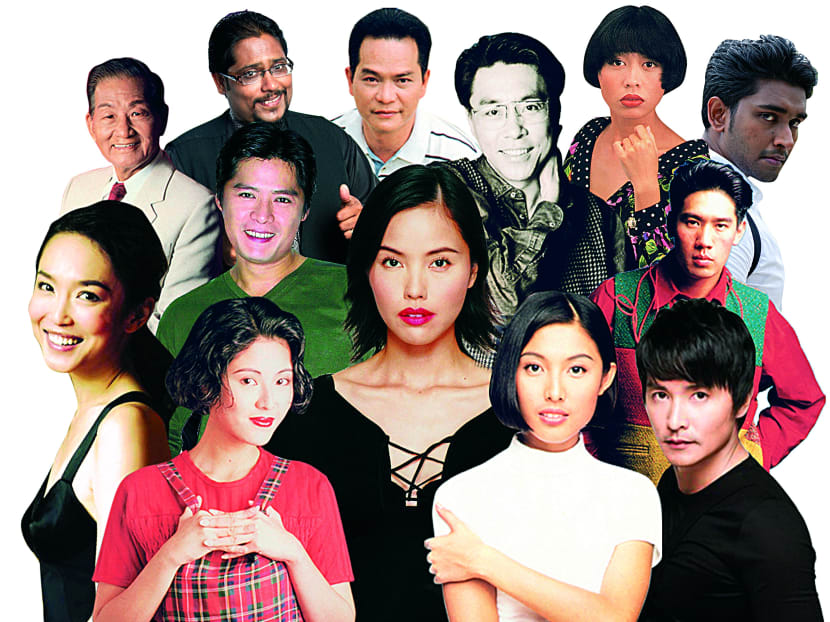



Celebrities. They’re just like us, only taller, thinner and more beautiful. They are who we could be if we dared to get up off the couch and chase our dreams. But how can we turn off the TV when those celebrities look so darn good?
Television has been the most powerful star-making machine since it arrived in Singapore in 1963 and beamed Wang Sha and Ye Fung, Rahimah Rahim and Zoe Tay, among a host of larger-than-life local personalities, directly into our homes to follow, discuss and bond over.
“Only home-grown celebrities can make shows about us — for example, The Awakening, Phua Chu Kang, The Little Nyonya and The Noose — relatable and believable,” said MediaCorp Deputy CEO Chang Long Jong.
Playwright and former magazine editor Michael Chiang thinks valuing home-grown stars can only be a positive thing. “Up until the early ’80s, it was all the Hong Kong stars — your Carol Chengs — that people were going gaga over. The minute they came to perform, they sold out and people crowded around their hotels. We’d think, ‘Our stars are just as good, but maybe we don’t have that celebrity culture’. After the late ’80s, that picked up.”
And that has been more than welcome. “For me, it’s about valuing talent, whether it’s a songwriter, an actress or a musician,” said Chiang, “and recognising that we are just as good.”
CHAPTER 1: THE NAME WITH THE FAME
They say that stars are born, not made — but local celebrity culture certainly didn’t sprout overnight.
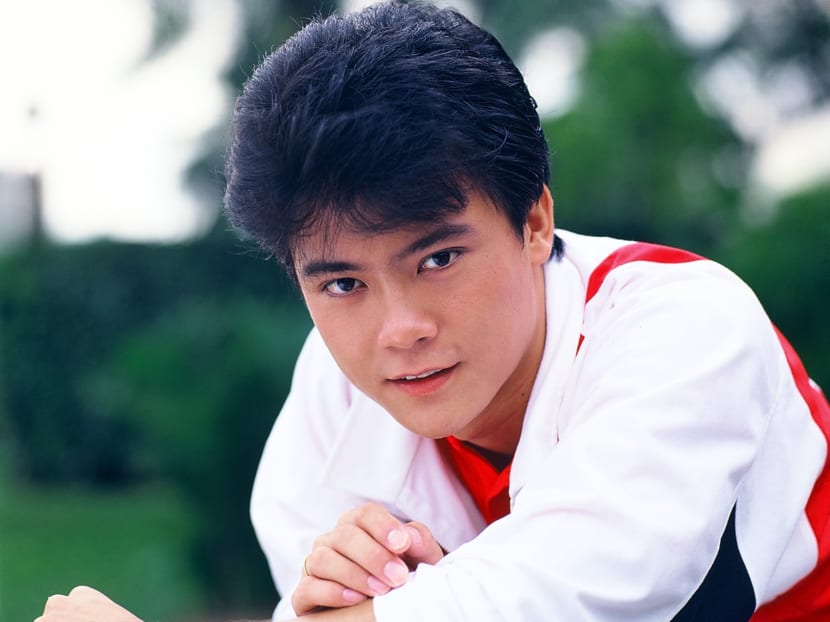
Chances are your mum or aunt will admit to having had a bit of a crush on Wang Yu Qing — you can admire his handsome 1980s mug blown up at 50 Years Of TV: Experience The Magic, the exhibition (until Dec 21) marking television’s golden anniversary at the National Museum Of Singapore — way back when they were in pigtails and pinafores. Yes, Wang plays fatherly roles now, but back in the ’80s, he was one of the first of his local TV brethren to make teenaged girls’ hearts throb when he stretched out by the pool in nothing but a Speedo in the drama Flying Fish. And you thought folks were more conservative back then.
Sure, there were celebrities before we started making our own drama on television. But there is a difference between simply being famous and being a star. “If we trace it all the way back to black and white TV, artistes like Wang Sha and Ye Fung, and singers from the earlier eras like Lin Zhu Jun, were idols in their own right,” said Chang, who has been with MediaCorp for 28 years. “In terms of TV creating local celebrities with huge followings, that would have to be through the success of local dramas. The first generation of celebrities like Xiang Yun, the late Huang Wen Yong and Wang Yu Qing became household names after starring in the high-profile, popular dramas of the 1980s.”
For example, said MediaCorp consultant Andrew Cheng, who has been the head of Production Resource and of Artiste Management during his 32 years with the company, “The Awakening launched the popularity of Huang Wen Yong and Xiang Yun — we always refer to them as the first generation of Ah Ge and Ah Jie (aka the King and Queen of Caldecott).”
Looking back on those days, Xiang Yun recalled, life was much simpler. “I didn’t feel like an idol,” she said, in spite of the crowds that seem to trail her every move. “There were a lot of people everywhere I went,” she said. “I had no idea I was popular — except when Wen Yong would tell me, ‘Xiang Yun, we are really very famous.’”
Fans showed their devotion by sending fan mail. “If I got letters from students, I would encourage them to spend more time studying. Some are quite successful now,” said Xiang Yun. “Recently, a fan posted on Facebook a letter that I had written in reply years ago. I laughed when I saw it. The letter simply asked: ‘How are you?’ The fan had blurred my name and posted: ‘Guess which actress wrote me this letter?’”
These days, she laughed, young fans approach her on behalf of their mothers. “I think it’s funny — they are so filial!”
CHAPTER 2: A STAR IS BORN
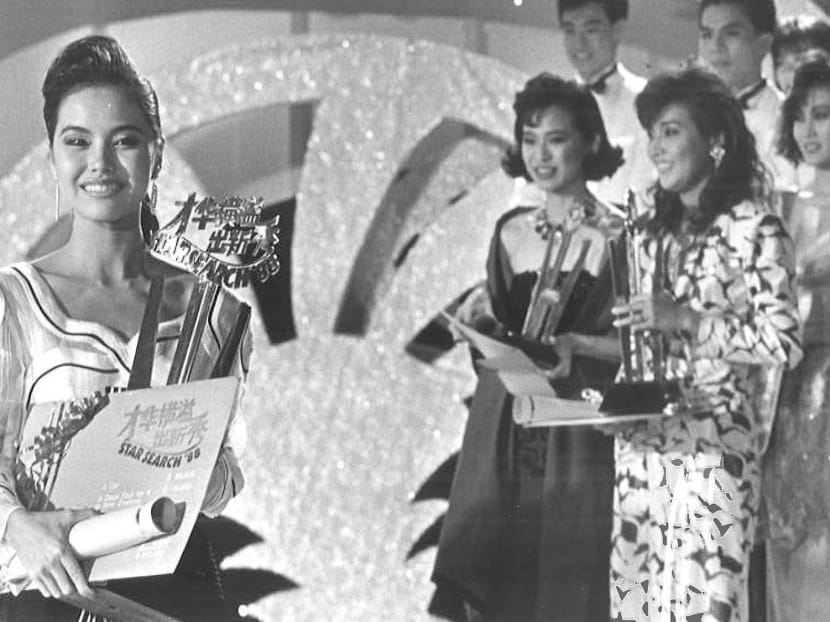
It was in 1988 that an official star-making event was created: The very first Star Search talent competition which, of course, produced local television’s brightest star even to date: Zoe Tay. “Star Search was a good way to discover new talents,” said Chang Long Jong. “Before that, artistes were recruited mainly through Artiste Training Courses.” In subsequent years, Star Search unearthed talents like Chew Chor Meng, Ivy Lee, Ann Kok, Christopher Lee and Qi Yuwu.
The first Star Search was a lavish event for its time. “To create the high impact we wanted and to attract the best talents, we got a sponsor for a car (as part of the top prize),” Chang said. This meant a top haul of S$100,000 in cash and prizes which, he pointed out, was a lot of money in those days.
That said, there was a considerable sign-up fee of S$25, recalled Aileen Tan, who was a 21-year-old beauty pageant organiser before she clinched the first runner-up prize at that inaugural show.
“There was only one round (of competition) — no dancing and singing like there is now. (It) was simple and straightforward: We just had to act out a modern role and a period role, after a lot of rehearsals.”
“It was amazing how the contestants were transformed through the competition,” said Chang. “I remember Zoe’s first audition. She looked plain and unimpressive in her nondescript, unglamorous clothes. But once she was on camera, she looked totally transformed. She oozed so much charm and screen presence. The judges knew they had just witnessed a star in the making.”
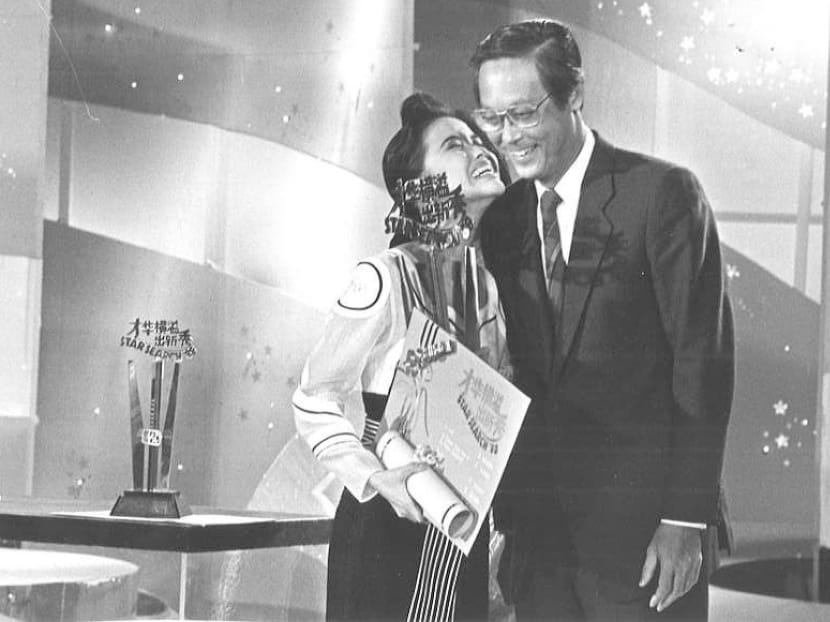
So did then-Deputy Prime Minister Goh Chok Tong, who was the recipient of the famous celebratory kiss from Tay when he presented her with the award.
Thereafter, Tan recounted, they each signed a three-year contract. And the station was serious about grooming its new stars. “They wrote a script for the first batch of Star Search — not only for the top three winners but for all the finalists — called My Fair Ladies.”
Tay, Tan and second runner-up Jazreel Low immediately got the stamp of approval from veteran actor Chen Shu Cheng, who has been acting on television since 1971. “I felt they were all good because they started out as models — they had expressive body language and they were not camera-shy. They were pretty and they walked with style,” he said.
“Of course, Zoe is still the Queen of Caldecott,” Tan smiled, “But I’m not complaining, because I’m quite content with what I have.”
CHAPTER 3: HITTING THE RIGHT NOTES
Zoe Tay, said MediaCorp’s Andrew Cheng, was the first television idol with a strong following from audiences and massive interest from the media. And on the back of her breakout drama Pretty Faces, “Zoe was the daily talk of the town”.
There was even more talk when she became a Lux girl. “It was Lux’s first engagement of a local celebrity to endorse their product,” said Cheng, of the global beauty brand. “It was big news.”
Although Ah Jie status is only achieved through hard work, it is also about being in the right place at the right time, said Chen Shu Cheng. “Opportunities are given to you and it’s up to you to make the most of them.”
Michael Chiang agreed. “With the right project, the right vehicle, the right timing — literally, overnight, you could take off,” he said, citing the example of James Lye shooting to fame because of the crime-drama Triple 9. “You need a big show that people talk about and remember you for.”
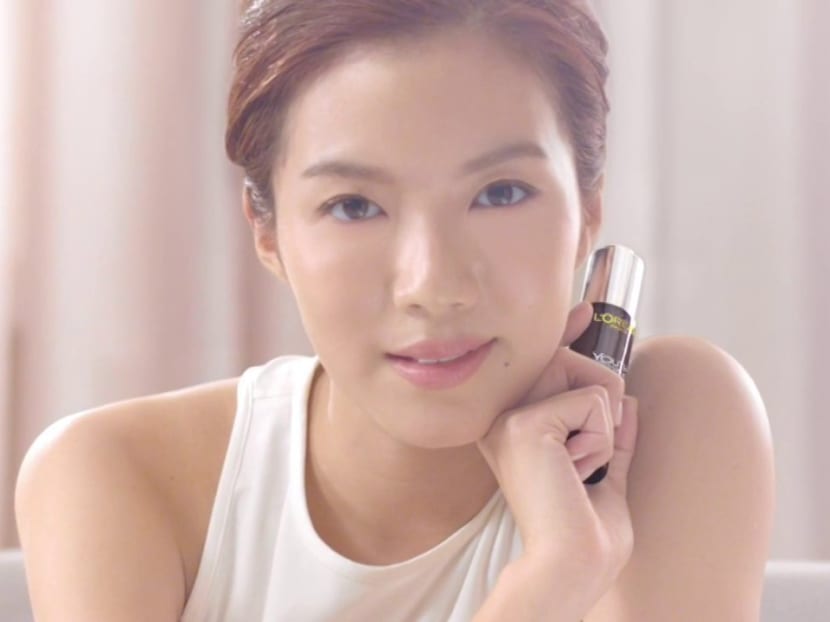
“Even the endorsements matter — whether you’re seen to be endorsing the right products,” Chiang continued. “Like Rui En’s L’Oreal endorsement. It’s a premium brand, so you associate her with things you aspire towards. You think, ‘Gong Li — also (with) L’Oreal.’ I think endorsements are quite critical. They also determine how you are perceived and how long you will be in the business … If you have a global brand, it shows they recognise that you are quite a talent.”
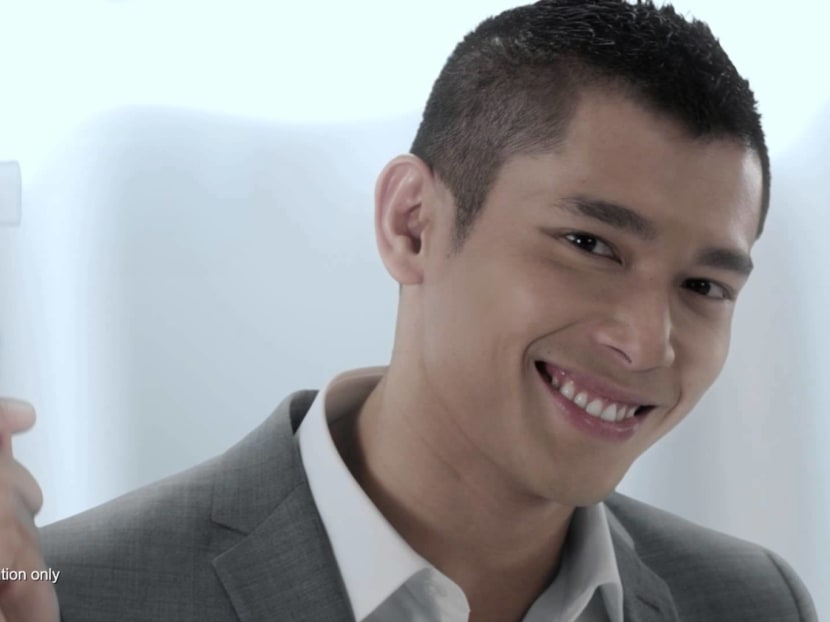
Other celebrity endorsements through the years have included Chen Han Wei and Yvonne Lim for Omega; Moses Lim for Osim, Sharp and Cornell; Joanne Peh for Panasonic; Jeanette Aw for Olay; and Elvin Ng for Mercedes, Systema and Shokubutsu.
Ng, commented i-Weekly Editor-in-Chief Jackie Liu, “is popular for endorsements because of his image: Sunny, healthy, friendly, warm and boy-next-door. At the same time, he has star quality.”
It’s not just MediaCorp TV Channel 8 artistes that are inking deals. Over the years, Mastura Ahmad has spoken for Harvey Norman and Yun Nam Hair Care; Syirah Jusni for New York Skin Solutions; and Nurul Aini for London Weight Management, Crown Jewels and, most recently, Bulan Bahasa, a Malay language movement.
For Suhaimi Yusof, who started out as a radio DJ in 1991 and debuted on the former Prime 12 a year later in a Hari Raya show, endorsements contribute to about 30 per cent of his income. Over the years, he has spoken for Courts, Sakunthala’s Restaurant, OWS Performance Oil and 4Life Transfer Factor. Suhaimi began his career as a host with the programme Potret Keluarga (Family Portrait) but, in 2001, turned to acting in MediaCorp Channel 5’s Living With Lydia. Thereafter, of course, there was Police And Thief and The Noose.
Crucially, a brand ambassador must connect with his audience. Doctor Doors Gallery/Combi Door chose Bryan Wong as its spokesman because of his strong work in the series Home Decor Survivor. “And he’s very well known, so we hope that he will bring us more business,” said its Director Kenneth Wong.
Even fictitious contractors with dubious hair can land endorsements. Phua Chu Kang and his wife Rosie have been ambassadors for McQuay air-conditioners and Courts, rapped on the MRT for the Singapore Kindness Movement and against the SARS virus, and nearly everything else in between.
Once the artistes’ popularity is cemented, they can even be marketed overseas. In the late ’80s and early ’90s, said MediaCorp Deputy CEO Chang Long Jong, the first generation of celebrities became popular in markets like Malaysia and China because their dramas were consumed there.
“Moving into the mid-1990s, celebrities who were multi-talented — for example, who could act, sing, dance and host — had the advantage of being packaged and marketed better overseas,” Chang continued. “Fann Wong was one of those who became popular and successful through her dramas, albums and promotional activities.
“There are also celebrities who continue to grow their popularity overseas, mainly through the dramas and co-productions they act in — for example, artistes like Zoe Tay, Li Nanxing and, more recently, Tay Ping Hui, Joanne Peh, Jeanette Aw, Rui En and Qi Yuwu. A phenomenal success story in our English productions is Gurmit Singh’s PCK character — the popularity of the sitcom and the character was unsurpassed in Malaysia.” Not to mention, of course, Under One Roof, which was picked up in Malaysia, Taiwan, Australia and Canada; and Singapore’s most celebrated export to Malaysia: Movie star Aaron Aziz.
CHAPTER 4: COVER GIRLS AND BOYS
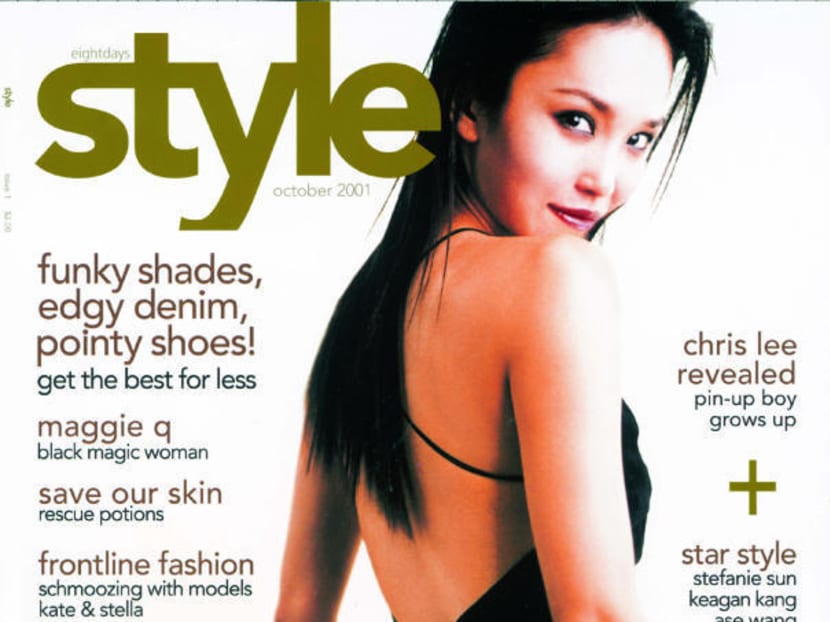
Glossy celeb faces grace the covers of nearly every magazine on the newsstand today but, according to Michael Chiang, the celebrity glam factor really kicked in when magazines ditched the ubiquitous models in favour of putting local TV stars on the cover — something he did as Editor of the now-defunct Go magazine.
“In a way, we pioneered the celebrity cult,” Chiang opined. Before that move: “They were all seen as drama artistes — salaried cast contracted to appear in shows. They were household names, but nobody treated them as stars. People like Xiang Yun and Huang Wen Yong had a following but it was just people wanting to meet them. They were photographed on set but they weren’t taken out to be styled and photographed by commercial photographers. Nobody thought of doing that.”
He continued: “When I went over to re-launch Go magazine, I did something most people didn’t expect. The tradition had always been models on the cover, but not personalities. I picked three top stars — Zheng Wanling, Zeng Hui Fen and Chen Xiu Huan — and put them in designer clothes and shot them for the cover. We were the first English magazine to glamorise the MediaCorp Channel 8 artistes. It started out as an experiment: What if we put them in Italian designer clothes and made them look like celebrities? It was a complete sell-out. We tripled the print run and we sold out.”
A few years later, when he fashioned the Radio and TV Times into 8 Days and i-Weekly in 1990, Chiang said, he picked up where he’d left off. “We hired photographers like Wee Khim and Russel (Wong) to start shooting Zoe and Fann. It just elevated them.”
Fann Wong, said her children’s drama training course classmate Bryan Wong, benefitted tremendously from the added exposure. “She was very quiet and that was why she didn’t get any roles. She was a late bloomer,” he said. “She started blooming when she was 16, after magazine shoots and stuff like that. She used to be so quiet, she disappeared into a corner. I didn’t choose to ignore her — she sort of blended really well into the wall then. But, of course, later, she outshone all of us.”
That led to what i-Weekly Editor Jackie Liu calls “the most exciting period in local celebrity”.
“The culture of following ‘idols’ started to grow locally,” he explained. “Fann and Zoe had the first fan clubs. The fans were very active and would hold up banners for their idols at events. The Star Awards was the main event that allowed the fans a chance to get close to them.”
CHAPTER 5: I WOULD LIKE TO THANK…
The first Star Awards in 1994, in MediaCorp consultant Andrew Cheng’s opinion, had glamour and an impact that was “no less than the Hollywood scene”.
“In order to make it the best it could be, the dress rehearsal lasted until 2am, and there were costume changes being made up until the night before,” he recounted. After all, Li Nanxing and Chen Liping had to look their best when they received their Best Actor and Actress awards.
Since then, it’s only gotten bigger and better, with more award categories, more high-tech voting systems, and even more hairspray. And it’s not just about whether you impress some judges — it’s also about how many people love you.
Of course, the popularity game is a capricious one, as Bryan Wong knows all too well.
After joining the cast of City Beat, a newspaper named him Most Disliked Artiste. “I’m not politically correct, and when I played characters in City Beat, I knew I was really over the top and silly. Apparently, that didn’t sit well with the audience because I was a black sheep — I was not the standard, well-behaved presenter they were used to seeing,” Wong said.
He was so dejected that he typed his resignation letter — but his boss at the time, Man Shu Sum, didn’t even look at it. “He insisted that I should stick around and not give up.”
Four years later, in 1998, the first year that variety show hosts were eligible for the Top 10 Most Popular award, Wong received a trophy. “The first thing I did was to run to Mr Man and hug him. No artiste goes and hugs the boss,” he said.
If you ask Ivy Low, head of the Artiste Management Unit, the Star Awards is more than just an awards show — it’s “an important star-making mechanism”.
“It combines industry validation, audience votes and fan support. It gives recognition to artistes for their craft and gives young talents a goal to reach for,” said Low. “In my opinion, it covers the three key aspects of an artiste’s success: Production success, where the audience appreciates your craft and directors love to cast you; commercial success, like celebrity endorsements, where the bulk of the money is made; and character success.”
Measuring one’s character isn’t always easy, but maybe it comes down to whether audiences want to let you stick around. “Respected veterans with staying power speak for themselves,” said Low. “In my opinion, if you intend to be in this industry for the long haul, besides talent and opportunity, tenacity, humility and graciousness go a long way.
“Look at Xiang Yun, Chow Yun Fatt and Ang Lee. I hope my artistes can be truly successful in all three areas — then, I would be proud of them.”
Stay in the know. Anytime. Anywhere.

Subscribe to our newsletter for the top features, insights and must reads delivered straight to your inbox.
By clicking subscribe, I agree for my personal data to be used to send me TODAY newsletters, promotional offers and for research and analysis.






