
Of Gaudi proportions
Visiting the church of the Sagrada Familia is an epic experience. Architect Antoni Gaudi’s unfinished masterpiece and Barcelona’s most famous landmark is at once the most ridiculous and majestic thing I have ever seen.
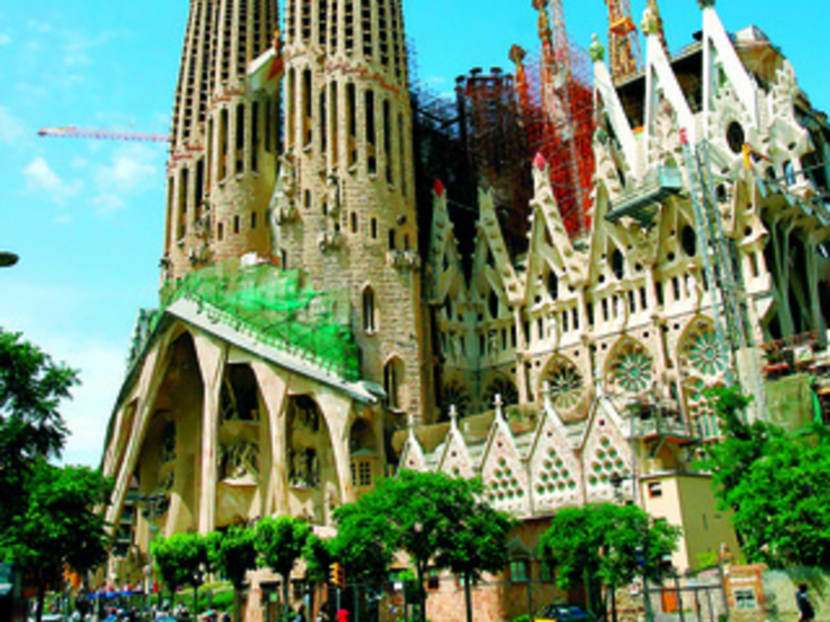
Visiting the church of the Sagrada Familia is an epic experience. Architect Antoni Gaudi’s unfinished masterpiece and Barcelona’s most famous landmark is at once the most ridiculous and majestic thing I have ever seen.
This mammoth building is just a metre shy of Montjuic — a 213m hill in Barcelona — as Gaudi believed that his creation should not surpass God’s.
The church strives to contain all of Christ’s birth, death and resurrection through biblical scenes on its facades, and spires meant to represent saints. Inside, sunbeams pierce its forest of columns and stained glass windows.
What’s jarring, though, are the cranes poking between the spires, rushing for its completion by 2026 — 140 years after construction started and a century after Gaudi died.
“My client is in no hurry,” Gaudi once said, referring to God.
Spiritual, or eccentric? That’s up to you to decide.
art in the city
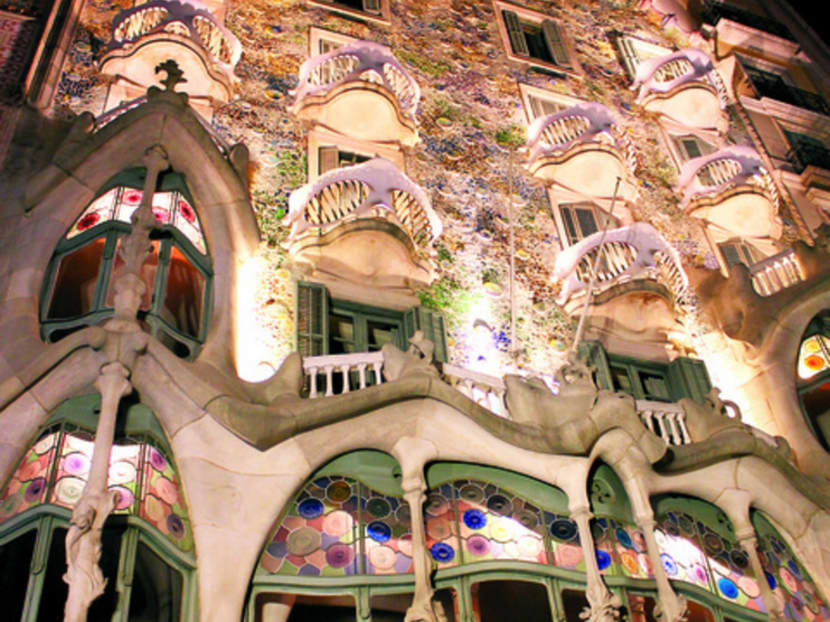
The Spanish architect’s wild modernista designs, and those of a similar flavour by his contemporaries, seem to lie in every corner of the city. The Manzana de la Discordia or Block of Discord along Passeig de Gracia, for example, is a block of three very contrasting buildings by Barcelona’s three Modernist artists.
Of the trio, Casa Amatller by Josep Puig i Cadafalch was completed the earliest, at the turn of the 20th century, and is my favourite. At first glance, it looks nothing more than monotonous tilework, but closer inspection reveals highly detailed ornamentation around its windows.
Next to it, Gaudi’s Casa Batllo tells the story of Catalonia’s patron saint, Saint George, slaying the dragon, thought to be represented by the facade’s scaly roof line.
The award-winning Casa Lleo Morera by architect Lluis Domenech i Montaner is likely the least crowded of the three, if you’re thinking of doing an interior tour.
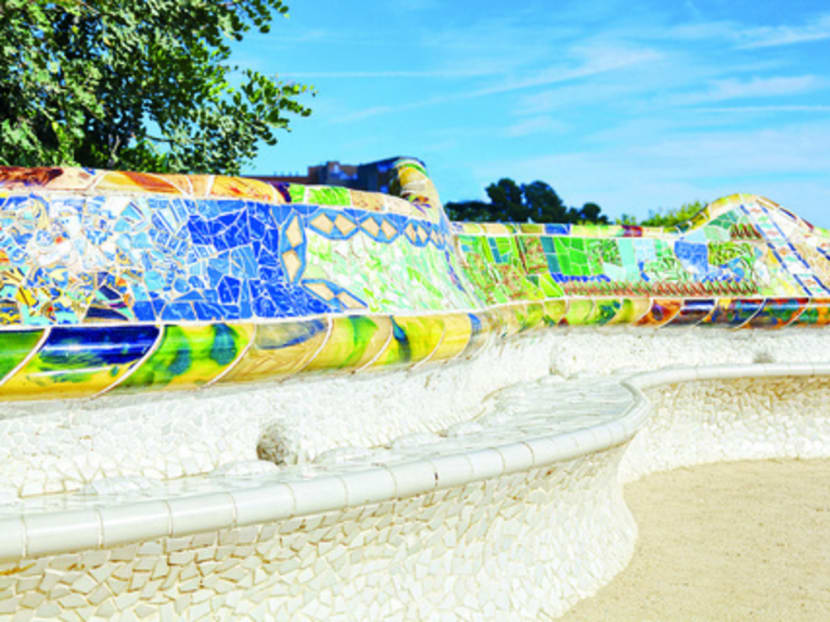
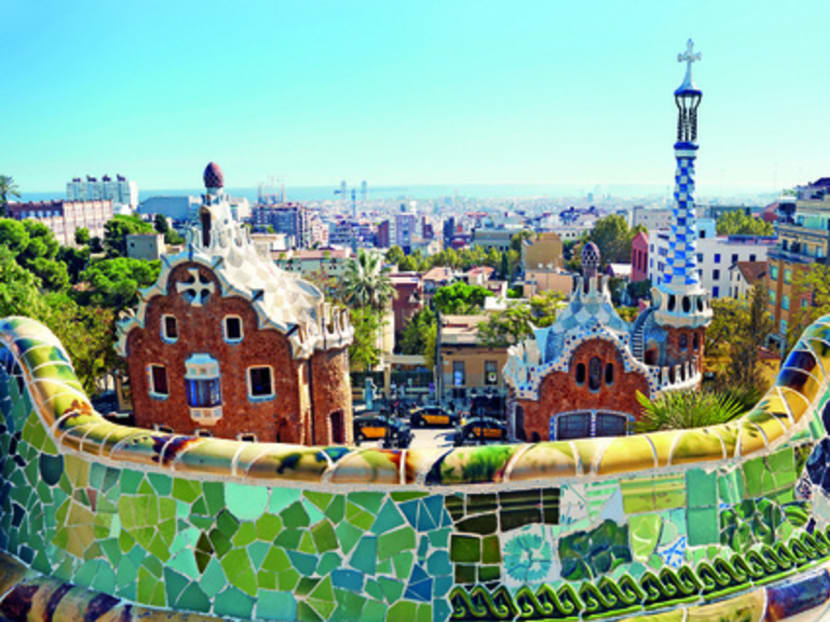
Park Guell is where Gaudi turned his hand to landscaping. Much of the park is still wooded, rendering it an interesting mix of nature and artificial.
The entrance is guarded by a mosaic dragon and its steps lead up to an open plaza — a great space for panoramic shots of the city or a glass of sangria. The houses are Hansel-and-Gretel styled, containing furniture by Gaudi, several of which were taken from other houses he had designed.
GREEN SPELLS TRANQUILity
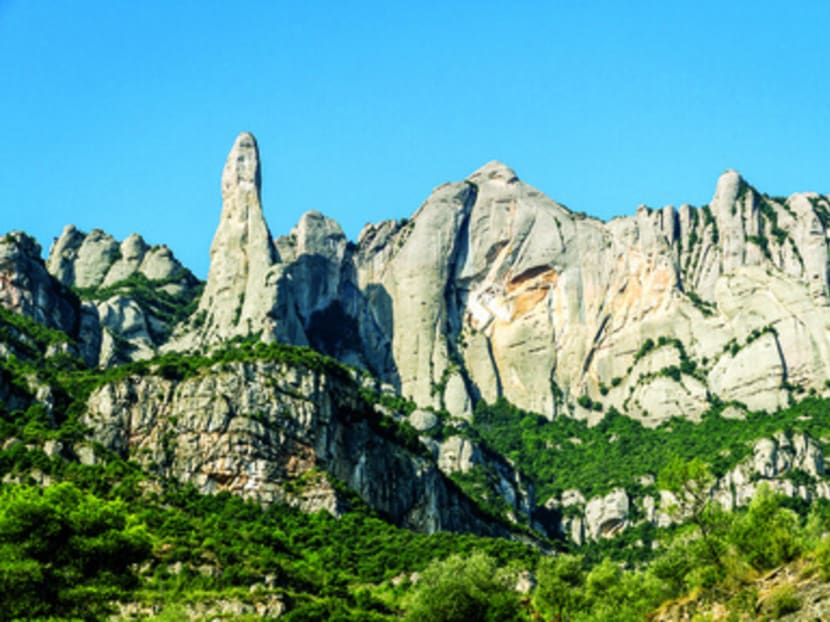
Hiking up Montserrat was another highlight of my trip. This multi-peaked mountain houses a Benedictine abbey, Santa Maria de Montserrat, and is usually reached by a cable car or rack railway.
Adamant to go up by foot despite being unable to find directions online and on guidebooks, I befriended a local who was equipped with hiking sticks at the base of the mountain.
Montserrat (who better to be a guide than one named after the mountain!) did not know English and I spoke no Spanish, but we managed to weave our way around the multitude of pretty pink sedimentary rock formations to reach Sant Jeroni (1,236m) in four hours.
I really liked the colourful candles inside Santa Cova Chapel. The abbey, though crowded with both pilgrims and tourists, offered an unusual tranquility — the kind marked by being on top of the world.
Stay in the know. Anytime. Anywhere.

Subscribe to our newsletter for the top features, insights and must reads delivered straight to your inbox.
By clicking subscribe, I agree for my personal data to be used to send me TODAY newsletters, promotional offers and for research and analysis.






