
The fastest man on Earth
On Oct 14, 1947, American pilot Chuck Yeager became the first person to break the sound barrier. Fifty years and a day later, Royal Air Force (RAF) pilot Andy Green became the first person to go supersonic in a car.
On Oct 14, 1947, American pilot Chuck Yeager became the first person to break the sound barrier. Fifty years and a day later, Royal Air Force (RAF) pilot Andy Green became the first person to go supersonic in a car.
Created by former World Land Speed Record (WLSR) holder Richard Noble, the Thrust Supersonic Car (SSC) was a 100,000bhp, 16m long, 10-tonne car powered by two jet engines from an F-4 Phantom II fighter.
At Nevada’s Black Rock Desert, Green did the two runs required by the FIA (International Automobile Federation), averaging 1,227.990kmh, or Mach 1.002, setting a record which still stands.
Sound, vision, fury
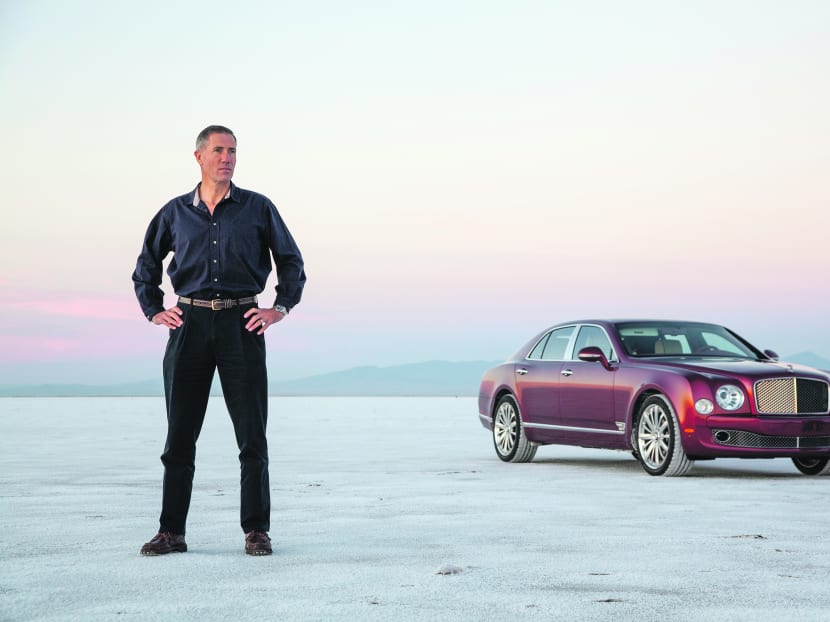
Green was in Singapore to talk about his involvement in Bentley’s new film series, which profiles individuals from different backgrounds ranging from FIA president Jean Todt to Hong Kong film star Jackie Chan.
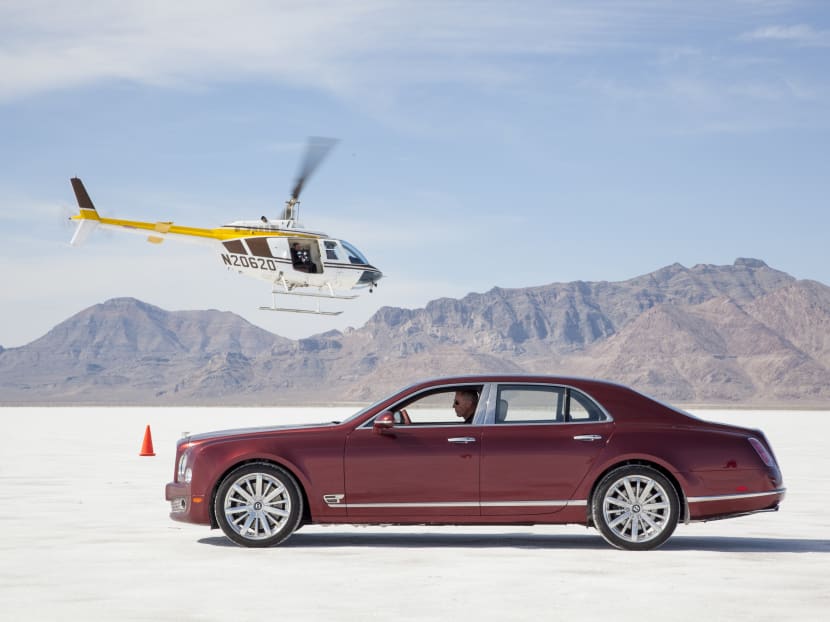
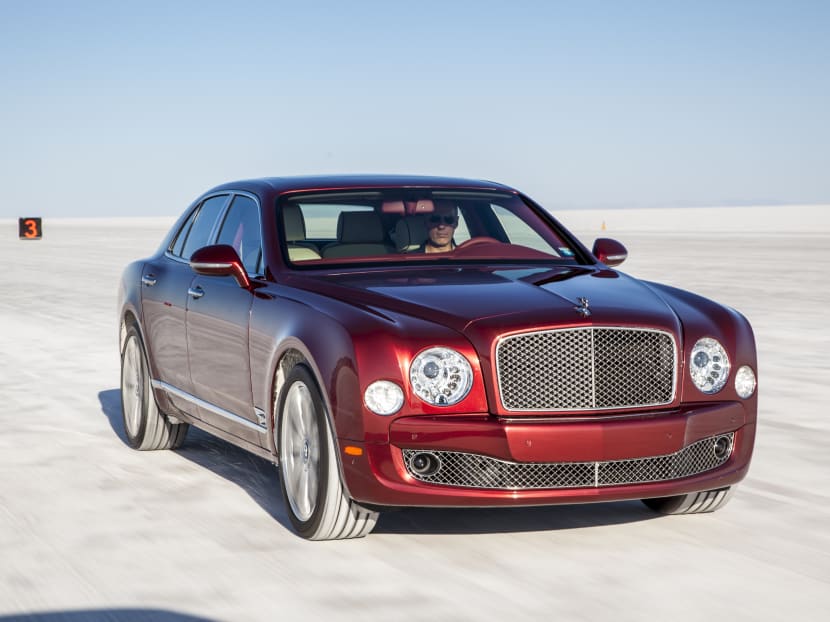
Given Green’s background, it’s no surprise he ended up doing what is possibly the world’s fastest interview: Pondering on speed and technology while driving a Bentley Mulsanne flat out at Bonneville Salt Flats, Utah, the spiritual home of the WLSR.
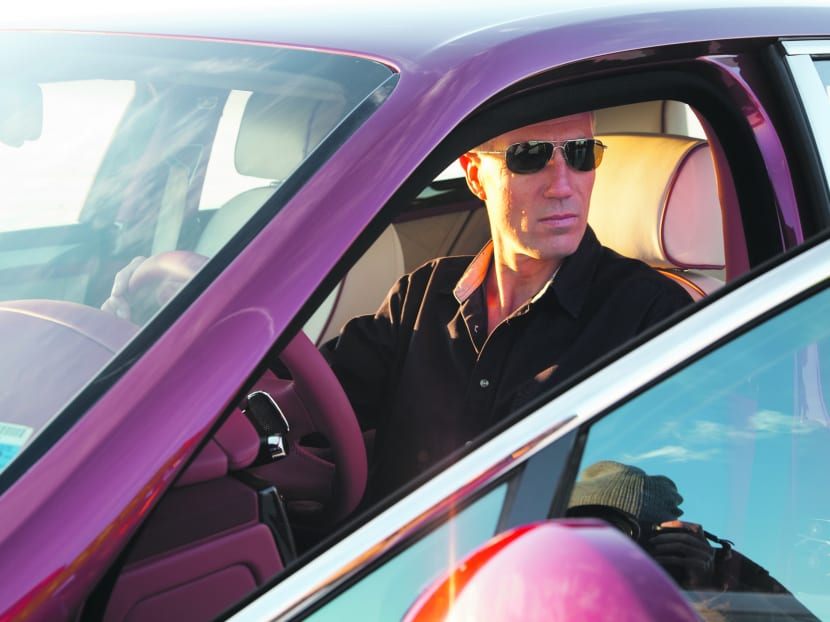
The 51-year-old is the classy epitome of British understatement. Despite a distinguished RAF career, a knighthood and an Oxford degree in Mathematics, he said: “I was initially nervous — because I had to think of something sensible to say! There was no script, and we were really just doing a question and answer session in the cockpit at 300kmh.”
Green did his run with a fully-loaded vehicle — there was a producer, director, cameraman and sound man in the car, in addition to aerodynamic disturbance from the chase helicopter.
Given the Mulsanne’s rock-solid performance at speed, he came away very impressed.
“Is it my favourite car? Yes, my favourite car for doing an interview at 300kmh! But I don’t think I could actually physically park it,” he laughed.
From here to there
The plush Mulsanne is a stark contrast to the record-breaking Thrust SSC he drove in 1997, which was hot, noisy and cramped. Sitting in the Nevada heat in a jet-powered, jet-black machine he describes the overwhelming sensations experienced as he broke the sound barrier.
“There are a lot of G forces, and one of the main challenges is fighting to keep the car straight as the conditions would change constantly — ground conditions, wind, car settings and so on.
“I couldn’t actually hear the jet engines, but the (supersonic) shockwave over the canopy was very, very loud. So: Noise, sound, heat, the physical workload, there was a lot going on in there and it was a physically and mentally challenging environment. But that’s fine, because that’s what I was trained to do,” he says, referring to his RAF career, where he flew F-4 Phantom and Tornado jets.
He describes the process of test runs (“Run No 1 to 40kmh on a runway all the way to run 66: Breaking the speed of sound”) as exploring safe parameters, of making “certain that we don’t exceed any limits, judging every single second, asking, ‘Is it still safe? Is it happening as we expected?’”
Fast and steady
Green describes himself as the antithesis of a speed freak. It’s not speed that motivates him, but the technical application of high-level skills.
It’s an approach linked to safe aviation — take all the known controllable risks and reduce them. It might not sound like the most glamorous approach, but it gets the job done. For that same reason, the world’s fastest man also likes to take it easy on a Harley-Davidson and, by his own admission, will “only take it out on days when it’s not raining”.
Noble, Green and team are going to do it all, and more, again with their current project, the 1,600kmh Bloodhound. With competition from American and Australian WLSR efforts, it’s not going to be easy, even if technology has come a long way since 1997.
Stay in the know. Anytime. Anywhere.

Subscribe to our newsletter for the top features, insights and must reads delivered straight to your inbox.
By clicking subscribe, I agree for my personal data to be used to send me TODAY newsletters, promotional offers and for research and analysis.






