
Forward Vision
TOKYO — When the Tokyo Motor Show ends tomorrow, nearly one million people will have filtered through its halls, glimpsing the future of the car as Japan’s manufacturers imagine it.
TOKYO — When the Tokyo Motor Show ends tomorrow, nearly one million people will have filtered through its halls, glimpsing the future of the car as Japan’s manufacturers imagine it.
Visitors will have seen hydrogen fuel cell cars from Honda and Toyota that predict a clean, carbon-emissions-free era ahead. Rival Nissan showcased the IDS Concept, an electric car that can drive itself while its occupants relax.
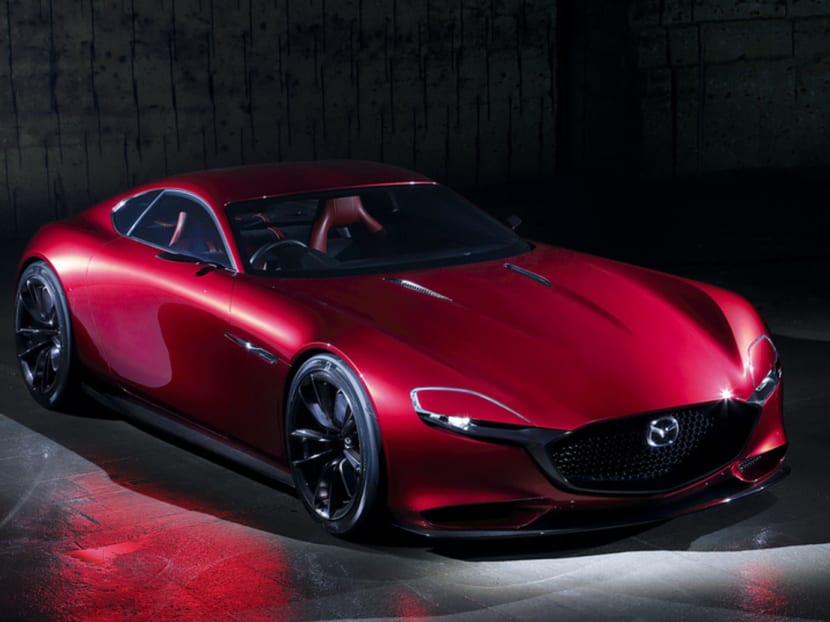
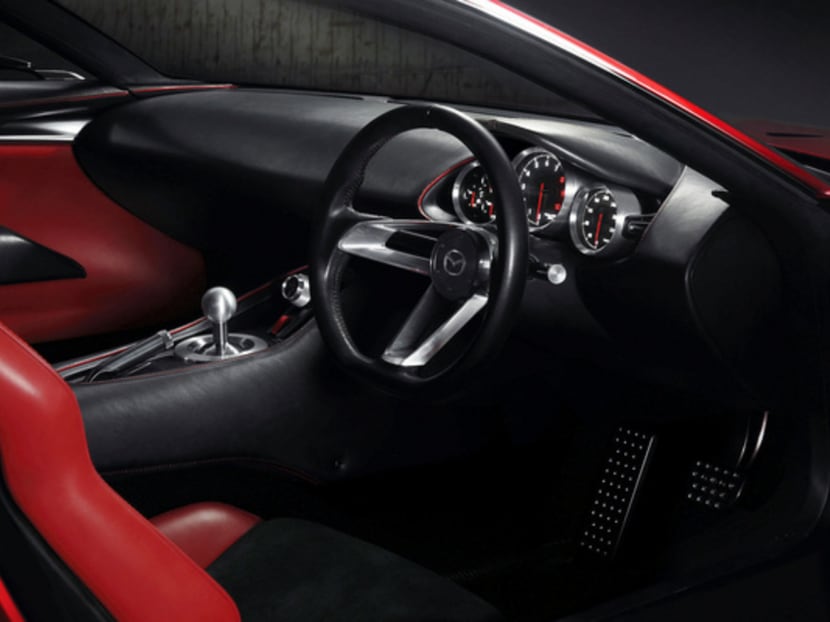
Mazda’s ode to the future at the show was the RX-VISION, a car so old-fashioned in its appeal that it almost feels like a throwback to an idea that other manufacturers seem to have forgotten: That a sexy two-seater coupe with a powerful petrol engine is what made people love cars in the first place.
Strictly speaking, the RX-VISION was only created to provide a hint of what Mazda’s next generation of cars will look like. Its smooth curves are meant to reflect light in a way that makes it look like an animal in motion.
A CONVENTIONAL FUTURE
But its designer, and the head of Mazda’s styling team, has high hopes that the RX-VISION will go from, well, vision to reality.
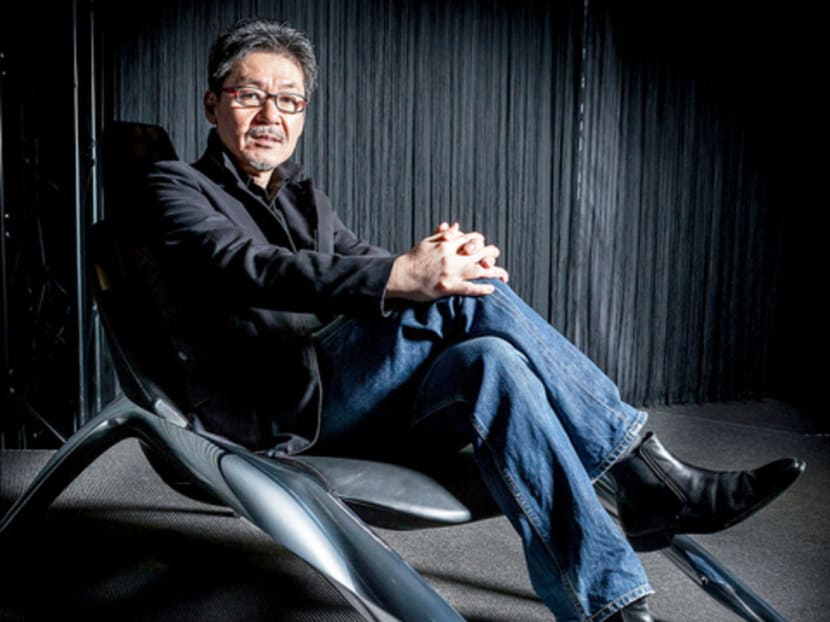
“My personal thought is that for Mazda’s brand, this kind of vehicle is absolutely essential, so it’s my desire that we can make this kind of car in the future,” said Ikuo Maeda.
Designing the RX-VISION was a dream come true for Maeda, and something of a birthright — as head of Mazda design in the 1970s, his father Matasaburo Maeda also designed an iconic coupe, the very first RX7.
Yet, the RX-VISION is more than the chance for a designer to indulge himself. It also showcases Mazda’s intention to build a new rotary engine, a compact kind of powerplant that tends to be smoother and more powerful than the piston engines that nearly all cars use.
ROTARY REVIVAL
Today’s stringent emissions standards have killed rotaries, so car manufacturers consider them a dead-end technology. But 50 engineers at Mazda have been working steadily on one, even though its last rotary-engined model was killed off in 2011.
It is an indulgence that the relatively small manufacturer can ill afford. With about 2 per cent of the world’s car market, Mazda sells fewer cars than BMW.
“There is never enough money (for development),” joked Kiyoshi Fujiwara, the head of Mazda’s R&D department. But rotary engines are so unique to Mazda that they are considered a part of its DNA, he says.
At times, the company’s five-decade-long fixation with rotary engines threatened to bankrupt it.
But Fujiwara says his team is on the verge of a breakthrough. On the test bench, Mazda’s new rotary engine, dubbed SkyActivR, is as clean and reliable as current piston engines. To prove that in the real world, Mazda will build running prototypes and test them for up to two years.
This is nearly three times as long as it takes to validate a regular piston engine, said Fujiwara, but it is important that Mazda gets SkyActivR right. When it is put into production, it will be a unique proposition in an increasingly homogenous engine landscape.
A different approach
Many car manufacturers have converged on four-cylinder turbocharged engines to power most of their products, while their research teams focus on alternative fuels and electric drive.
Mazda’s rotary breakthrough could provide a final hurrah for old-fashioned petrol power.
Indeed, at the Tokyo Motor Show, the RX-VISION was unveiled with a soundtrack that included the screaming wail of Mazda’s rotary powered racing cars, providing a tantalising hint of how exciting the SkyActivR engine could sound. After all, if you’re going to create one last hurrah for fossil-fuelled engines, you might as well make it a loud one.
Stay in the know. Anytime. Anywhere.

Subscribe to our newsletter for the top features, insights and must reads delivered straight to your inbox.
By clicking subscribe, I agree for my personal data to be used to send me TODAY newsletters, promotional offers and for research and analysis.






