
10 things you never thought you’d find at the wet market
SINGAPORE — Wet markets are not just about the cacophony, the colours, the smells and the haggling. Visit your neighbourhood wet market and you might notice that some of the stalls offer a remarkable variety of fresh produce beyond those harvested from neighbouring Malaysia or Thailand.
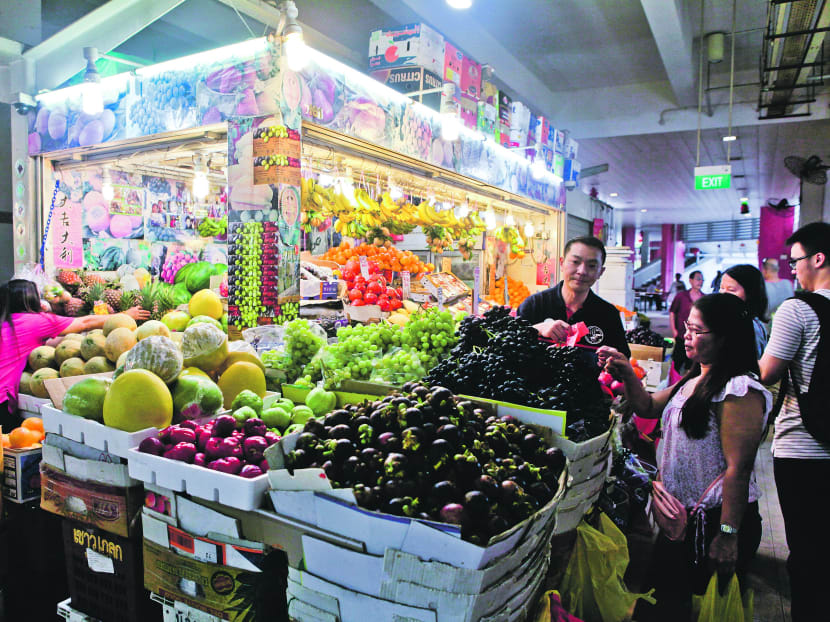
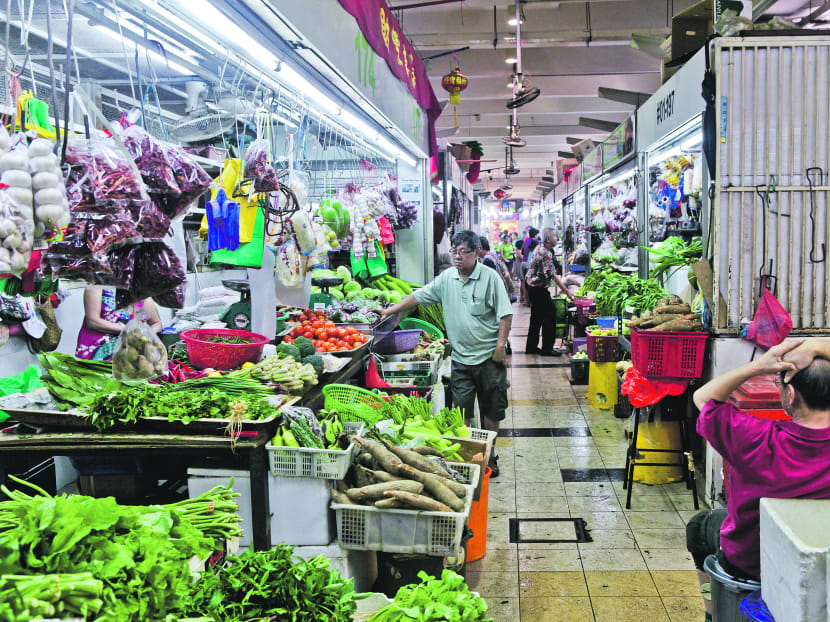
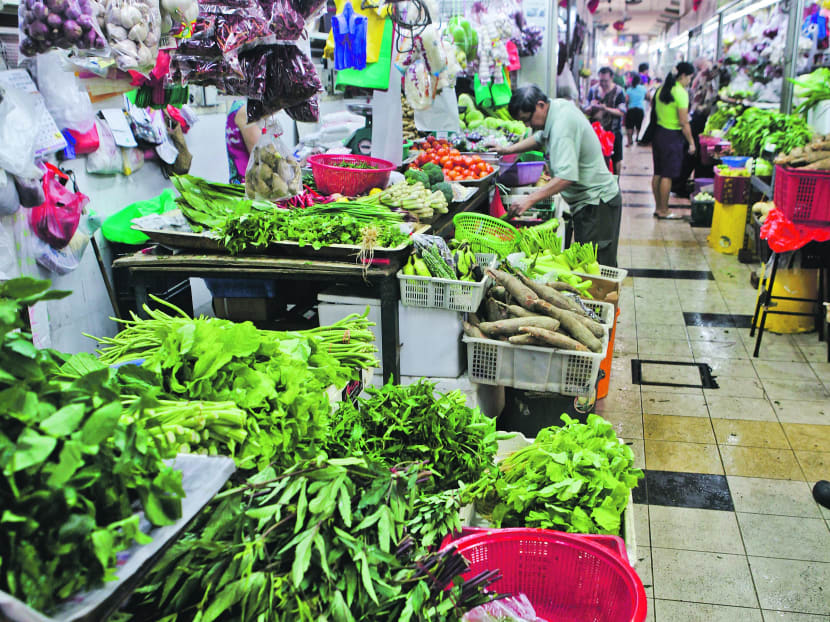
SINGAPORE — Wet markets are not just about the cacophony, the colours, the smells and the haggling. Visit your neighbourhood wet market and you might notice that some of the stalls offer a remarkable variety of fresh produce beyond those harvested from neighbouring Malaysia or Thailand.
Think bundles of wispy dill hanging above tightly packed endives, bouquets of kale sitting snugly next to bulbous fennels, and many other imported ingredients, some air-flown from as far as Ecuador and Spain.
With the gentrification of several of our neighbourhoods, our wet markets have also evolved. Thanks to the increase in the expat population on our shores, the demand for these products have picked up in the past few years. Our wet markets in town and the heartlands have been stocking up on gourmet produce to cater to this growing mix of shoppers, which include well-travelled locals.
Jimmy Chok, a private chef, said that he has seen this trend for some years now with “consumers getting more knowledgeable and requesting such produce”. “Some wet markets carry better stuff than supermarkets here,” he said. “You can get things like Swiss chard, Italian kale, really good vine-ripened tomatoes, arugula and endive nowadays. In fact, they are also cheaper and better quality as the stall-holders know how to handle these products.”
Saint Pierre’s Chef Emmanuel Stroobant has also noticed this change. “We now have access to a lot of items. There is rarely a time when I don’t see something new. I love the markets because of its versatility and I always bring visiting chefs to these places,” he said, adding that it is always great to buy fresh ingredients from people who actually know what they are selling. “There are a lot of younger stall owners who are bringing in quality imported products. You can ask them to bring something special next week and they will often find it for you. You will get fruits and vegetables that you have never seen before and they will share the origin of the product and its different uses.”
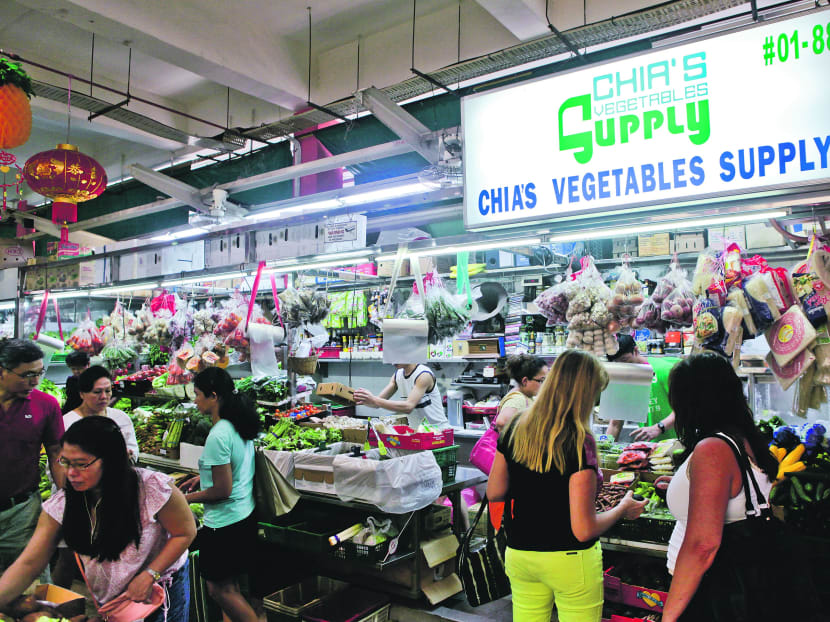
And where are these stalls? One of the best examples, said Chok, is Tekka Market’s popular Chia’s Vegetable Supply (unit 01-88), where Victor Chia and his brother are always on hand to fill you in on the very best imported fresh veggies. “Holland Village also has a stall that offers everything a Western kitchen would need and the stall-holder can even source for you. He also has organic produce,” he added.
Over at the popular Tiong Bahru Market, a host of organic vegetables (from Zenxin Organic in Malaysia) can also be found at stall 01-194/195. Said Tiong Bahru resident Raymond Lim, 35: “It is not uncommon to see legions of Japanese housewives who come to do marketing here. And with the arrival of more foreigners, the stall-holders also stock up items that these expats are after. On the downside, however, it also means prices have definitely headed north.”
Hui Qun, 34, who lives near Tekka Market, thinks that access to such a wide range of quality produce in Singapore is fortuitous. “Shoppers these days are savvier with what’s available. But I would say that our supermarkets and restaurants contributed to giving exposure and creating awareness of new produce and ingredients.”
Here are just some of the things you might be surprised to find at the wet market.
1. Purple carrots from New Zealand (Tekka Market)
We’ve seen mountains of orange carrots sold at vegetable stalls, but were surprised to find purple carrots at Chia’s Vegetable Supply. If you are planning to liven up your salads, try mixing this purple root veggie with corn and cabbage for a colourful coleslaw. Alternatively, roast them with some olive oil and thyme. The original purple carrots were cultivated in Afghanistan 5,000 years ago. The orange ones you see today weren’t available before the late 16th century. Dutch farmers crossed strains of the purple carrot to create this orange variety, which actually lacks the purple pigment, anthocyanin (an antioxidant compound found in superfoods like blueberries).
2. Pomegranates from Spain (Tekka Market/Tiong Bahru Market)
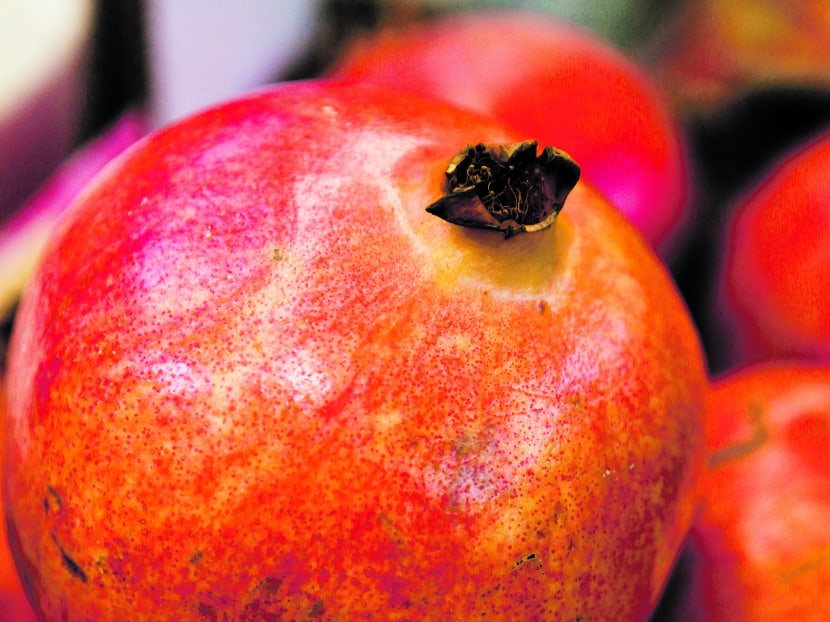
Larger than the smaller Asian variety, these pomegranates are harvested in eastern Spain in the Alicante region. Crack open the tough skin to find juicy deep red gems. You can also toss them in with salads and add them to desserts. Spanish pomegranates are usually available end of the year to February. One of the oldest cultivated fruits, they’re high in antioxidants and helpful in improving blood flow.
3. Belgian endives from Europe (Tekka Market)
The stall owner called out: “What do you want today? Kale? Brussels sprouts? Endive?” Discovered in Belgium in 1846, Belgian endive is a smallish cylindrical-shaped vegetable. It has tightly packed pale yellow leaves that are crunchy and slightly bitter. You can slice and mix them with apple, beetroot and vinaigrette; or braise or grill them. Those with green tips are a bit more bitter, so select the yellow or pale ones that are plump and firm.
4. Habanero from Mexico (Tekka Market)
Who could imagine that these famously hot peppers from Mexico would be available in a wet market here? It’s not your regular chilli padi — the small and squat Habanero is often recognised as the hottest pepper in the world. Those sold at Tekka market are orange, but there are red and yellow varieties too. Usually only around 3cm in length, these lantern-shaped peppers really pack a punch, so use them only in salsas and sauces. You can also roast them to enhance their fruity flavour.
5. Flathead lobster from Malaysia (Chinatown Complex Market)
You are more likely to see this shellfish with square-ish heads on TV when Masterchef contestants fiddle around with them. Although the seller at Chinatown Complex Market called it a “crayfish”, they’re really flathead lobsters (or Bay lobster or Moreton Bay bugs). The ones sold here are caught in small quantities off the shores of Malaysia and Singapore. The meat has a medium-to-strong flavour. When preparing, cut them length-wise down the centre. Poach, steam or grill them, and serve with a squeeze of lemon, aioli or vinaigrette.
6. Romanesco cauliflower from Europe (Marine Terrace Market/Chinatown Market)
Here’s something that will impress guests at the dinner table. Romanesco looks like something straight out of an art gallery. We were surprised to find this at a wet market — even some supermarkets don’t carry this peculiar-looking coral-like veggie. Said to have originated in Italy in the 16th century, it is a knobbly, light green species related to the cauliflower. Its flavour is mild, delicate and nutty, and its texture dense and crunchy. Its florets hold up well to various cooking methods. Try steaming to enjoy its natural flavour. Alternatively, blanch the florets, toss with olive oil, garlic and chilli, and then roast in the oven. When buying, look for heavy, firm, tightly closed heads without bruises. You can find them around October and November.
7. Fennel bulbs from Australia (Holland Village Market/Tekka Market)
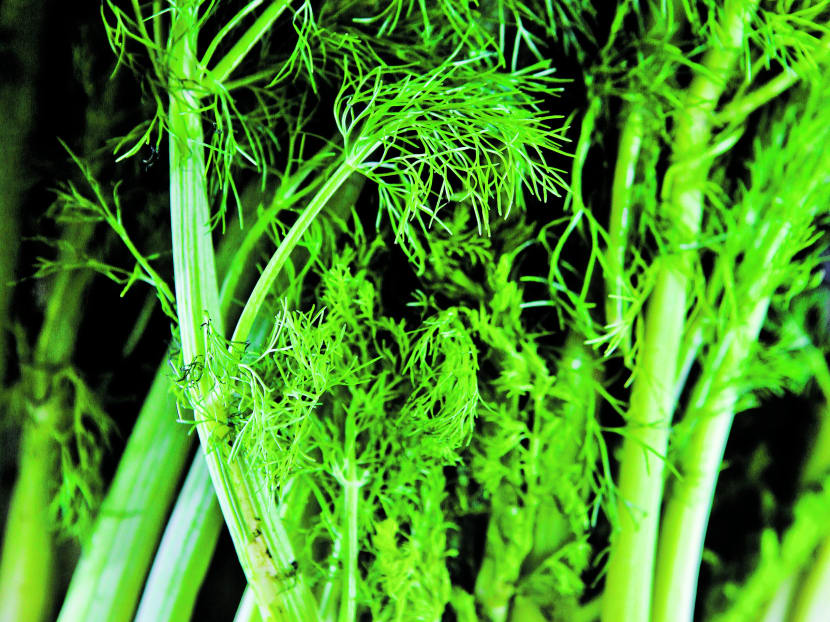
We spotted this bulbous pale green vegetable topped with green stalk and feathery green leaves at a couple of stalls that specialise in imported ingredients. The friendly stall-holder told us that sliced fennel is great for stir-frying. You can also shave the bulb and mix the crunchy pale green ribbons with oranges and avocadoes for a fresh salad. Look for those without blemishes or soft spots; and the wispy fronds should be green and fresh. The tough stalks are best for stocks and stews. This veggie has a mildly sweet anise and licorice flavour and is at its best from autumn to early spring.
8. Pink Himalayan Salt from Pakistan (Tiong Bahru Market)
Forget about your typical refined table salt; this pretty, rosy pink offering is considered healthier than the common variety because it is natural, sans additives or chemicals. Believed to be one of the purest salts on earth, it also has high mineral content. Use it to season fish or chicken.
9. Pitajaya Amarilla from Ecuador (Marine Terrace Market)
The stall-holder said they were S$6 each, but judging by the almost empty box, this fruit must be pretty popular here. It has a sweet delicate flavour, akin to melon and kiwi, and is a great source of fibre. This oval-shaped yellow dragon fruit is smaller than its red or pink cousins. The pulp is pale or milky white and studded with black seeds. A member of the cactus family, this fruit is native to Mexico and Central America.
10. Kale from America (Marine Terrace Market)
The stall-holder told us that the produce was flown in from the United States. A descendant of the wild cabbage, kale is one of the healthiest vegetables around, highly nutritious and a rich source of antioxidants. To enjoy its peppery-bitter flavour, steaming is recommended. Wash the leaves, cut into smaller pieces and steam for five minutes. When ready, season with some olive oil and salt. Kale is usually available from mid-winter to the beginning of spring.
WHERE THESE MARKETS ARE:
Tekka Market, 665 Buffalo Rd, L1 Tekka Centre
Tiong Bahru Market, 83 Seng Poh Road
Chinatown Complex Market, 335 Smith Street, Chinatown Complex
Holland Village Market, 1 Lorong Mambong
Marine Terrace Market, Blk 50A Marine Terrace
Stay in the know. Anytime. Anywhere.

Subscribe to our newsletter for the top features, insights and must reads delivered straight to your inbox.
By clicking subscribe, I agree for my personal data to be used to send me TODAY newsletters, promotional offers and for research and analysis.






