
Notable aviatrix from the past
Singapore — Tracey Taylor-Curtis is one in a line of female aviators who have made their mark in aviation history. Here are some of them …
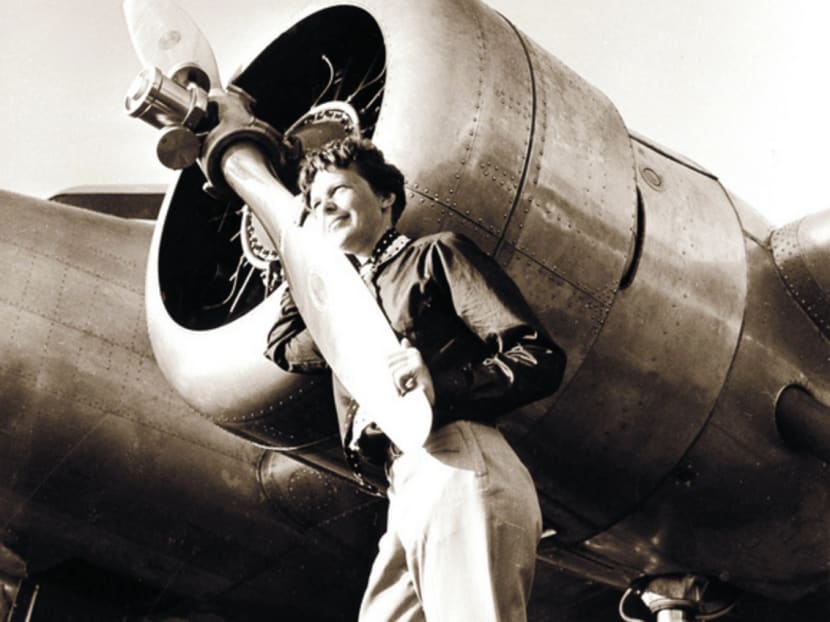
Aviator Amelia Earhart with her Electra plane at Burbank Airport in Burbank, California, on
May 20, 1937.
Photo: Albert Bresnik/The Paragon Agency via AP


Singapore — Tracey Taylor-Curtis is one in a line of female aviators who have made their mark in aviation history. Here are some of them …
Baroness Raymonde de Laroche
She may have disappointed her parents by not going into the family trade (they were plumbers), but she changed history in 1910 by becoming the first woman to receive a pilot’s licence. She was taught by French aviation pioneer Charles Voisin, and the feisty actress-turned-aviatrix took to the sky numerous times — earning the title of baroness in the process. Still, it wasn’t a piece of cake for de Laroche. Her aircraft crashed at an air show in Reims in 1910 and she suffered severe injuries that grounded her for two years. She recovered, but was once again injured in another accident, the car crash that claimed the life of her mentor, Voisin. In 1919, while attempting to become the first professional female test pilot, de Laroche’s experimental aircraft crashed during an approach at an airfield in the seaside village of Le Crotoy. De Laroche, 36, and her co-pilot were both killed on impact.
Bessica Raiche
What did Bessica Raiche not do? Back in the 1920s, she was one of the few who broke the mould when it came to how society deemed women should behave. She wore pants, drove a car, shot guns and practised medicine, first as a dentist and then as one of the first female specialists in obstetrics and gynaecology in the United States. She was also an accomplished linguist, artist and musician.
On Oct 13, 1910, Raiche became the first American woman to make a solo flight on an aircraft — a homemade, Wright Brothers-inspired aircraft that she and her husband built using silk, piano wire and bamboo.
Amelia Earhart
This pioneering female aviator’s claim to fame is well-known: In May 1932, Amelia Earhart became the first woman to fly solo, non-stop, across the Atlantic Ocean. Only one other person, Charles Lindbergh, had previously accomplished that feat. (Earhart was the first woman to fly across the Atlantic Ocean as a passenger in 1928.) In addition to her famous transatlantic flight, Earhart was the first woman to fly solo, non-stop, across the United States from Los Angeles to Newark in 1932, and was the first pilot, male or female, to fly solo from Hawaii to the US mainland, between Los Angeles and Mexico City, and between Mexico City and Newark (all in 1935). (Talk about accomplishments: She also served as an editor for Cosmopolitan magazine from 1928 to 1930; and designed and endorsed her own fashion line.) In 1937, she disappeared at the age of 39 under mysterious circumstances in the central Pacific while making a round-the-world trip.
Jacqueline Cochran
How did a beautician become the person Earhart often referred to as the “Speed Queen”? Jacqueline Cochran held more distance, altitude and speed records than any other pilot, male or female, at the time of her death in 1980. She was the first woman to fly a bomber across the Atlantic in 1941, the first female pilot to break the sound barrier (1953), the first woman to land and take off from an aircraft carrier, the first female president of the Federation Aeronautique Internationale (1958 to 1961) and the first pilot to fly above 20,000ft (6,000m) without an oxygen mask. She was also the first aviatrix to run a Marilyn Monroe-endorsed cosmetics company (her line was aptly dubbed Wings) and trained women to fly non-combat aircraft during World War II. Not bad for someone who received her pilot’s licence after only three weeks’ training.
Bessie Coleman
In 1922, she became the first female pilot of African American descent, and the first person of African-American descent to hold an international pilot licence. Coleman quickly realised that in order to make a living as a civilian aviator, she would need to become a “barnstorming” stunt flier, and perform for paying audiences. Queen Bess as she was known, was a highly popular draw for the next five years. She primarily flew Curtiss JN-4 “Jenny” biplanes and army surplus aircraft left over from the war, delivering daredevil manoeuvres — including figure eights, loops, and near-ground dips. Coleman died after she was thrown from a plane after its engine had died in mid-flight and dived. She was 34. While Coleman would not live long enough to fulfil her dream of establishing a school for young black aviators, her pioneering achievements served as an inspiration for a generation of African-American men and women.
Valentina Grizodubova
While American women were restricted to administrative flying missions during wartime, more than a thousand Russian women flew combat missions during World War II. Valentina Grizodubova was one of them. She made more than 200 military flights during the war, including bombing missions against Germany. She was promoted to colonel and served as commander of a long-range bomber squadron of 300 men. Sometimes referred to as the Soviet Union’s Amelia Earhart, Grizodubova set six world records, including a women’s long-distance non-stop flight record, which she later broke. She later became the most decorated woman of the Soviet Union, receiving the Hero of the Soviet Union medal in addition to the Order of the Red Star, the Order of the Red Banner, and the medal of a member of the Supreme Soviet. After retiring from the military in 1946, Grizodubova worked in civil aviation, one of only a few women who were able to continue in aviation. She died in 1993 at the age of 83.
Amy Johnson
Britain’s most famous female flyer, Amy Johnson achieved worldwide recognition when, in 1930, she became the first aviatrix to fly solo from England to Australia. Flying G-AAAH, a Gipsy Moth that she named Jason, she flew from Croydon to Darwin, covering 18,000km in just under three weeks.
In July 1931, Johnson and her co-pilot Jack Humphreys, became the first pilots to fly from London to Moscow in one day, completing the 2,830km in approximately 21 hours. From there, they continued across Siberia and on to Tokyo, setting a record time for flying from Britain to Japan. A year later, Johnson set a solo record for the flight from London to Cape Town, which she broke in 1936.
In 1940, Johnson joined the newly formed Air Transport Auxiliary (ATA), whose job was to transport Royal Air Force aircraft around the country; but while flying from Prestwick to the RAF base near Oxford, Johnson went off course in adverse weather conditions. Reportedly out of fuel, she bailed out as her aircraft crashed into the Thames Estuary. While the crew of the HMS Haslemere spotted Johnson’s parachute coming down and saw her alive in the water, calling for help; a sudden swell sent the ship lurching forward; the crew were unable to pull it back in time and the ship’s stern crashed down on Johnson who was sucked into the blades of the propeller. Johnson’s body was never recovered.
Stay in the know. Anytime. Anywhere.

Subscribe to our newsletter for the top features, insights and must reads delivered straight to your inbox.
By clicking subscribe, I agree for my personal data to be used to send me TODAY newsletters, promotional offers and for research and analysis.






