
Recreating the sounds of Singapore: The Korg Pa600SG
SINGAPORE — Lively staccato drum beats and an animated clang of cymbals — familiar sounds that usually accompany lion dance troop performances during Chinese New Year or a store opening — reverberated through the shop as we walked in.
SINGAPORE — Lively staccato drum beats and an animated clang of cymbals — familiar sounds that usually accompany lion dance troop performances during Chinese New Year or a store opening — reverberated through the shop as we walked in.
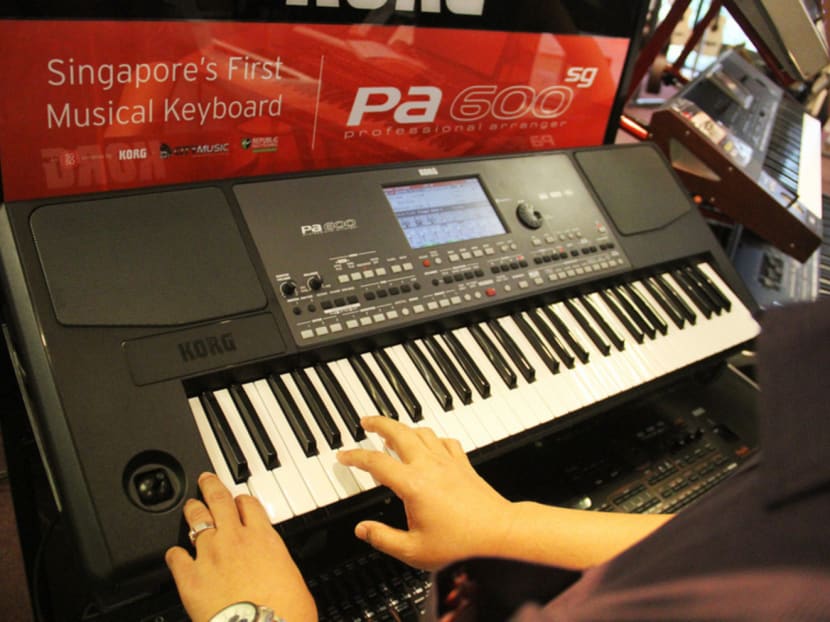
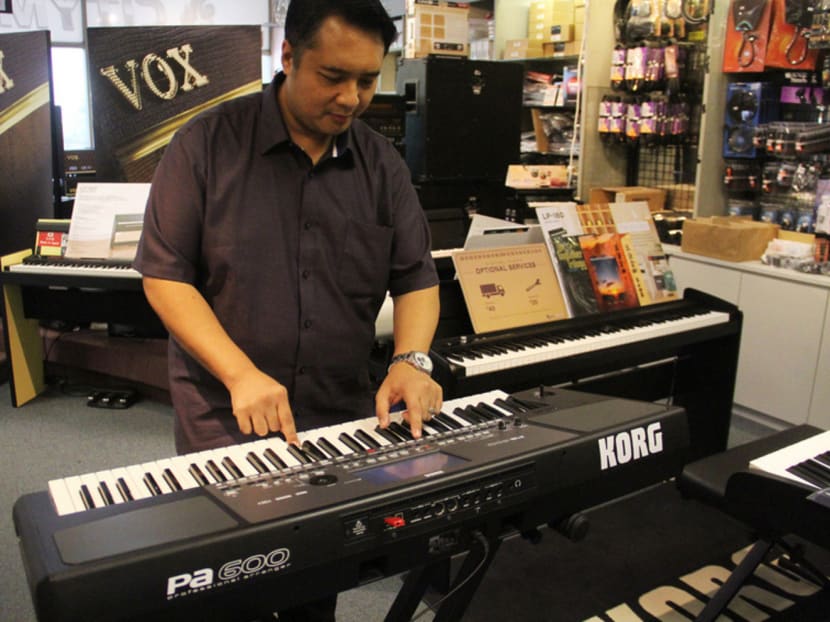
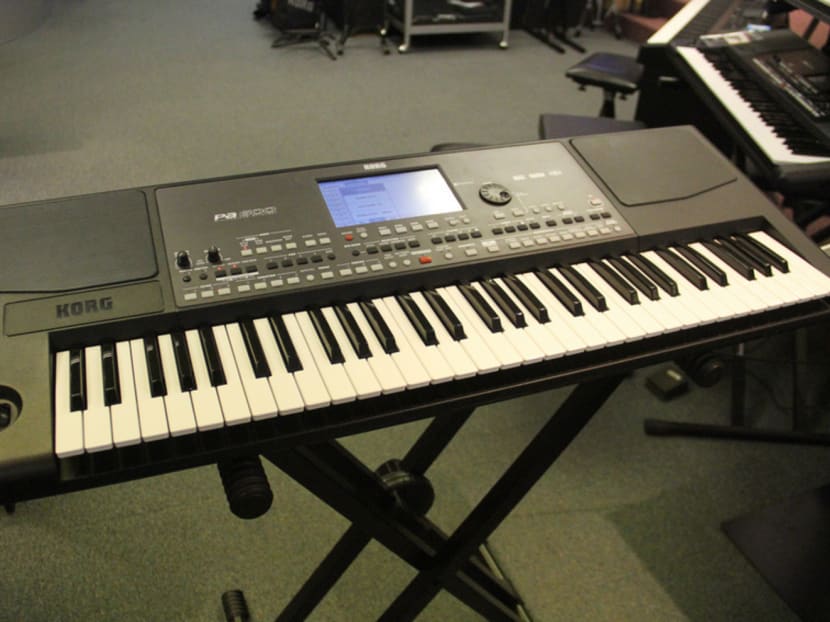
We expected to see two feisty “lions” springing about, as well as his noisy “band” standing by a corner. Instead, we were greeted by a keyboard standing in the centre of a room, and a man standing behind it, his fingers enthusiastically running through its keys, as he bobbed in time with the rhythms of the music.
Quickly, the music shifted, and crystal clear strings of a gu zheng hummed through the air, twisting and bending as though a light finger was vibrating on the strings’ surface. Then — another change: This time the melodious resonant clunks of the angklung, as the harmonies of the bamboo instrument rang gently in a soft song.
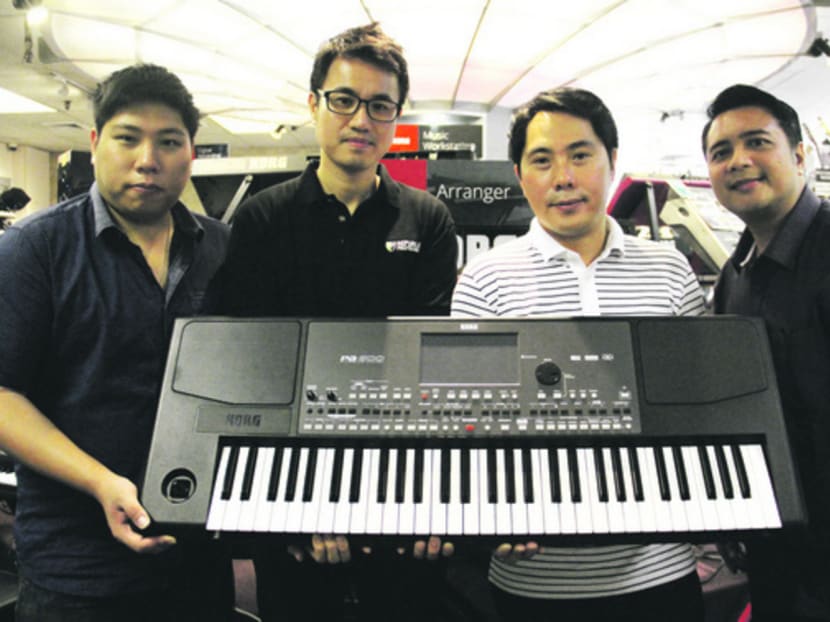
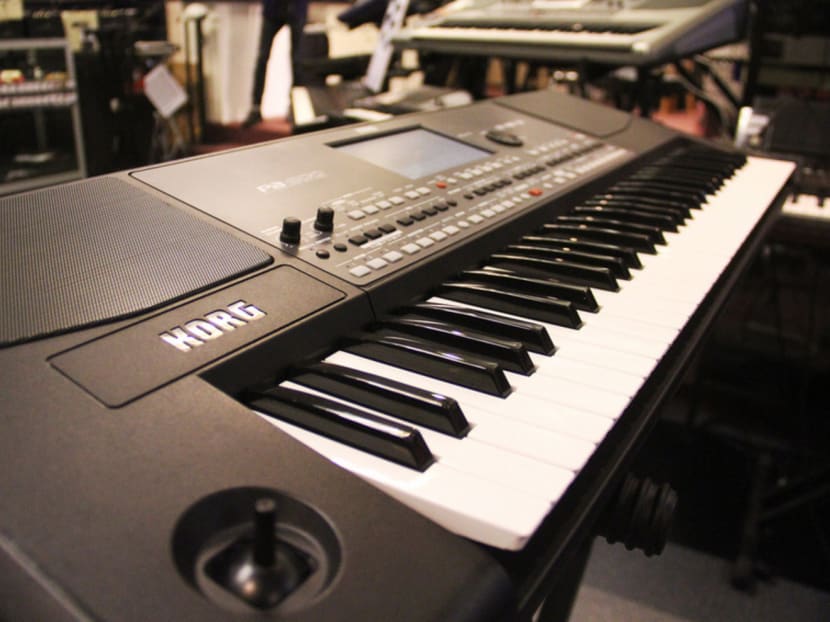
The musician, who was playing the variety of ethnic sounds at a quick flick of his fingertips was Mike Mayuni from musical instrument distributer City Music Co. The instrument in question, which was producing all these “uniquely Singapore” sounds, is their new offering, the Korg Pa600SG keyboard. It’s a new iteration of the Korg Pa600, part of the brand’s Professional Arranger series of keyboards, but instead of having just the usual bank of “mainstream” instrument sounds such as strings, brass or piano — the Pa600SG also comes programmed with beats and sounds of Singapore, if you will (hence the SG suffix).
Calling it a Korg × City Music initiative for SG50, the idea came about in April 2014, after the retailer noticed many keyboard enthusiasts approaching them asking if they sold keyboards with Chinese instruments or other ethnic sounds, said its director of sales, Hoe Yeegn Lougn. Given that 2015 was the country’s Golden Jubilee, they felt the time was opportune to embark on a project to capture these sounds and “to preserve and promote Singapore’s unique blend and harmony of our three ethnic races — Chinese, Malay and Indian”, he said.
“We wanted to do something permanent and tangible, which will last throughout the years ... If we don’t do something like that, the culture will be forgotten down the years,” said Hoe, adding that the result was a completely “Singapore” product, done with Singapore talent and Singapore’s music, under the auspices of Japanese instrument maker Korg.
Once Korg gave them the green light to embark on this project, they began gathering feedback from those in the music industry on what instruments and styles they should include, before settling on 31 traditional instrument sounds as well as over 40 accompanying styles unique to the three local ethnic groups.
Instruments include the cak lengpong, angklung, kompang, er hu, gu zheng, pi pa, dholak, nadhaswaram and mridangam; while the built-in musical rhythms include traditional lion dance, Chinese opera and Mando pop, traditional Malay dance such as the zapin or joget, as well as bhangra and Bollywood styles.
City Music Co then engaged more than 20 secessionist musicians from all three ethnic groups to sample their instruments’ sounds, with the help of five students from Republic Polytechnic’s School of Technology for the Arts, who were from the school’s Diploma in Sonic Arts Programme, and who embarked on this as their Final Year Project.
Over a period of six months, the students helped create more than 160 audio samples at the school’s studio and polished it up so these could be used in the keyboard. Mayuni, who is the project head as well as City Music Co’s sales manager, then began programming the sounds into the keyboards last February. On March 15 (this year), the Pa600SG hit the shelves, more than a year after its first inception.
The most challenging aspect of this project was incorporating the techniques that the musicians used to play the musical instruments — for example, the trembling strum of the gu zheng, their dynamics and their various tonations and frequencies — into the keyboard “to make it possible for people to play these instruments with their fingers”, pointed out Mayuni.
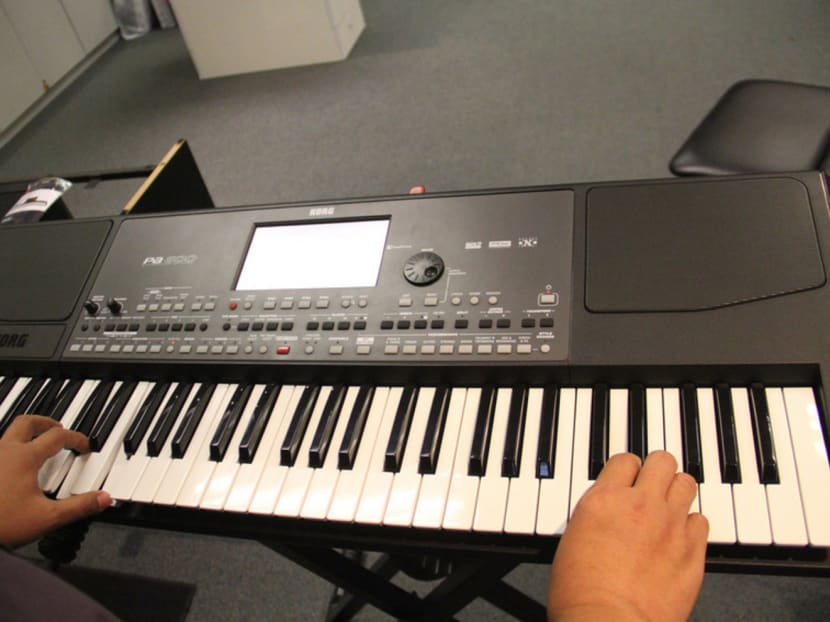
To make some of the instruments sound less one-dimensional, a little joystick at the left hand side of the keyboard allows the player to modulate and vibrate the notes.
The Singapore sounds come as a software upgrade from the original Pa600, one of Korg’s highly-acclaimed series of arranger keyboards. (City Music Co says it sells an average of eight to 10 pieces of Pa600 keyboards a month.) The company said those who purchased the Pa600 keyboard after January last year can obtain the Singapore upgrade for free. Those who purchased the Pa600 before that date will have to pay S$130 for an upgrade, while current Pa600SG models — priced at S$1,650, will come in-built with these “heritage sounds”.
The project is not at its end, revealed Hoe, who said they are speaking with Republic Polytechnic about working on “phase two”, which could see more sounds and styles being introduced.
The creators feel this uniquely Singapore keyboard will open up new musical possibilities and serve as a cheaper alternative to hiring a live band or an actual lion dance troop at event. It can also be used as a live karaoke system for home users, pointed out Hoe. The keyboard also allows you to record songs, so creative types can go crazy mixing the different musical styles together (both ethnic and mainstream) and producing their own special tunes.
“I may not be able to play the gu zheng because it takes years of training, but I may want to do a fusion song, for example the song Singapura (Sunny Island) with some Malay or Indian elements in the background. It will bring different textures into the same song. We are providing these tools for people to do their own music in their own flavour,” said Hoe.
Stay in the know. Anytime. Anywhere.

Subscribe to our newsletter for the top features, insights and must reads delivered straight to your inbox.
By clicking subscribe, I agree for my personal data to be used to send me TODAY newsletters, promotional offers and for research and analysis.






