
Chongqing is hot, hot, hot — and it’s not just the food

Quick, name us a city you’d like to visit in China. Most travellers would say Beijing for the Great Wall and Forbidden Palace, or Shanghai for The Bund or, well, shopping. Unless you have a strange obsession with tongue-numbing spicy food, Chongqing is not exactly a place you would have on your bucket list.
But don’t overlook this city, which ranks as one of China’s most important commercial capitals and is among the fastest growing in the world, with a gross domestic product of 1.27 trillion yuan (S$260 billion) last year. The Singaporean business traveller might also be interested to know that Singapore-based companies like City Developments acquired three major plots of land in the city while CapitaLand is injecting its biggest investment in China here with Raffles City Chongqing, designed by stararchitect Moshe Safdie.
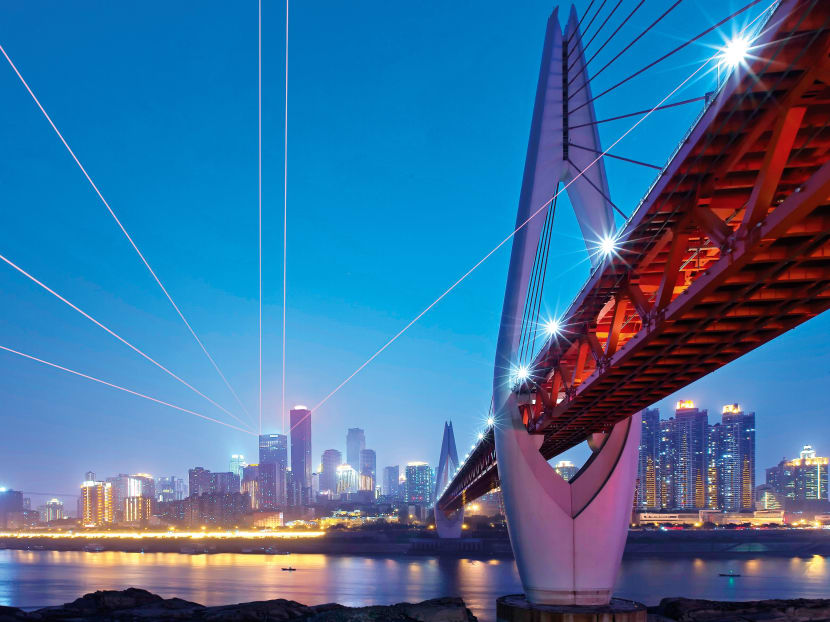
This sprawling city of more than 30 million people looks especially impressive at night — the Chinese sure know how to light up their skyscrapers — and its ubiquitous yellow taxis do remind one of New York. All right, we admit, it’s nothing remotely close to the latter, but it does offer some unique attractions as a travel destination, namely its proximity to the Three Gorges.
SWEET STAYS, SPICY DELIGHTS
You can start your trip from The Westin Chongqing Liberation Square. The latest five-star kid on the block and 200th in the Westin family is also the highest hotel in the city, occupying the 34th to 55th floors of the new Forebase Financial Plaza. But first, have the best kind of good night rest on Westin’s signature Heavenly Bed that, by the way, comprises 10 layers.
The hotel has also cleverly incorporated elements with the business traveller in mind. There’s the Tangent collaborative workspace, which can be rented for 300 yuan an hour. It offers state-of-the-art office technology and equipment like video-conferencing capabilities and Herman Miller work chairs.
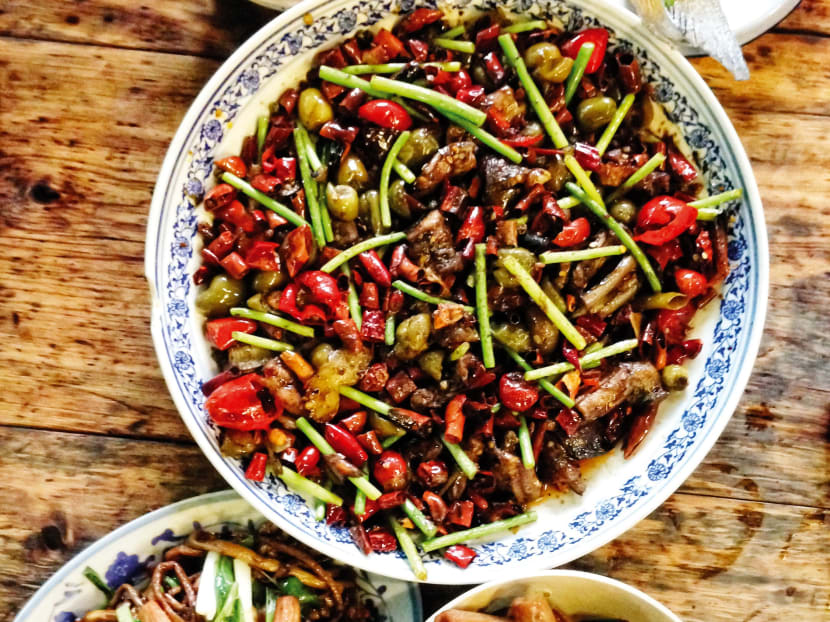
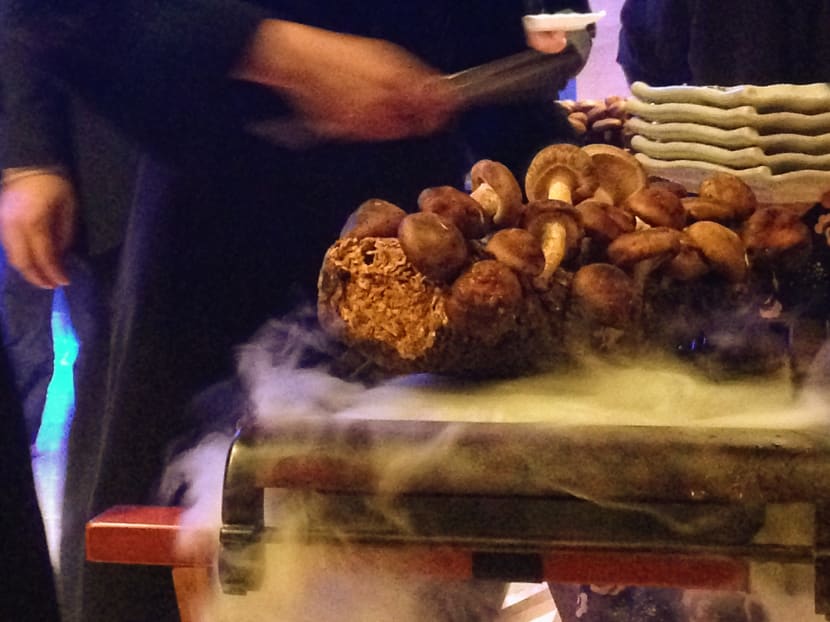
In Chongqing, you should also belch fire like the locals do. No trip to this city would be complete without a taste of the true Sichuan hot pot. The Westin Chongqing Liberation Square serves up good hot pot at Jin Yao Xuan Specialty Restaurant, where you can dunk into your broth organic vegetables and fresh seafood and meat. In fact, the hotel is so committed to its promise of quality that you can even get a chef to bring out an entire lump of earth (complete with dry ice effects) and have him pluck the fresh mushrooms right before your eyes. It’s a little theatrical, but at least you know for sure the source of your food. This is, after all, China.
For those who don’t mind the real deal — meaning a local, sweat-inducing and grubby experience — head for Nanshan Pi Pa Yuan Hot Pot located in Nanshan district, which is recommended by the hotel’s sales and marketing director, Singaporean Eric Ang.
If spicy is not your thing, authentic Sichuan restaurant Boating Lakes serves a variety of dishes that are easy on the palate. For a good Western meal, Ang also frequents the Mark Bar & Restuarant in the Longhu Crystal Centre. Other popular venues include the Cici Park, a Bohemian-style bar that’s a crowd favourite with local hipsters and expats, and Zhaoer Hot Pot along Jiefang Donglu, touted by many to serve the best hot pot in the city.
OLD TOWN, RIVER CRUISE
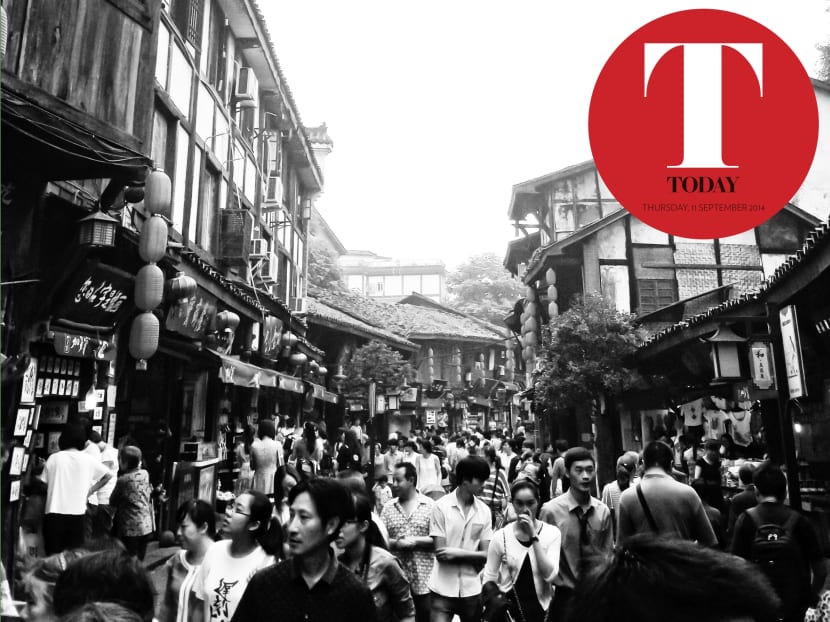
With your stomach sated, hit Chongqing’s Ciqikou Old Town. As its name suggests, this is what the city used to look like in the ancient times, long before it transformed into an economic powerhouse. Most of the buildings you’ll see date back to the Ming Dynasty and have been beautifully restored — they are now home to a slew of shops selling souvenirs, local snacks and jewellery.
If there’s one thing many Singaporeans remember of classic period dramas, it’s how characters in those shows always seem to be chomping on sticks of candied haws. You’ll find plenty of those here, in addition to various types of hot and spicy noodles. Despite their fiery appearance, the noodles make for a tasty treat that are actually quite forgiving on the tongue. Also worth checking out is Baolun Si, one of the town’s few remaining temples that is said to be more than 10 centuries old.
If you prefer to visit, erm, more contemporary venues, head down to the Huangjueping area in Jiulongpo District, home to the longest stretch of graffiti art in China. Over 30 buildings, covering 50,000sqm of land, have been adorned with street art — sanctioned by the government, of course. The feat was said to have required more than 800 students and artists, over 12 tonnes of paint and hundreds of thousands of brushes.
As Chongqing is well known to be the starting point for the scenic Yangtze River cruises, most cruise operators can take you from Chongqing pier to Yichang in Hubei province in a four-day tour that includes tourist traps such as Fengdu Snow Jade Cave and the Zhang Fei Temple, before culminating at the Three Gorges Dam.
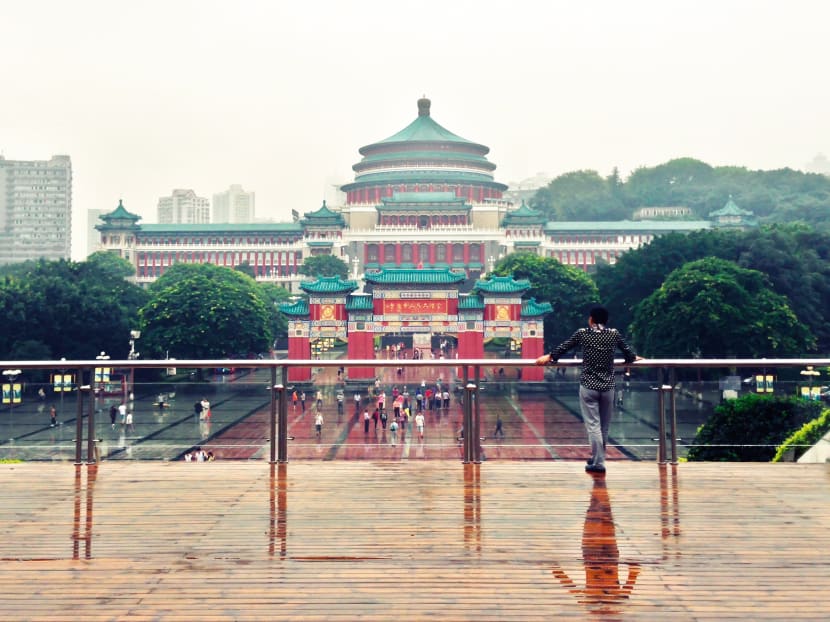
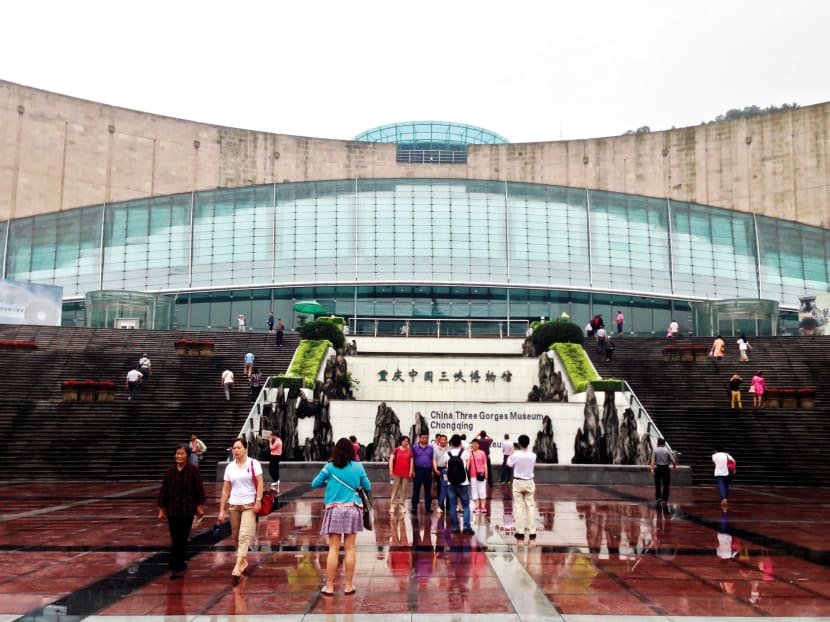
For those who don’t have the time or energy to embark on that, there is the Three Gorges Museum which provides an overview of these attractions. Inside, you’ll also get to learn about some of China’s minority cultures, historical facts about the Japanese bombing of Chongqing, as well as view sculptures and artefacts from the various dynasties. The architecture of the modern museum makes for good photos, too. Right across the museum is the Great Hall of the People, considered to be the architectural symbol of Chongqing. It may look like an ancient building, but it was actually built in the 1950s to look that way. Go figure.
Nearer than the Three Gorges is the Wulong Karst area. Just a two-and–a-half-hour drive away, Wulong feels an entire world away from Chongqing as this UNESCO Heritage Site is home to spectacular geological formations such as the Three Natural Bridges in Xiannushan Town, the Qingkou Tiankeng cluster of dolines (or sinkholes) and the Furong Cave. It boasts some movie ties: It was where Transformers: Age Of Extinction was partly shot and the Tianlong Bridge was featured in Zhang Yimou’s Curse Of The Golden Flower. Exploring the area works up an appetite — for another round of fiery hot pot, of course.
Stay in the know. Anytime. Anywhere.

Subscribe to our newsletter for the top features, insights and must reads delivered straight to your inbox.
By clicking subscribe, I agree for my personal data to be used to send me TODAY newsletters, promotional offers and for research and analysis.






