
No constituents’ concerns were too small for Mr Lee Kuan Yew
SINGAPORE — It is in this tiny sliver of our small island, an area marked both by dizzying modern developments such as the Pinnacle@Duxton as well as well-preserved corners of old Singapore, that Mr Lee Kuan Yew connected most closely with the ordinary Singaporean, the streets and back-alleys where he wore out much shoe leather and pumped many an outstretched hand.


SINGAPORE — It is in this tiny sliver of our small island, an area marked both by dizzying modern developments such as the Pinnacle@Duxton as well as well-preserved corners of old Singapore, that Mr Lee Kuan Yew connected most closely with the ordinary Singaporean, the streets and back-alleys where he wore out much shoe leather and pumped many an outstretched hand.
Mr Lee will forever be known as founding Prime Minister, Senior Minister, and Minister Mentor, but less well-documented is the work he did as Member of Parliament for Tanjong Pagar, first, and later as an MP for Tanjong Pagar GRC. And it stands to reason that it is the residents and shopkeepers here, the ones whose most pressing needs he tended to – whether they were issues as minor as having a proper covered area for stallholders in the wet market to display their wares, or big ones like housing needs – who will miss him the most.
Bean sprouts seller Loo Ya Hing, 74, was a young helper at Tanjong Pagar market in the 1960s when she witnessed first-hand how Mr Lee took swift action to help the stallholders. “We were still plying our vegetables and meat on canvas sheets over muddy grounds and we told Mr Lee how business was affected each time the rain came down on us,” said Ms Loo. Mr Lee held discussions with the stallholders, and later had tents erected in the market.
The tents were still insufficient to guard against the scorching sun and gusty storms, so Mr Lee decided to build a concrete shelter. “It didn’t mean that he would rush to take up every suggestion, but he took things step by step, and improved on each solution along the way,” said Mdm Loo.
Mr Toh Poh Seek, 66, who has been running “ang ku kueh” shop Ji Xiang Confectionary at Everton Park for the past 28 years, added: “He was Singapore’s PM, but we never felt that our needs were neglected, and we can go to him or his grassroots leaders with our problems anytime”.
Mr Toh recalled that about 15 years ago, his business and that of several shopowners nearby was affected after the carpark behind his shop was closed, leading to fewer parking lots for customers.
When the owners petitioned Mr Lee for help, he came by and personally explained that the carpark had to be demolished for a sheltered walkway for residents. Mr Lee stressed that “it is about the residents” even if the business owners were unhappy, Mr Toh said.
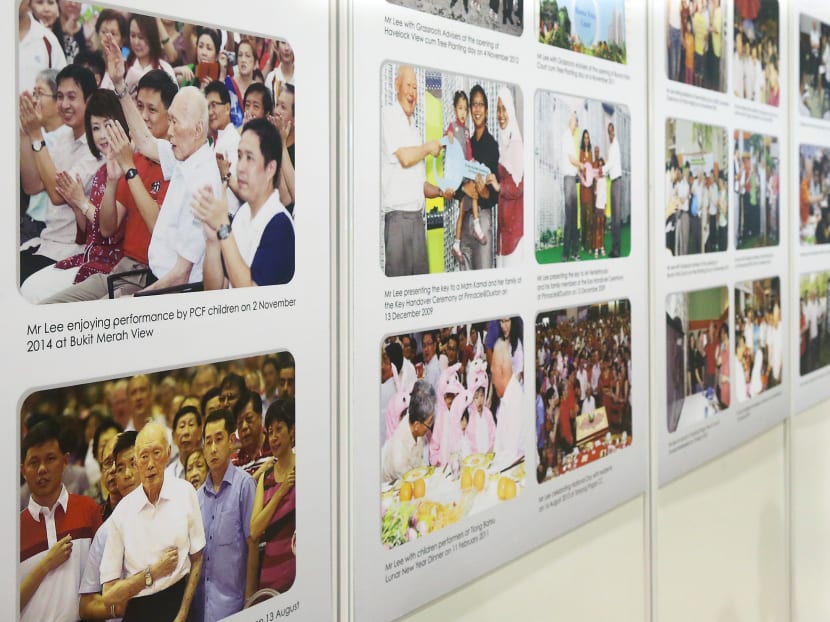
Other long-time residents and shopkeepers said that in the 60s and 70s, Mr Lee would be frequently seen around the constituency, be it at tree-planting ceremonies or events to mark National Day or Chinese New Year.
A resident, Mr Lau Joo Kin, 81, remembered how Mr Lee picked up Hokkien in just a few months in order to communicate better with the residents.
He recalled: “The Tanjong Pagar area was being developed rapidly into prime land, but Mr Lee assured us that we still have a place to stay in this estate... He was the nation’s PM, but he still took time to explain these small things to residents.”
Grassroots leaders who had worked with Mr Lee marvelled at his attention to detail, and how no concerns of the residents or shopkeepers were too small for him to address. Mr Jason Tay, 64, said: “Mr Lee would ask specifically about how this block of residents were doing and he didn’t just (accept) general answers. If you don’t know, it’s better to just say that.”
Mr Tay noted that as Mr Lee got on in age, he would ensure that other MPs helped him to oversee the constituency. Even then, Mr Lee wanted to be kept informed regularly of the goings-on in Tanjong Pagar, and would read minutes of meetings on constituency matters. Former Tanjong Pagar MP Koo Tsai Kee was one of the MPs whom Mr Lee had entrusted to help look after his ward.
Associate Professor Koo, who was an MP from 1991 to 2011, reiterated that the welfare of Tanjong Pagar residents were never far from Mr Lee’s mind even when his plate was full from managing national affairs. Assoc Prof Koo recalled how Mr Lee would go on unannounced drives around the area. “He would... take notes and would give feedback on, for example, areas that might need cleaning,” he said.
Mr Lee also paid close attention to municipal issues, ranging from cleanliness to whether the lights and lifts were working, Assoc Prof Koo said. “He was most concerned about them (municipal issues)... getting the other (Tanjong Pagar GRC) MPs to understand the importance of making sure that the everyday life of residents was being looked after,” noted Assoc Prof Koo.
He added that Mr Lee kept himself updated on constituency matters through monthly meetings with his fellow Tanjong Pagar GRC MPs before parliamentary sittings and would study the Tanjong Pagar Town Council reports, for example. Mr Lee would frequently ask about the state of the childcare facilities in Tanjong Pagar, Assoc Prof Koo said. In fact, he regularly donated money from his own pockets to improve these facilities.
Mr Lee was also very concerned with upgrading the estate’s infrastructure. He would say that the “flats are very old...(and) the residents grew up with me”, said Assoc Prof Koo, who was tasked by Mr Lee to oversee the estate upgrading project for Tanjong Pagar and ensure good living conditions for its elderly residents.
Long-time residents interviewed by TODAY beamed with pride at how Tanjong Pagar had morphed from a muddy kampung area, filled with drug addicts and triad members, to what it is now.
At an election rally in March 1955, Mr Lee explained why he chose to stand in Tanjong Pagar to fight his maiden elections: “Tanjong Pagar is a working-class area ... I wanted to represent workers, wage-earners and small traders, not wealthy merchants or landlords. So, I chose Tanjong Pagar not Tanglin.” Mr Lee had stayed true to his words, six decades on.
Stay in the know. Anytime. Anywhere.

Subscribe to our newsletter for the top features, insights and must reads delivered straight to your inbox.
By clicking subscribe, I agree for my personal data to be used to send me TODAY newsletters, promotional offers and for research and analysis.






