
Achieving a fair, equal society is a collective responsibility
How can we ensure a fair and egalitarian society? How do we adapt the founding ideals of this improbable nation in a rapidly changing environment? Can our current strengths, which are not preordained, degenerate into immutable weaknesses?
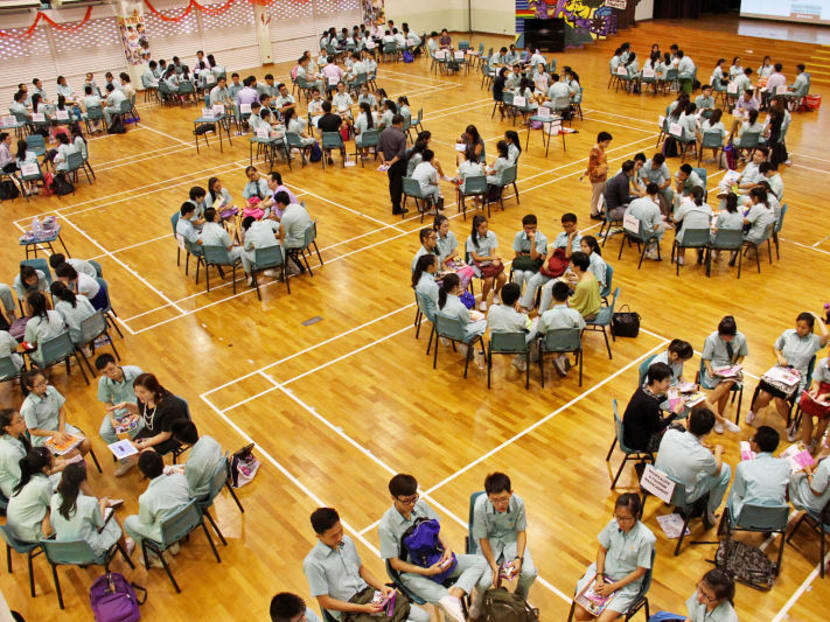
TODAY file photo

How can we ensure a fair and egalitarian society? How do we adapt the founding ideals of this improbable nation in a rapidly changing environment? Can our current strengths, which are not preordained, degenerate into immutable weaknesses?
The Singapore Story, moving rapidly from Third World to First in one generation, increasingly has little resonance for many Singaporeans, especially millennials who tend to treat our prosperity and sheltered lives almost as a given, if not a birthright. However, we will be impoverished if wealth and self-interest become the be-all and end-all in our society.
One of my vivid early memories as a four-year-old was the bare concrete floor when my family moved to a new HDB apartment in Marine Parade in 1974.
For my Pioneer Generation parents, with their third child on the way, tiles or even linoleum on the floor were luxuries that had to wait.
Because of their limited educational opportunities, my parents were determined to give their best for their children’s education. They wanted us to have as rich an educational experience as possible, including being actively involved in extra-curricular activities.
In the process, we were able to earn degrees from top universities almost entirely on scholarships. Coupled with the opportunities provided by a thriving economy, these enabled us to have better life chances than my parents could have ever imagined.
My family’s experience was not unique. It reflected the tenor of society then — of people progressing in tandem with the nation. There was growth with equity and we could all speak proudly of the Singapore Dream.
A 2015 Ministry of Finance study indicated that the degree of inter-generational mobility in Singapore has remained similar between the cohort born in 1978-1982 and those born in 1969-1973. This is not surprising, as both study periods coincided with a period of rapid, shared economic growth and Singapore was less unequal then, whether measured by income or by wealth. The study also noted that, “[a]s the pace of Singapore’s development slows, it will be an increasing challenge to sustain such mobility in the future”.
I often ask myself whether another Singaporean family today, in a position similar to my parents’, would believe that their children’s life chances would be better at a time when there is a persistent income gap, and seeming social stratification and divide.
Would my son’s generation inherit a Singapore that will continue to be a land of opportunities, purpose, hope and confidence? If Singapore becomes a society characterised by the double whammy of high inequality and low social mobility, the social stasis would surely suck the life-blood out of Singapore.
Education has long been viewed as the primary vehicle by which one can ascend the ladder of opportunity. There is much that is praiseworthy about our education system. But we need to seriously evaluate whether our education system is now unwittingly a source of inequality and of its perpetuation.
The different-peaks-of-excellence educational model, differentiated by streaming and by different types of schools with different fees and curricula and admission criteria, appears to have stronger segregating than integrating effects, reinforcing the effects of socio-economic differentials.
At one end, we have the Integrated Programme (IP) schools, many of them independent and offering school-based gifted education programmes and direct school admission. At the other end, normal technical stream students are primarily channelled to vocational studies.
True, students have different abilities and talents. To expect them to progress at a similar academic pace is unrealistic.
But we must strenuously avoid the simplistic and expedient approach of “levelling down”, especially in the educational realm, to reduce the divide. Regardless of their abilities, all students must be nurtured to their full potential.
Particular attention should be paid to bright students from less-well-off backgrounds. They should be encouraged to access the full suite of opportunities available and not feel marginalised in our top schools.
Empirical evidence from Scandinavia, Japan and Korea suggests that certain characteristics in an education system can decrease intergenerational mobility.
These include ability-based and school-based streaming, privatisation of tertiary education and expanding tertiary education with increasing fees — all these are found in the Singapore system.
Therefore, our education system and its stakeholders must endeavour to ensure that there is real and equal access to the opportunities available. Educational outcomes should not become a sole function of parental incomes and investments in their children.
We also need a greater focus on values, character and empathy in our education system so that those who benefit the most will also recognise their responsibility to pay it forward.
There is greater effort towards interventions such as more financial assistance, including bursaries and more affordable access to pre-school education. However, if the overall system reinforces social immobility, these remedial measures have limited efficacy and effectiveness in levelling up children from less well-to-do backgrounds.
What left an indelible mark on me from my formative years in Raffles Institution in the mid-1980s was how the vast majority of my peers came from humble backgrounds, how the system provided relatively abundant opportunities for all and how we could access them notwithstanding our home backgrounds.
We must strive to ensure that such access to opportunities and social mobility remains robust. Equality of opportunity is more than a noble aspiration. It is an imperative if we are to avoid a society riven between the haves and have-nots.
When equality of opportunity co-exists with strong inequality in the access to educational and employment opportunities, it raises legitimate questions of how truly fair and equitable a society is.
It also engenders in the successful a misplaced sense of entitlement and a winner-take-all mindset in an examination-based meritocracy — what they have is what they earned. For the not-so-successful, would they see their lot in life as either being their own fault and/or the result of a system weighted against them, particularly if relative immobility becomes inherited? Social cohesion is consequently threatened.
As a nation, we should be deeply concerned about such income and wealth inequalities. Yes, a suite of government transfers has had some redistributive effect in reducing the Gini coefficient, which remains high. But it raises the question of whether remedial measures can be avoided in the first place by having a fairer system that reduces the divide between the haves and have-nots. We should not have to play “catch-up”, always chasing our own tails.
Social structure, often a constant rather than a variable, is not easy to change. The Government, schools and society need to work together to ensure that Singapore’s social mobility does not flatline. This challenge takes place against the harsh reality that Singapore has to be relevant to the world. The moment we become irrelevant is the start of our decline. But we must be relevant to the world on our own terms and be fully alive to our having to be a nation-state and a global city. This requires policies to promote social cohesion and bring everyone together as one.
Ultimately, social cohesion is sustained by a shared sense of empathy, belonging, responsibility and fair play. A fair, just and cohesive society is better placed to surpass the best facets of its predecessors’.
Although we have crossed 50 years of nation-building, the imperatives today remain as they were in 1965. But beyond the “whys” and the “whats”, the focus must now shift to the “hows”.
The next big thing for Singapore will involve nurturing an acute sense of individual and collective responsibility for egalitarianism in Singapore, with an eye on equity and dignity as we seek the prize of sustained, optimal economic growth.
How we do so matters immensely.
ABOUT THE AUTHOR:
Eugene K B Tan is associate professor of law at the Singapore Management University. A similar version of this piece first appeared in The Birthday Book, a collection of 51 essays on Singapore’s next big thing.
Stay in the know. Anytime. Anywhere.

Subscribe to our newsletter for the top features, insights and must reads delivered straight to your inbox.
By clicking subscribe, I agree for my personal data to be used to send me TODAY newsletters, promotional offers and for research and analysis.