
All full-time ITE courses to offer internships by 2020
SINGAPORE — By 2020, all full-time Institute of Technical Education (ITE) programmes will offer internships as part of ITE’s five-year plan to deepen the skills of its graduates and better prepare them for the workplace.
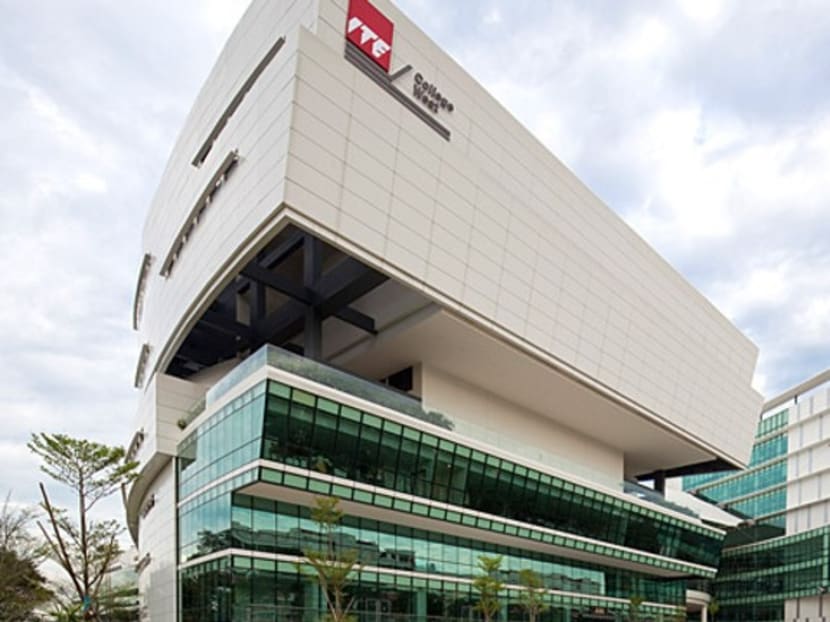
A Channel NewsAsia file photo of ITE College West campus.

SINGAPORE — By 2020, all full-time Institute of Technical Education (ITE) programmes will offer internships as part of ITE’s five-year plan to deepen the skills of its graduates and better prepare them for the workplace.
ITE also plans to introduce Place-and-Train programmes, which will see its graduates matched to employers who will provide structured on-the-job training coupled with ITE classes, so graduates can earn employer-recognised skills certification.
These are among the plans ITE intends to put in place between now and 2019, the institution revealed yesterday as it marked several milestones achieved since the last five-year plan.
The plans have been designed to align with the SkillsFuture initiatives that arose from recommendations by the Applied Study in Polytechnics and Institute of Technical Education Review Report on vocational education.
Speaking at a media conference yesterday, ITE chief executive officer and director Bruce Poh said: “We will move away from the existing trade-specific preparation model, towards a more career-oriented, professional-skills preparation model.”
ITE wants to provide more opportunities for students to master skills by integrating work and study, and career guidance and holistic development will take “centre stage”, it said.
Currently, 60 per cent of ITE courses have an internship component. The target to increase this to all full-time programmes by 2020 will be achieved gradually and the institute wants to offer enhanced internship programmes with longer industry training attachments where relevant, as well as structured training and mentorships. Courses that currently do not offer internships include Nitec in product design, Nitec in security technology and Higher Nitec in marine engineering.
Industry partners will be called on to play a bigger role, such as mutually agreeing on structured learning outcomes at the workplace and having formal internship agreements on expectations and to safeguard interests of all parties. An employer’s assessment of a student’s performance will make up 60 per cent of the overall assessment, with the remaining by ITE lecturers.
The ITE did not reveal details on its plans for its Place-and-Train programmes, such as when it plans to launch the initiative and which courses will offer the programmes for a start. Painting the broad strokes of the initiative, it said these programmes will be additional options for Nitec and Higher Nitec graduates. By providing students with employer-recognised skills certification, it will pave the way for further skills upgrading to improve graduates’ career prospects.
Meanwhile, to provide students with better career guidance, all three ITE colleges here will each have six full-time education and career-guidance officers by the end of the year, as announced last month by Education Minister Heng Swee Keat. The counsellors will be part of the colleges’ Education and Career Guidance centres, which will also provide each student with 40 hours of career preparation training over two years, starting from Year 1 ITE students this year.
Students will receive help in matching personal interests to a field and develop workplace skills, while industry visits will be organised to help them better understand their job options.
ITE yesterday also gave an overview of its achievements since the last five-year plan. Forty-seven new full-time courses were introduced from 2010 to last year. More graduates now progress to full-time polytechnic courses, from one in 10 in 1995 to more than one in four today. Gross mean salaries of graduates have also risen by 28 per cent, from S$1,391 in FY2009 to S$1,782 in FY2014.
Stay in the know. Anytime. Anywhere.

Subscribe to our newsletter for the top features, insights and must reads delivered straight to your inbox.
By clicking subscribe, I agree for my personal data to be used to send me TODAY newsletters, promotional offers and for research and analysis.






