
Alleged dissatisfaction over jobs, living conditions not cause of riot: COI
SINGAPORE — The riot in Little India was not caused by dissatisfaction among foreign workers over employment and living conditions in Singapore, the Committee of Inquiry (COI) looking into the Dec 8 riot said in its report.
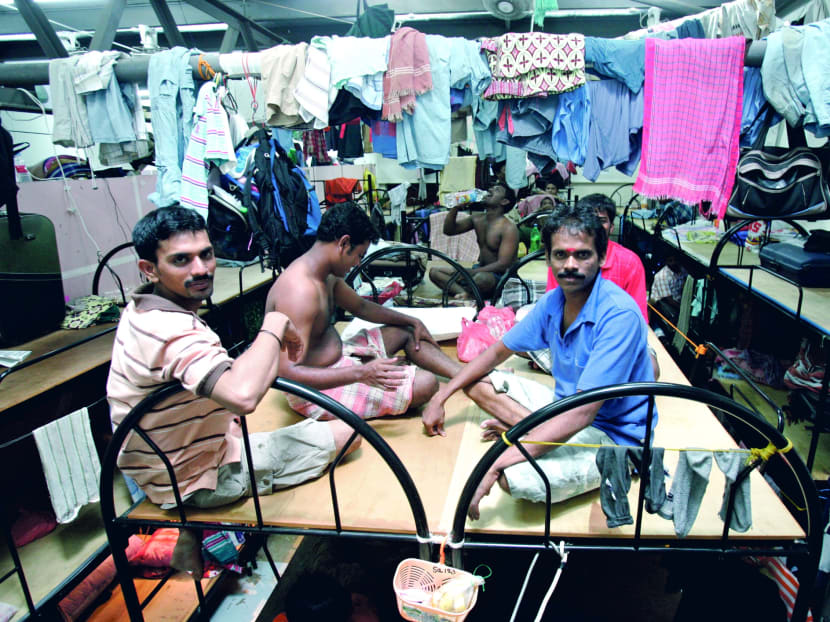
The COI report showed that
nearly every foreign worker
the committee spoke to said they were happy with their jobs and living quarters. Today file photo

SINGAPORE — The riot in Little India was not caused by dissatisfaction among foreign workers over employment and living conditions in Singapore, the Committee of Inquiry (COI) looking into the Dec 8 riot said in its report.
Racial issues were also not the cause and attempts to frame the riot as such are “completely unfounded”, given that neither racial nor ethnic issues arose in any of the evidence tendered by witnesses, the COI said.
While riots are typically classified as instrumental, where groups resort to violence to express discontent over specific issues; or expressive, where a minority group uses violence to express dissatisfaction at living conditions, the COI’s view is that the riot was a “unique event” outside of those categories.
The report listed five reasons for that verdict: The rioters comprised a small minority of foreign workers and was not a case where large groups of workers took to the streets for a common cause; it was not planned; it was not related to ethnic or an endemic form of discrimination; no one has come forth in support of the rioters’ actions and fellow foreign workers condemned the riot; and police brutality was not involved.
These findings contradict reports by media outlets overseas and locally that minority issues and general grievances felt by the foreign worker population had sparked the riot. Those reports — such as one by Indian news network Sun TV that implied that the riot occurred because of racial conflict — “contained several plain inaccuracies” and “misread the riot here completely”, the COI said.
The COI also highlighted a Financial Times report headlined “Riot tarnishes Singapore’s image as place of ethnic harmony” as one that was unfounded when compared against the evidence tendered and discussions with 323 witnesses.
The Financial Times report had suggested poor employment and living conditions were possibly the underlying causes of the riot. However, nearly every foreign worker the COI spoke to said they were happy with their jobs and living quarters, yesterday’s report showed.
“Based on the evidence gathered, the COI does not think that the riot was a result of dissatisfaction among foreign workers with their employment and living conditions in Singapore,” the report said, reiterating that the trigger was an emotional outburst caused by the death of a fellow worker, exacerbated by misperceptions about the accident, alcohol consumption and cultural and psychological elements.
Labour issues were not involved and the riot was a purely criminal riot with no motivation that some might find legitimate, it said.
“What the rioters did on the night of Dec 8 was clearly illegal and uncalled for, and abused the freedom that Singapore has afforded them as transient workers in the country. Even though we can understand the crowd’s emotional distress resulting from the fatal accident, there is no excuse for the assault, property destruction and arson seen that night,” it added.
Members of Parliament (MPs) TODAY spoke to agreed with the COI’s findings, saying that dissatisfaction among foreign workers in Singapore was not widespread, but that more should be done to improve their lives.
Mr Zaqy Mohamad, MP for Chua Chu Kang, pointed out that the work environment and welfare of foreign workers, including amenities and salaries, are two key areas the Government could look at. However, he said the workforce has to show greater productivity in order to justify an increase in salaries.
Mr Seng Han Thong, MP for Ang Mo Kio, said fair treatment should be given to both local and foreign workers. He also highlighted as important that foreign workers respect Singapore’s rules and regulations, and that Singaporeans appreciate their contributions to the nation’s development.
“While most employers treat their workers fairly, employers should also treat (the riot) as a lesson,” he said.
Meanwhile, non-governmental organisations (NGOs) that TODAY spoke to said there were still issues at hand regarding foreign workers here.
The Humanitarian Organization for Migration Economics, which has dealt with about 1,000 foreign workers annually for the past 10 years, said there has been “a pattern of grouses we see from the workers, such as wage theft — shortchanging, delays or deduction of wages or too-low wages; (poor) living conditions and bad employer treatment — threats of repatriation or blacklisting”.
“Regardless of the riot’s causes, we should work towards systemic changes that will improve the lives of the foreign workers,” Mr Jolovan Wham, its executive director, told TODAY.
“We shouldn’t have to wait for another riot to happen before we make a decision that more should be done for them,” added Mr Wham.
Meanwhile, Ms Braema Mathi, president of human rights group Maruah, said “standards on how we treat foreign workers must be set more clearly”. “It is about making sure (the workers) have more equitable work conditions. It is also about the language —the tone we use with them and how we refer to them,” she added. ADDITIONAL REPORTING BY LOUISA TANG AND ALFRED CHUA
Related topics
riotStay in the know. Anytime. Anywhere.

Subscribe to our newsletter for the top features, insights and must reads delivered straight to your inbox.
By clicking subscribe, I agree for my personal data to be used to send me TODAY newsletters, promotional offers and for research and analysis.






