
ASEAN must boost defences against hackers: PM Lee
SINGAPORE — Members of the Association of Southeast Asian Nations (ASEAN) must strengthen defences against hackers and cooperate to deal with common threats, while they work towards strengthening cooperation to enhance regional integration and create new opportunities for their economies.


SINGAPORE — Members of the Association of Southeast Asian Nations (ASEAN) must strengthen defences against hackers and cooperate to deal with common threats, while they work towards strengthening cooperation to enhance regional integration and create new opportunities for their economies.
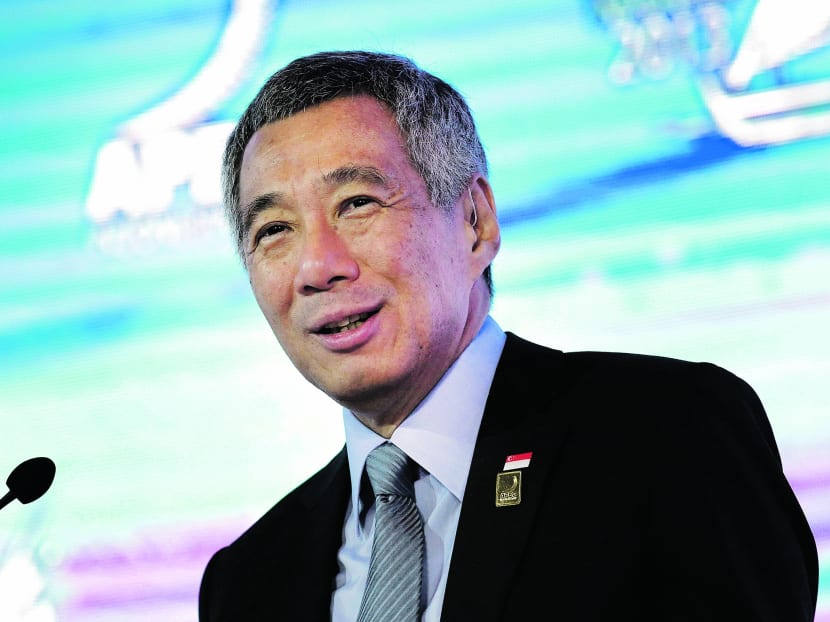
Prime Minister Lee Hsien Loong said this yesterday as he noted that hackers had compromised websites in Thailand, the Philippines and Singapore over the past two weeks. Websites in Malaysia and Indonesia had also been hit previously.
“I do not think any country has been spared,” said Mr Lee at the opening ceremony of a two-day annual meeting of ASEAN ministers in charge of telecoms and information technology at the Raffles City Convention Centre.
In Singapore, six suspects behind the recent high-profile hacking of several websites, including some belonging to the Government, have been hauled up by the authorities.
James Raj Arokiasamy, 35, was charged on Tuesday under the Computer Misuse and Cybersecurity Act for allegedly hacking the Ang Mo Kio Town Council website on Oct 28 while operating under the moniker The Messiah from a unit at the Dorchester Apartment at Jalan Sri Hartamas in Kuala Lumpur. Brothers Mohammad Asyiq Tahir, 21, and Mohammad Azhar Tahir, 27, were arrested for allegedly hacking the Prime Minister’s Office website and have been released on bail pending police investigations. Melvin Teo, 17, and Mr Delson Moo, 42, were questioned over the alleged hacking of an Istana website.
Noting these arrests, Mr Lee said such “malicious and harmful behaviour” must not be condoned.
“It is not a prank when someone hacks websites and intrudes into computer systems. It is, in fact, a criminal act. At a minimum, it inconveniences the public but, potentially, it has much graver consequences. It can damage infrastructure and endanger lives,” he said, citing as an example the computer systems of the electricity grid, the water supply or a hospital management system.
While the courts will deal with the culprits to the full extent of the law, he said citizens, too, should “speak up against such acts and express their clear disapproval” against those responsible or others who supported or encouraged the perpetrators.
Speaking to an audience of about 200 people, including representatives from the 10 ASEAN member states, Mr Lee floated three ideas that could strengthen cooperation in information and communications technology (ICT).
First, he suggested harmonising the 700MHz band for mobile broadband services, enhancing the consumer experience through improving the mobile broadband network’s data capacity and indoor coverage. “ It is important for ASEAN to align itself with the Asia-Pacific Telecommunity (APT) 700MHz band plan, which will minimise potential radio frequency interference between neighbouring countries, improve regional mobile roaming and quality of mobile broadband services and benefit consumers by lowering costs through economies of scale,” said Mr Lee.
Second, the Prime Minister pointed out the benefits of accelerating the shift towards digital television broadcasts, providing viewers with higher-quality images and a more interactive viewing experience. “It will also free up scarce spectrum capacity for other services such as wireless broadband,” he said.
The third idea was to enhance the resilience of submarine communications cable systems, which are key to global communications network and the Internet. “Secure cable systems contribute to the growth of ASEAN economies by supporting business operations, financial trading and Internet connectivity,” he added.
Earlier, Minister for Communications and Information Yaacob Ibrahim provided an update on the ASEAN ICT Masterplan 2015, which is aimed at making ICT a key enabler of ASEAN’s social and economic integration.
Launched in 2011, two-thirds of the work has been completed, with the masterplan “well on track for completion” by 2015, he noted.
Related topics
web securityStay in the know. Anytime. Anywhere.

Subscribe to our newsletter for the top features, insights and must reads delivered straight to your inbox.
By clicking subscribe, I agree for my personal data to be used to send me TODAY newsletters, promotional offers and for research and analysis.






