
'Cheap fares not sustainable' amid higher operating costs for public transport, Khaw warns
SINGAPORE — Warning that cheap fares for public transport could not be sustained amid the rising costs needed to operate the growing system, Transport Minister Khaw Boon Wan on Wednesday (March 7) called for changes to the "inadequate" formula used to calculate the fees.
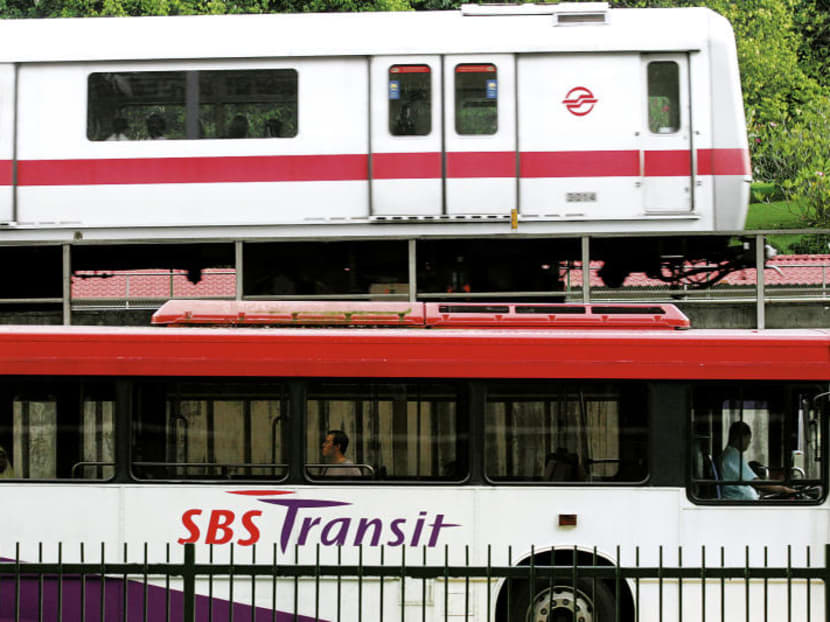
Transport Minister Khaw Boon Wan said operating costs have gone up by about 60 per cent over the past five years. A large part of it was due to the “large increase in network capacity” with new MRT lines, more buses and trains, he added. TODAY file photo

SINGAPORE — Warning that cheap fares for public transport could not be sustained amid the rising costs needed to operate the growing system, Transport Minister Khaw Boon Wan on Wednesday (March 7) called for changes to the "inadequate" formula used to calculate the fees.
Speaking in Parliament during the Committee of Supply debate on his ministry's budget, Mr Khaw pointed out that operating costs for public transport services have gone up by about 60 per cent over the past five years, largely due to the significant increase in rail network capacity as well as the introduction of more buses and trains.
However, fares have gone down by 2 per cent over the same period of time.
Agreeing with Member of Parliament Cheng Li Hui's observation of an "alarming spike" in public transport subsidies, the minister said: "She is right. And we should all be alarmed ... rising cost against declining revenue have only one outcome, a disaster."
Stopping short of announcing imminent fare hikes, Mr Khaw urged the public to be supportive when the Public Transport Council (PTC), which is currently reviewing the fare formula, unveil their new recommendations.
The council kept most public transport fares unchanged in their fare review exercise for 2017. It currently uses a fare formula pegged to changes in the Core Consumer Price Index, the Wage Index and the Energy Index (cost changes in electricity and diesel) over the preceding year.
"While transport fares must be affordable, we must be careful that they are not priced too cheaply, as maintaining a high quality transport system requires resources," said Mr Khaw. "Cheap fares are popular, but they are not sustainable."
He noted that the Government will be spending even more on public transport in the next five years - providing subsidies of about S$5 billion for public bus services, S$4 billion to renew the rail operating assets, and investing another S$20 billion to further expand the public transport network.
The transport ministry's budget is the second highest among government agencies this year, behind the Ministry of Defence but ahead of those for health and education.
While the higher spending on public transport has a trade-off in terms of expenditures elsewhere, Mr Khaw noted that it was just as essential as the drive to improve Singapore's external connectivity via new projects like the Tuas mega port and Changi Terminal 5.
"No point being able to fly or sail into Singapore easily, only to be stuck in traffic jams. This is a common phenomenon in most cities around the world. Singapore must never be like that," he added.
Stay in the know. Anytime. Anywhere.

Subscribe to our newsletter for the top features, insights and must reads delivered straight to your inbox.
By clicking subscribe, I agree for my personal data to be used to send me TODAY newsletters, promotional offers and for research and analysis.






