
BPA levels in canned food products within safe limits: Case
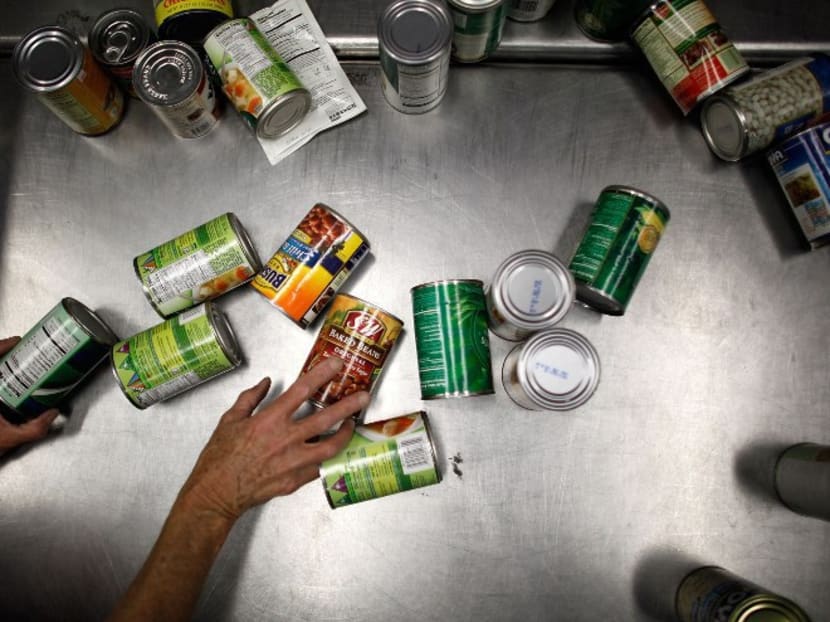
SINGAPORE — Consumers in Singapore who eat canned food face “minimal risk” of ingesting a chemical that could migrate from the inside lining of the can to the food, the Consumers Association of Singapore (Case) said, after it did a test of 30 different canned food products sold here.
AFP file photo

SINGAPORE — Consumers in Singapore who eat canned food face “minimal risk” of ingesting a chemical that could migrate from the inside lining of the can to the food, the Consumers Association of Singapore (Case) said, after it did a test of 30 different canned food products sold here.
The test results showed that the migration level of the chemical, known as bisphenol-A (BPA), for all the products were within the safety limits set by the Agri-Food & Veterinary Authority of Singapore (AVA), and the majority had no detectable amount of the chemical at all.
“The results of the test bring assurance to consumers that there is minimal risk of BPA from the lining of the cans leaching into the canned food products sold in Singapore,” Case said in a press release on Monday (Aug 22).
BPA is a chemical used to prevent metal corrosion and breakage in canned food, and is also found in many everyday items such as plastic bottles or containers, smart phones, flat-screen TVs, bike helmets and parts of cars.
Researchers have previously expressed concerns that the chemical may leach into food or drink from the lining or packaging of containers, with studies linking BPA to heart problems and diabetes in humans.
Case said that the 30 products it tested were “common canned food products with liquid content” from various countries that its “mystery shoppers” bought from supermarkets and provision stores in housing estates here.
In Singapore, the migration limit for BPA, which is the tolerable amount of the chemical that may transfer into food products in a can, is 0.6mg of BPA per kilogram of food. AVA adopts this limit based on the European Union’s standard.
Case president Lim Biow Chuan said: “We applaud those companies which have already taken the lead to publicly declare that they are either phasing out BPA in their manufacturing processes or are BPA-free altogether.”
A study in the United States published recently in the Environmental Research journal found that the urine samples of test subjects contained BPA 24 hours after they ate canned food, with the highest concentration found in those who ate canned fruits, soups and pastas.
The link between eating canned food and urinary BPA levels was higher in children than adults, casting concern on children from low-income families.
Case urged consumers to buy and eat canned food products in moderation and to watch out for their production dates where possible, because the migration level of BPA may be higher for products that have been on the shelves for a longer time.
Consumers could reduce their overall BPA exposure by choosing fresh and non-processed food as far as possible, it said.
Last year, the association also did a test on the migration levels of BPA in 20 brands of reusable plastic water bottles and found that most did not leach the chemical under normal usage conditions.
As a precautionary measure, the use of BPA in infant feeding bottles sold here is banned.
Stay in the know. Anytime. Anywhere.

Subscribe to our newsletter for the top features, insights and must reads delivered straight to your inbox.
By clicking subscribe, I agree for my personal data to be used to send me TODAY newsletters, promotional offers and for research and analysis.






