
Budget 2023 and you: What the measures mean for a young worker
SINGAPORE — Like many workers in the retail sector, Ms Shazwani Abu Bakar does not see herself working in the industry for the long haul, but she might be willing to give it a shot if she receives training that leads to better prospects at work for her.
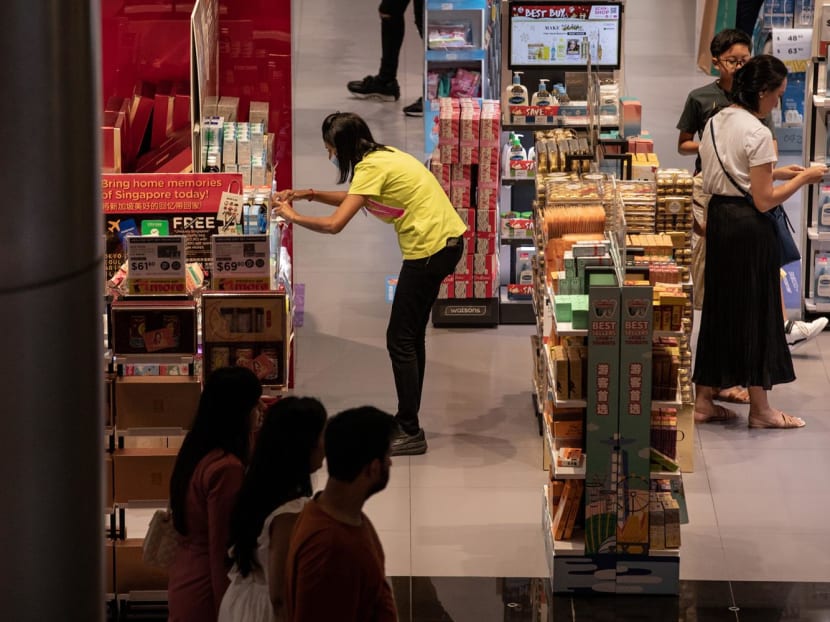

- A retail worker earning less than S$1,500 a month does not see herself in this line for long due to her low pay
- However, she may be willing to stay on if new plans for training are rolled out for the retail industry
- The initiatives were announced at Budget 2023 by Finance Minister Lawrence Wong
- People working with industry partners to match jobs and train workers, for instance, have to ensure that these translate into better earning prospects


SINGAPORE — Like many workers in the retail sector, Ms Shazwani Abu Bakar does not see herself working in the industry for the long haul, but she might be willing to give it a shot if she receives training that leads to better prospects at work for her.
The 23-year-old was speaking to TODAY after Deputy Prime Minister and Finance Minister Lawrence Wong announced a new initiative on Tuesday (Feb 14) for the retail and other selected industries.
In his Budget 2023 speech, Mr Wong said that there is a need to develop labour market intermediaries and the Government will appoint middlemen known as "jobs-skills integrators" who can work with industry partners to optimise job placements and train workers.
This pilot will start in the retail, precision engineering and wholesale trade sectors.
Most importantly, Mr Wong said that these middlemen must “ensure that training translates into better employment and earning prospects”.
Ms Shazwani, who has been working as a full-time sales associate for about six months at a modest fashion retailer along Haji Lane near the Bugis district, said that she is looking forward to receiving more training, which she is hoping will help her do her job more effectively.
She is also hoping that this may lead to her eventually realising her dream of opening up a shop of her own with her best friend.

Ms Shazwani, who is also taking a postgraduate course on Islam in Contemporary Societies through the Islamic Religious Council of Singapore (Muis), said: “(My friend) loves sewing, so maybe we can create tops or blouses that will fit petite to big-sized individuals.”
There were no details in Mr Wong’s Budget speech on the kind of training that will be available, but Ms Shazwani said that she hopes to receive training in areas such as visual merchandising, to learn how best to present clothes in a retail setting.
More importantly, she hopes to learn how to handle online sales now that more people are shopping online and she believes that this is where the focus for sales should be.
Apart from getting the relevant training, whether she stays on in the retail sector will ultimately boil down to whether these initiatives would really lead to a bump in her salary.
Last August, a tripartite cluster working to adopt the Progressive Wage Model for the retail sector suggested that one Workforce Skill Qualifications training module be included in the minimum training requirements for all job roles under this model.
This will enable retail workers to “take on higher value job roles with higher productivity for sustainable wage increases”, the tripartite group consisting of unions, employers and the Government said.
The Government had also accepted a recommendation by the group to increase the pay for those in the sector's three lowest job rungs.
This means that retail assistants and cashiers will earn a minimum monthly gross salary of S$2,175 by September 2024.
The Singapore Retailers Association later described the move as a "step in the right direction to help rebuild retail as an attractive career choice”.
Speaking of the sector’s acute manpower shortage at the time, the association said that if left unaddressed, “Singapore will be hard pressed to retain its reputation as a vibrant shopping and lifestyle destination with superior service delivery”.
Until she sees the pay increases, Ms Shazwani said that it is unlikely she will stay in the retail line for long, even though she enjoys interacting with her customers who sometimes even surprise her with gifts such as dessert.
She now earns less than S$1,500 a month working eight hours for five days a week.
She complements her income by working as a teacher over the weekend for kindergarten children waiting to enter Madrasah (an Islamic school), which brings up her total monthly pay to about S$1,700.
“The pay is okay (for now), but I feel like I will need to find another job that pays better since I want to settle down in a few years’ time,” she said.
“I will continue working in the retail industry for a while and at the same time, I will find another job with higher pay with the certificate that I will get from the course with Muis.”
Related topics
Budget 2023 retail JobsStay in the know. Anytime. Anywhere.

Subscribe to our newsletter for the top features, insights and must reads delivered straight to your inbox.
By clicking subscribe, I agree for my personal data to be used to send me TODAY newsletters, promotional offers and for research and analysis.






