
Calls from international groups to halt death penalty in Singapore contained 'inaccuracies', say MinLaw, MHA in rebuttal
SINGAPORE — The law and home affairs ministries on Thursday (Sept 8) rebutted recent statements made by two international organisations that called for Singapore to halt executions, saying that they contained “misconceptions and inaccuracies”.
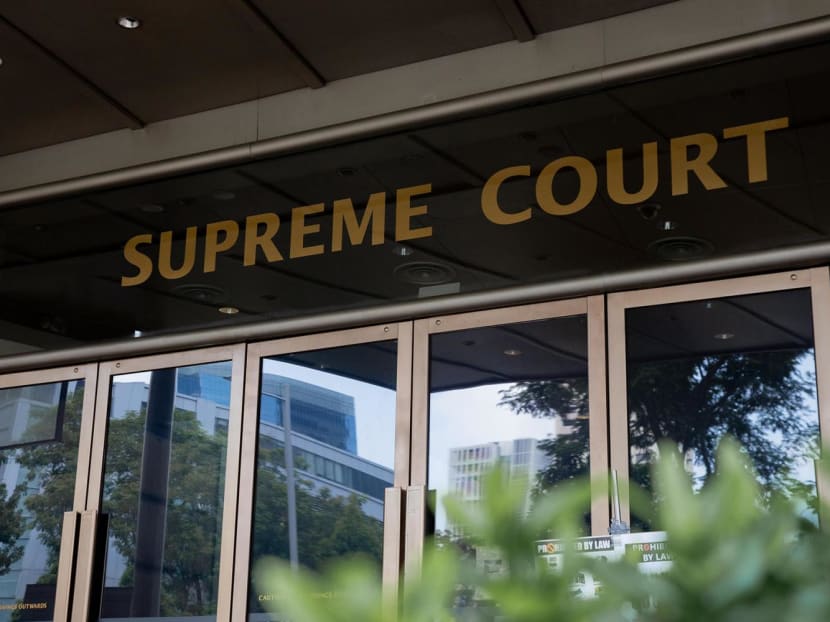
The condemnation by the two international organisations were made days after the Court of Appeal here denied a last-ditch stay of execution for convicted drug trafficker Abdul Rahim Shapiee.

- Two international organisations had called on Singapore to halt executions with a view of abolishing the death penalty
- They suggested that punitive cost orders against lawyers has obstructed death-row inmates' access to justice
- The Ministry of Law (MinLaw) and Ministry of Home Affairs (MHA), in a rebuttal, labelled their statements as containing "misconceptions and inaccuracies"


SINGAPORE — The law and home affairs ministries on Thursday (Sept 8) rebutted recent statements made by two international organisations that called for Singapore to halt executions, saying that they contained “misconceptions and inaccuracies”.
The statements were made last month by the International Bar Association’s Human Rights Institute (IBAHRI) headquartered in the United Kingdom and the International Commission of Jurists (ICJ) based in Switzerland.
Both statements, issued two days apart, had called for Singapore to place a moratorium on executions with a view to abolish the death penalty. The ICJ had also called on the Singapore authorities to stop using "punitive" cost orders against lawyers representing death-row inmates.
Noting that lawyers in Singapore have in recent months been ordered to pay costs for failed court challenges by death-row inmates, IBAHRI’s co-chair Mark Stephens said that such punishments “raise concerns around access to justice and effective legal representation and the right to a fair trial”.
The ICJ, more directly, claimed that these cost orders had “obstructed death-row inmates’ access to justice and effective remedies, their right to legal counsel... their right to a fair trial and, ultimately, their right to life”.
The two organisations referred to how lawyers M Ravi and Cheng Kim Kuan were in June ordered to pay S$20,000 in costs to the Attorney-General (AG) for an abuse of process in a failed application by 17 death-row inmates who alleged, among other things, that the AG had discriminated against them as Malays in prosecuting them for drug offences.
Lawyer Charles Yeo was in July also ordered to pay S$4,000 after he made unsuccessful attempts to challenge the death sentences of two drug traffickers.
PUNISHMENTS AGAINST LAWYERS
In joint statements on Thursday, the Ministry of Law (MinLaw) and the Ministry of Home Affairs (MHA) said that the organisations’ comments were inaccurate and that action has never been taken against lawyers specifically for representing death-row inmates.
All persons facing the death penalty have access to justice and legal representation, the ministries said. If the person cannot afford a lawyer, legal counsel is offered for free regardless of nationality under the Legal Assistance Scheme for Capital Offences.
“That right does not mean persons can abuse the court process,” the ministries said, noting that the courts in many other jurisdictions have powers to prevent such abuse.
“(The IBAHRI and ICJ) cannot be seriously suggesting that (they want) abuses of court processes to go unpunished,” the ministries added.
Under the Criminal Procedure Code, the Court of Appeal and the High Court can order costs to be paid by any party to any other party in a case, of such amount as the court thinks fit.
Cost orders are generally justified only in cases where the court is satisfied that the proceedings are frivolous, vexatious or an abuse of process.
So far, there have been eight instances where the courts had to impose cost orders against lawyers representing prisoners on death row, the ministries said.
Without naming Mr Ravi, the ministries highlighted that one lawyer in particular was the subject of six of these orders.
The condemnation by the two international organisations were made days after the Court of Appeal here denied a last-ditch stay of execution for convicted drug trafficker Abdul Rahim Shapiee.
Abdul Rahim, who has been hanged, had sued the Attorney-General on Aug 1 alongside 23 other death-row inmates, alleging that their access to lawyers was obstructed.
The High Court dismissed the suit two days later, which the Court of Appeal upheld in a judgement delivered just before midnight on Aug 4.
During the hearing in the Court of Appeal, three of the inmates said that they had approached several lawyers who did not want to represent the inmates because they were afraid of adverse cost orders.
The ministries stressed that the 24 inmates had full legal representation at their criminal trials and their appeals at the apex court. They later attempted to reopen their cases but the Court of Appeal dismissed their application as "completely unmeritorious", the ministries added.
The ministries noted that Abdul Rahim had filed his application at the 11th hour, shortly before he was to be hanged, though his application pertained to events that occurred between 2016 and 2018.
They added that the Court of Appeal found that his application had no merit and was an abuse of process, which was why a stay of execution was not given.
JUSTICE INDEPENDENT OF ETHNICITY
The IBAHRI and ICJ also noted concerns from a group of experts from the United Nations Human Rights Council that a disproportionate number of people being sentenced to death for drug-related offences in Singapore are minority persons and tend to be from economically disadvantaged backgrounds.
MinLaw and MHA said that ethnicity and socio-economic status play no part in how law enforcement agencies discharge their duties, the prosecutorial decisions of the Public Prosecutor and in the decisions of the courts.
“It would be helpful if those who make such comments clarify whether they are suggesting that justice be dependent on the individual’s ethnicity and socio-economic status,” they said.
They added that there is “no basis” to assert that imposing the death sentence for drug offences is a breach of international law.
“There is no international consensus against the use of capital punishment when it is imposed according to the due process of law and with judicial safeguards. Every country has the sovereign right to determine its own criminal justice system, considering its own circumstances and in accordance with its international law obligations,” they said.
“This right should be respected.”
The ministries said that the death penalty has helped deter major drug syndicates from establishing themselves in Singapore and that the penalty is only imposed on the most serious crimes that cause grave harm to others and to society.
“In light of the above, we invite the (IBAHRI and ICJ) to examine the facts prior to issuing such statements,” they added.
Related topics
death penalty drugs minlaw MHA lawyers costStay in the know. Anytime. Anywhere.

Subscribe to our newsletter for the top features, insights and must reads delivered straight to your inbox.
By clicking subscribe, I agree for my personal data to be used to send me TODAY newsletters, promotional offers and for research and analysis.






