
Changi Airport to boost aircraft handling by 40%
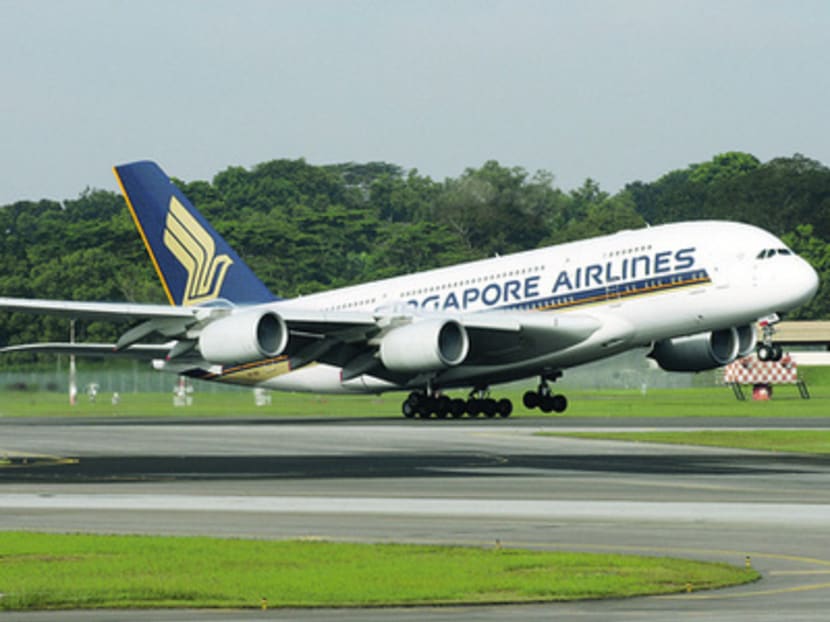
PHOTO COURTESY SIA

SINGAPORE — As one of the world’s busiest international airports, the 1,227-ha, two-runway Heathrow Airport in London saw 476,000 aircraft movements last year. In comparison, the Republic’s 1,300-ha, two-runway Changi Airport only handled 301,700 aircraft movements in the same period.
Yesterday, the Civil Aviation Authority of Singapore (CAAS) unveiled plans to increase Changi Airport’s capacity by 40 per cent, to handle 430,000 aircraft movements a year.
Analysts TODAY spoke to believe the move will benefit passengers as the airport manages its traffic more efficiently. While Changi Airport will handle significantly more passengers as well, Flightglobal’s Asia Managing Editor Siva Govindasamy said: “The ultimate passenger experience is the ability to take-off and land on time and to clear customs efficiently and to clear your bags very quickly.”
The CAAS had commissioned the United Kingdom’s air navigation service provider NATS — which manages the air traffic for UK airports, including Heathrow — to determine the potential capacity of the Singapore airport, based on existing infrastructure.
NATS found that Changi Airport, which has earned a stellar reputation from global travellers over the years, is severely under-utilised.
The CAAS said that, since the start of the year, it has been rolling out measures to increase Changi Airport’s capacity. Among these: Cutting the interval for take-offs and landings from 120 seconds to 90 seconds, and reducing the duration of scheduled closures of a runway by leveraging IT systems to improve the inspection process.
Flight routes have also been reconfigured to increase air traffic predictability and speed restrictions have been applied to more air traffic sectors, in order to better regulate air traffic flow.
The new measures have already shown results: The number of flights taking off within 15 minutes or less of their scheduled departure between June and November has improved by about 50 per cent, compared to the same period last year.
CAAS said that based on the projected average air traffic growth of 5 per cent a year, a capacity of about 430,000 for Changi Airport should be “sufficient until 2018 and beyond”.
Between January and November, Changi Airport handled 295,000 aircraft movements. CAAS expects the full-year figure to reach more than 320,000.
Aviation analysts TODAY spoke to said the move to increase Changi Airport’s capacity is overdue. but CAAS has its work cut out.
Aviation consultant Prithpal Singh said: “CAAS is still lagging very far behind (in terms of efficiency), even with a much lesser capacity of traffic coming to Changi.”
Standard & Poor’s Shukor Yusof felt that the authorities might need to consider a third runway. He said: “For now, (two runways are) enough. (Come) 2015, there’s the open skies agreement, there are more budget airlines coming in and expanding... based on the current market environment, there is a pressing need to quickly decide on an extra runway.”
A Changi Airport Group spokesman said total passenger capacity at the airport will increase by 29 per cent to 85 million passengers per annum by 2017 when Terminal 4 is completed and additional capacity is added to Terminal 1.
A steering committee was set up earlier this year to chart Changi Airport’s development over the next two decades.
CAAS director-general Yap Ong Heng said that in terms of physical infrastructure, the committee will make an announcement on future plans for Changi Airport after it completes its work.
Stay in the know. Anytime. Anywhere.

Subscribe to our newsletter for the top features, insights and must reads delivered straight to your inbox.
By clicking subscribe, I agree for my personal data to be used to send me TODAY newsletters, promotional offers and for research and analysis.






