
Changi to build second air traffic control tower near T5
SINGAPORE — Changi Airport is looking to build a second air traffic control tower to complement its existing iconic 80m tower, as the region’s leading aviation hub gears up to handle a 50 per cent jump in aircraft traffic by the early 2020s, when Changi welcomes its third runway.
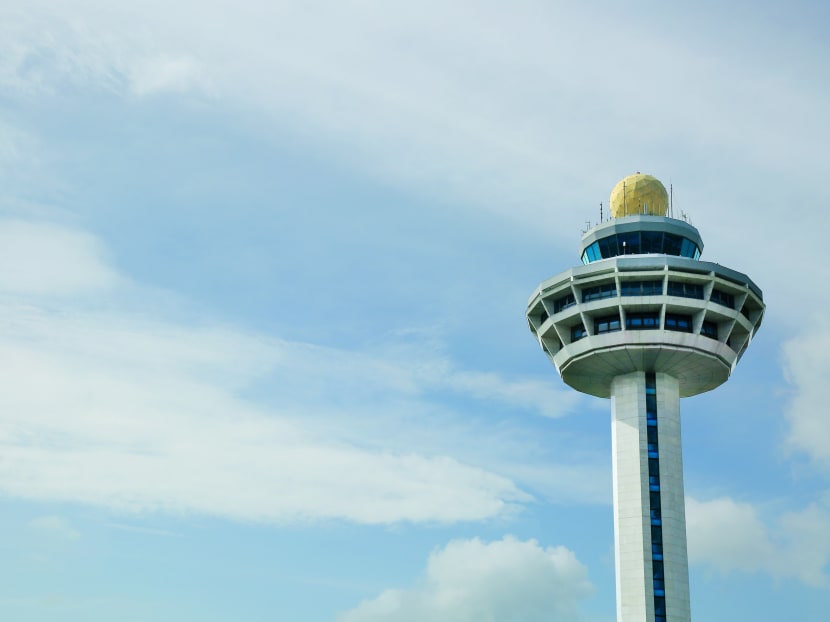
Singapore Changi Airport control tower. TODAY file photo

SINGAPORE — Changi Airport is looking to build a second air traffic control tower to complement its existing iconic 80m tower, as the region’s leading aviation hub gears up to handle a 50 per cent jump in aircraft traffic by the early 2020s, when Changi welcomes its third runway.
“CAAS is planning for a second control tower to support (the) future operations of Runway 3. As part of the Terminal 5 (T5) design study, details of the tower such as its location and dimensions are being studied with Changi Airport Group,” a spokesperson at the Civil Aviation Authority of Singapore (CAAS) told TODAY in response to queries.
One key consideration of a control tower is that the air traffic controllers working there require a direct line of sight to the runways in order to control aircraft landings and take-offs.
Changi Airport currently operates two runways, serving its three terminals as well as the upcoming Terminal 4. Changi will be adding a third runway as part of the development of Changi East, which will house the new passenger terminal, T5.
T5, which is scheduled to begin operations by the middle of the next decade, is expected to handle up to 50 million passengers a year, taking Changi’s passenger handling capacity per year to 140 million.
The third runway will be created by converting an existing airstrip currently used for military flights at Changi East. It is separated from the existing airport by Changi Coast Road. This runway will be extended to connect to the existing two runways by a network of taxiways spanning 40km.
“This second control tower, which will be located in the vicinity of T5, is needed to provide (a) direct line of sight to Runway 3 and the aircraft manoeuvring area of T5, and Changi East industrial zone,” said the spokesperson.
Changi’s existing two-runway system, according to the CAAS, is capable of serving up to about 430,000 aircraft movements annually. With the introduction of a third runway in the early 2020s, Changi’s overall traffic-handling capacity will be raised by another 50 per cent, said CAAS.
In 2015, Changi handled close to 350,000 aircraft movements.
Currently, as part of the upcoming T4 expected to be ready in 2017, a 68m-high ramp control tower is being built to enhance the air traffic controllers’ visual line of sight of aircraft parking slots and surrounding taxiways near the southern end of Runway 2.
This ramp tower is likely to be ready in the second half of next year.
“This is an example of how Singapore invests in building more capacity much ahead in time to handle the anticipated growth in the region. It is also a move by the Republic to cement its position as a premier international air hub in the face of increasing competition from other airports like Hong Kong, Dubai and Abu Dhabi,” said Mr Ellis Taylor, Asia finance editor at Flightglobal.
Stay in the know. Anytime. Anywhere.

Subscribe to our newsletter for the top features, insights and must reads delivered straight to your inbox.
By clicking subscribe, I agree for my personal data to be used to send me TODAY newsletters, promotional offers and for research and analysis.






