
Civil servants can call in sick without MC for 2 days
SINGAPORE — From the start of this month, civil servants can — like some of their peers in the private sector — occasionally call in sick without having to produce a medical certificate (MC) and still get paid for a day’s work.
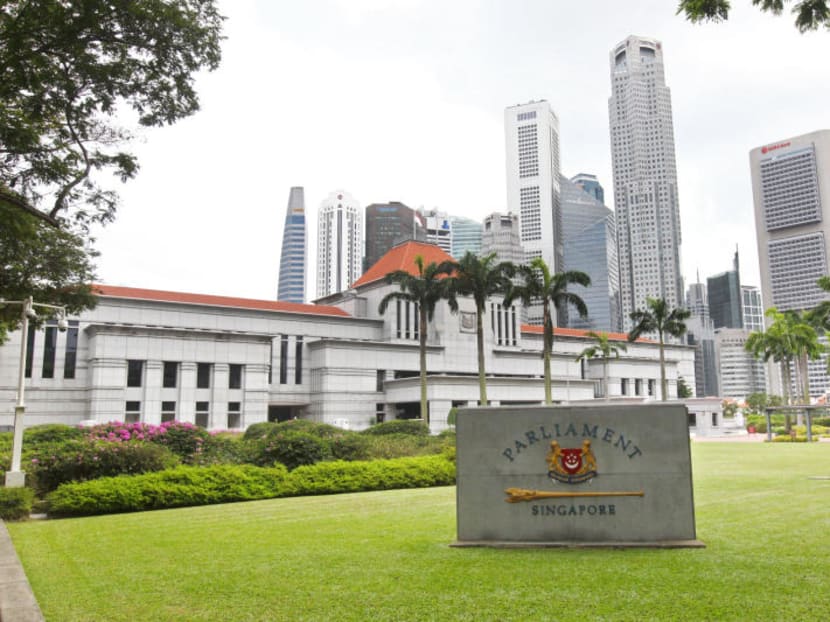
TODAY file photo

SINGAPORE — From the start of this month, civil servants can — like some of their peers in the private sector — occasionally call in sick without having to produce a medical certificate (MC) and still get paid for a day’s work.
They can exercise this privilege on two non-consecutive days each year, subject to the approval of their superiors.
A circular — dated March 28 — was sent out by the Public Service Division (PSD) informing civil servants of the revised policy which took effect on April 1.
The two days will be deducted from the Ordinary Sick Leave that civil servants are entitled to.
Previously, a civil servant had to produce an MC to be eligible for paid Ordinary Sick Leave when he was absent from work on medical grounds.
The PSD circular, which was also sent to statutory boards, said that stat boards have to consult their parent ministries on the revised policy.
Responding to TODAY’s queries, Ms Ong Poh Chin, PSD Director of Rewards and Recognition, said the change came about “after consultation with the ministries”. Adding that the PSD regularly reviews staff benefits, she said: “This is also a progressive human resource practice which some private-sector companies also offer. It will make it easier for the officer who may feel unwell but can recover with some home rest to do so, instead of getting an MC for it.
“However, should he need more than a day away from work, he should consult a doctor for an MC. This is to ensure that our officers’ health is taken care of.”
The Civil Service is the largest employer here, with an 80,000-strong staff. More than half of the civil servants are entitled to the minimum of 14 days of Ordinary Sick Leave.
While all civil servants — including the rank and file — will be eligible for the new privilege, ministries may need to set additional requirements to suit their operational needs.
“This is why flexibility has been provided for them to decide on the implementation date and modality to suit their operational needs, so that service levels are not compromised as a result,” said Ms Ong.
Most ministries TODAY contacted said they will implement the revised policy with minimal restrictions. For example, the Ministry of Education (MOE) will not allow staff to call in sick without a valid MC during national examinations such as the Primary School Leaving Examination, and the O- and A-Levels.
An MOE spokesperson explained that during national exams, selected officers are appointed as assessor, marker, invigilator or liaison officer. “As these are special appointments for specific duties, suitable replacements for absentees need to be selected and appointed. Hence, officers are required to produce an MC should they be unable to perform these duties,” she said.
The Ministry of Home Affairs said it was still studying the revised policy.
HR experts said the Civil Service’s move could inspire more private sector companies here to adopt a practice that is quite common in other countries. Some of them noted that should such a practice become more widespread here, healthcare costs could also be lowered as people do not have to turn to a doctor every time they are ill in order to be excused from work.
In Singapore, the practice is more common at multinational corporations as compared to smaller companies, said The GMP Group Assistant Director (Corporate Services) Josh Goh.
Kelly Services Singapore Country General Manager Mark Hall said that in the Netherlands, a medical certificate is not required by law and an employee can be self-certified for up to eight weeks on full pay.
In the United Kingdom, employees only need a medical certificate after seven days of sick leave. Nevertheless, he noted that, in general, private companies in these countries often implement their own policies. “For example in Finland, in the public sector, a medical certificate is only necessary after three days of absence but very often from the beginning in the private sector,” he said.
Civil servant Jasmine Li, 24, felt the move showed that her employers trust her and colleagues. She added: “As it is only two days, the impact of it being abused will be insignificant.”
Administrative manager Roland Tan, 45, who works in the Civil Service, also played down the likelihood of his subordinates abusing the system. Those who want to would do so regardless of the revised policy, he said, adding that “getting a day of MC is not hard”.
“I also know which of my staff likes to take MCs so I will be more careful when that person approaches me to ask for leave (without a valid MC),” he said. ADDITIONAL REPORTING BY WOO SIAN BOON
Stay in the know. Anytime. Anywhere.

Subscribe to our newsletter for the top features, insights and must reads delivered straight to your inbox.
By clicking subscribe, I agree for my personal data to be used to send me TODAY newsletters, promotional offers and for research and analysis.






