
Student-run cafe Superfudo hit with complaints of late payment of salaries
SINGAPORE — More than a dozen staff or former staff of Superfudo, a student-run cafe, have filed complaints against one of the eatery’s co-founders.
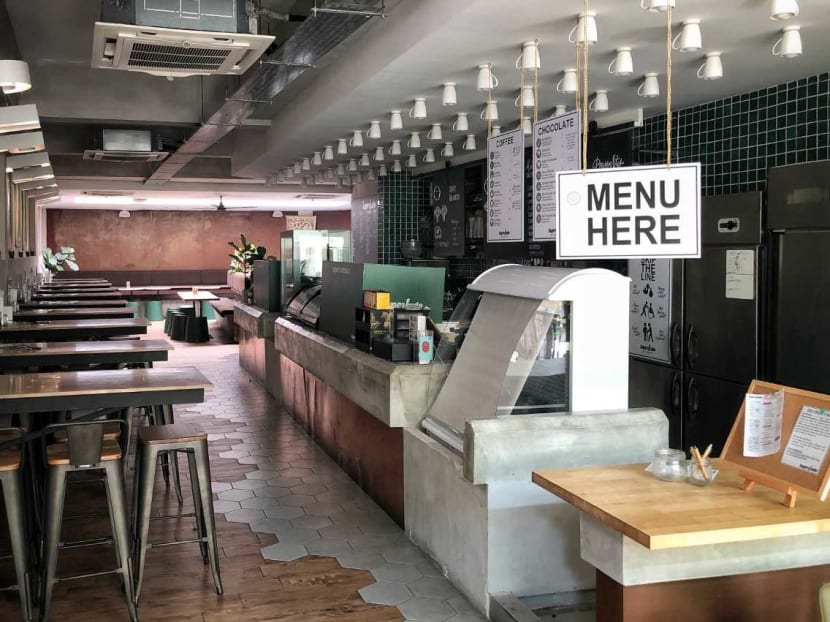
The Ministry of Manpower has received 14 complaints against a cafe, Superfudo, ranging from delays in the payment of salary to workplace grievances. The outlet in Holland Village (pictured) has ceased operations due to the lack of manpower.



SINGAPORE — More than a dozen staff or former staff of Superfudo, a student-run cafe, have filed complaints against one of the eatery’s co-founders.
The Ministry of Manpower (MOM) received 14 complaints on late payment of salaries and other workplace grievances on June 30, the ministry said in response to media queries on Thursday (July 4).
MOM said it has contacted the complainants and will be looking into the issues raised. “If there is any breach of the Employment Act, MOM will take appropriate action against the firm,” it said.
One of Superfudo’s outlets, in Holland Village, has ceased operations, owing to staffing issues, said employees. It has another outlet in Orchard Road. Superfudo’s offerings include protein bowls.
When asked about these allegations, the co-founder named in the MOM complaints, Mr Joseph Xu, told TODAY that the delay in the payment of salaries was because of “partnership changes”.
He said: “There has been a couple of weeks in delay because of partnership change and bank account changes. But all the employees have been paid weeks ago. We informed them (that there would be a delay) without having to give away too much detail on the partnership changes.”
He added: “I know a couple of them are unhappy and banded together but it is not fair to say that they are unpaid.”
Five current or former employees told TODAY that the late payment of salaries was not uncommon.
Manager Ms Desiree Galistan, 21, a Nanyang Academy of Fine Arts student who has been with the cafe since October last year, said: “Some of them would have to wait a month to get their pay, so they would have to wait till the end of June for their May’s pay. A lot of them struggled because for some of them, the salary would be like their bread and butter and they would be living from paycheque to paycheque.”
A former manager at Superfudo, Ms Keith Nicole Labonera, joined the cafe when it first opened its doors but left two weeks ago because of the lack of transparency in money management.
Ms Labonera, 21, a student at the University of Queensland, said: “There were a lot of money issues piling up… the suppliers were asking for their pay and I didn’t want to be in charge of something like that.”
Superfudo, which opens 13 hours a day throughout the week, started operations in late 2017 with the Holland Village outlet before opening the second outlet at the International Building on Orchard Road in February this year.
The eatery promoted a flexible rostering system, where staff members indicate their available time slots before a manager puts together a roster.
The eatery did not mandate that employees have to clock a minimum number of hours weekly.
BACKFIRED
While the flexibility had appeared attractive to employees initially, the students stated in the complaints filed with MOM that they were not given any contract upon joining the company, even if they asked.
Superfudo’s Holland Village outlet ceased operations two weeks ago because of lack of manpower, said employees. When TODAY visited the eatery on Wednesday (July 3), there were no employees present and the lights were switched off. The place was also closed when TODAY visited again on Friday (July 5).
An employee Ms Claudia Koh, 20, a student at Nanyang Academy of Fine Arts, said: “The reason why people don’t want to fill up their names for shifts any more is because of the late pay last month. They were one month late so obviously, if we are not getting paid on time, who wants to work? Nobody wants to fill the shift.”
Apart from the delay in payment of salaries, employees also said that they were often understaffed.
Ms Koh said that there would be only two employees running the cafe during peak periods. “The other employee would always be at the cashier because there were so many people. The rest of the things would fall on me: Making the food, washing the bowls and taking orders.”
Employees were also not given time to rest because of the lack of manpower.
Ms Labonera said: “In the beginning, when we worked for six hours, we would be entitled to a staff meal, but after some time, even those working from 9am to 11pm, they would not be given their food. And if there aren’t enough people manning the shop with you, then you can’t eat.”
Related topics
Superfudo grievance salaryStay in the know. Anytime. Anywhere.

Subscribe to our newsletter for the top features, insights and must reads delivered straight to your inbox.
By clicking subscribe, I agree for my personal data to be used to send me TODAY newsletters, promotional offers and for research and analysis.






