
Court of Appeal dismisses prosection's bid to submit fresh evidence in rape case
SINGAPORE — Rejecting the prosecution’s appeal against the acquittal of a 57-year-old man cleared of raping a teenager, the apex court has made clear that applications by accused persons to admit further evidence on appeal will be assessed more leniently than those by the prosecution.
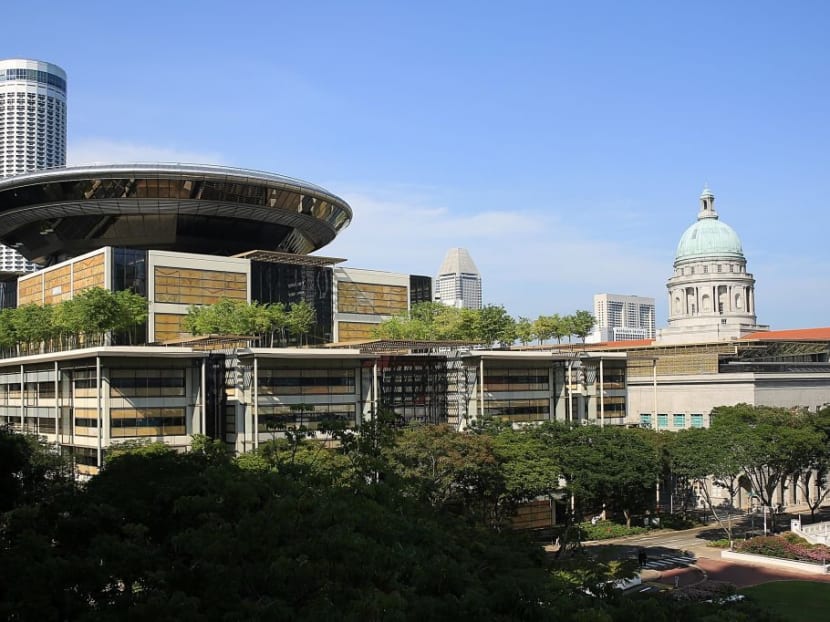

SINGAPORE — Rejecting the prosecution’s application to adduce fresh evidence in an appeal against the acquittal of a 57-year-old man cleared of raping a teenager, the apex court has made clear that applications by accused persons to admit further evidence on appeal will be assessed more leniently than those by the prosecution.
In its written grounds of judgement released on Wednesday (Feb 14), the Court of Appeal — comprising Chief Justice Sundaresh Menon, and Judges of Appeal Andrew Phang and Judith Prakash — spelt out the reasons: The considerable prejudice that would be suffered by an accused person who is wrongly convicted or who receives a manifestly disproportionate sentence relative to his culpability, the disparity of resources between the Prosecution and accused persons generally, and the need to sufficiently recognise the “harrowing nature” of what an accused person has to go through during criminal investigations and subsequent proceedings.
With these in mind, the judges rejected the application by the prosecution — led by Deputy Attorney-General Hri Kumar Nair — which was supported by two sets of further evidence which were not adduced during the trial in the lower courts.
An affidavit by the son of a man named Idris who was assigned as the driver of the prime mover where the rape allegedly took place, and a psychologist report.
Nevertheless, the judges allowed parts of the report, including the reasons for delays in the disclosure of child sexual abuse, to be admitted in a subsequent appeal, which will be heard at a later date to be fixed.
However, the judges said that a retrial would not be necessary, given that the delay in the teenager’s disclosure of the alleged abuse to her boyfriend and family members, as well as her reluctance to report the matter to the police, did not mar the trial judge’s view of the complainant’s credibility “to such an extent that it compromised his assessment of all (her) factual allegations”.
The accused, who cannot be named to protect the identity of the teenager, was said to have raped her in the back of a red prime mover, which he drove into a forested area in Punggol. He was alleged to have committed a series of sexual offences — including rape — between 2009 and 2011 when the teenager, who is the daughter of his lover, was around 15 to 16 years old.
The accused, who was cleared of the charges after a 10-day trial, had denied all charges, and told the court that he never drove the vehicle at all. His defence also relied on the testimony of his employer, who testified that the red prime mover was driven by Idris who died before the trial took place. In acquitting the man last April, Senior Judge Kan Ting Chiu found that the teenager’s evidence was not “unusually convincing”, and raised a few red flags about her accounts of the events.
Among other things, the trial judge noted that when she eventually broke her silence around a year after the alleged offences took place, her accounts were “contradictory and inconsistent”, despite the fact that she had ample time to recall the forms of abuse that she had suffered.
The trial judge also chided the police which could have better carried out the investigations. There were no photographs taken by police of the interior of the prime mover’s cabin where the rapes were alleged to have taken place. This would have been “important evidence” but the vehicle has since been scrapped.
In its appeal, the prosecution submitted a statement from Idris’ son who said that he had never seen his father drive a red prime mover, and he did not have a habit of sleeping in prime movers — contrary to the employer’s testimony.
However, CJ Menon, who delivered the Court of Appeal’s judgement, pointed out that the prosecution was aware of Idris’ existence while the trial was going on, and had time to further investigate before the trial ended, but chose not to.
“In fact, in oral argument, Mr Nair conceded that insufficient investigations had been done in this regard prior to the trial, and that at trial the Prosecution had made the decision to ‘press on’ and not to seek an adjournment of the proceedings for further investigations even after the existence of Idris was made known,” said CJ Menon, who had noted in general that the prosecution works with the police which has wide-ranging powers to collect any necessary evidence.
CJ Menon added: “Mr Nair expressly accepted that sufficient ‘digging was not done’. Having made the ‘conscious decision’ not to ask for an opportunity to obtain further evidence in his regard before closing its case… we do not think the Prosecution’s argument that this evidence could not have been obtained with reasonable diligence can now be accepted.”
Stay in the know. Anytime. Anywhere.

Subscribe to our newsletter for the top features, insights and must reads delivered straight to your inbox.
By clicking subscribe, I agree for my personal data to be used to send me TODAY newsletters, promotional offers and for research and analysis.






