
Covid-19: Mosques across Singapore to remain closed indefinitely, says Muis
SINGAPORE — Just three days before mosques across Singapore were set to reopen their doors, the Islamic Religious Council of Singapore (Muis) announced that the 70 mosques islandwide will remain closed indefinitely.
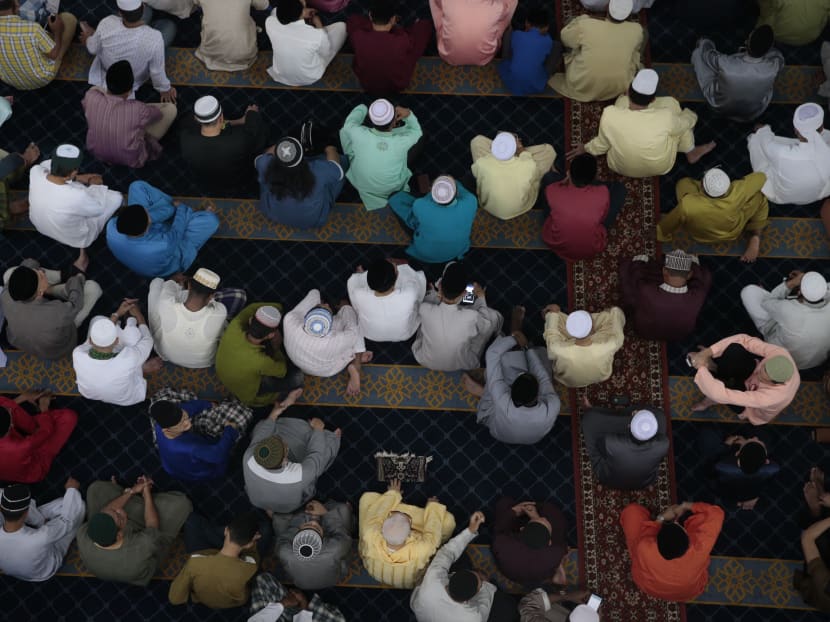
Mosques in Singapore will remain closed indefinitely, but small prayer rooms at selected mosques will be opened for limited hours.



SINGAPORE — Just three days before mosques across Singapore were set to reopen their doors, the Islamic Religious Council of Singapore (Muis) announced that the 70 mosques islandwide will remain closed indefinitely.
Muis said in a statement on Tuesday (March 24) that this move is necessary given the rapidly developing Covid-19 situation globally and in the region, and a heightened risk of community transmission.
It will, however, keep small prayer spaces open at 19 mosques which can accommodate no more than 20 people at a time and will be open for limited hours.
The closure of mosques as well as the suspension of Friday prayers will carry on until further notice and till the situation improves, it said.
Singapore's mufti, or the country's highest Islamic authority, Dr Nazirudin Mohd Nasir, said at a press conference on Tuesday that when the Fatwa Committee — a committee which issues religious guidance to Muslims in Singapore — announced the closure of mosques almost two weeks ago, they did say that they would only reopen the mosques when it is safe to do so.
“At that time, there were less than 200 cases in Singapore but the number now stands as of yesterday at 509 cases with two deaths. Therefore the situation has not improved but has worsened, and the curve with relation to the infection has risen sharply,” he said.
“So the only responsible and right thing to do now is to do everything necessary to prevent infection, which is not to gather in large congregations. As such, we agreed there is a need for mosques to remain closed and for congregational prayers to remain suspended until there are significant improvements as advised by the Ministry of Health.”
Mosques across the island have been closed since March 13.
Muis had said at the time that they would be closed for at least five days for thorough disinfection, after a few Singaporeans, who had attended a religious gathering in Malaysia and later visited several mosques back home, were diagnosed with Covid-19.
On March 16, Muis extended the closure of mosques across Singapore for nine days until March 26, as the authorities believed that there was a real risk of a large cluster forming from the participants of the religious gathering in Malaysia, which drew tens of thousands of people.
So far, three people in Singapore have tested positive for Covid-19 after attending the event.
Muis then said on Sunday that from Monday to Thursday, 19 mosques would open small prayer spaces for no more than 20 people at a time to perform afternoon prayers, ahead of the reopening.
These spaces will be open between 1.15pm and 6pm to serve working Muslims such as taxi drivers and delivery drivers.
Necessary precautions will be taken such as temperature taking, contact tracing, health declarations and safe distancing of at least 1m between each individual. Individuals who wish to perform prayers must also take along their own prayer items such as prayer mats and telekungs, the prayer garment worn by women.
Mr Esa Masood, chief executive of Muis, said that it decided to open these spaces as it wanted mosques to start putting in place necessary measures.
“By opening a few mosques to do this, we have been able to test our systems and can refine our systems over time in view of eventually opening the mosques at the right time. It is also important for our community to learn that these practices will be a new norm, so it’s a good time to get used to it. We’re doing it gradually so we can assess the risk and manage it accordingly,” he said.
He also addressed how Muis will continue to provide support for low-income families and elders who frequent mosques for help.
“The face-to-face visits have been reduced but what we are doing is we are replacing them with phone calls to the elderly and low-income families to keep in touch with them and see how they’re doing and monitor their health,” he said.
“The next few weeks are not a lull period for the mosque. A lot of work is being done behind the scenes to prepare all the necessary precautionary measures for when the mosques reopen.”
Related topics
Muis mosques Covid-19 coronavirusStay in the know. Anytime. Anywhere.

Subscribe to our newsletter for the top features, insights and must reads delivered straight to your inbox.
By clicking subscribe, I agree for my personal data to be used to send me TODAY newsletters, promotional offers and for research and analysis.






