
Covid-19: Travel bans for visitors to S’pore with recent history of travel to Iran, northern Italy, South Korea
SINGAPORE — All new visitors who have travelled to Iran, northern Italy or South Korea within the last 14 days will not be allowed to enter or transit through Singapore from 11.59pm on Wednesday (March 4), the Ministry of Health (MOH) said. This comes at a time when the number of Covid-19 cases has been spreading further and increasing globally.
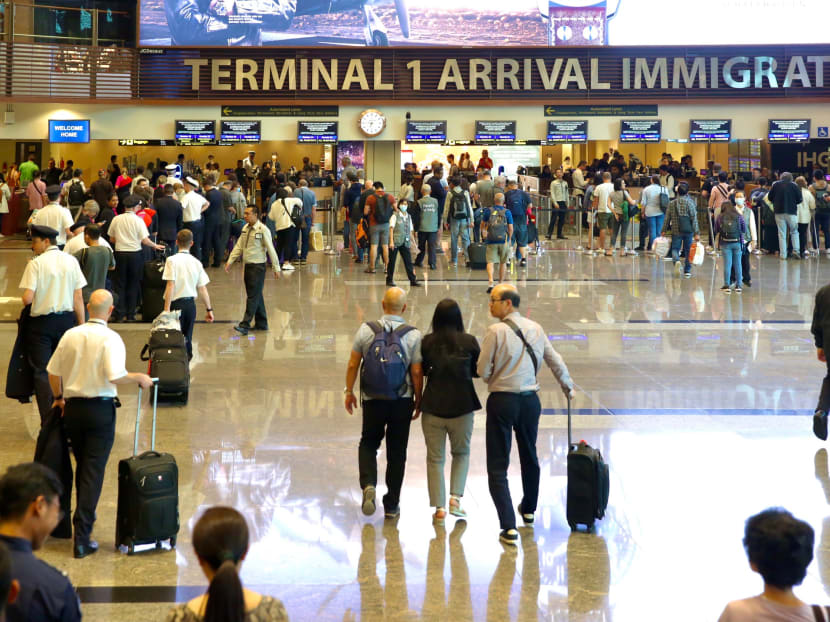
The expanded travel restrictions add to existing travel restrictions already imposed on travellers from mainland China, and come as Iran, Italy and South Korea face mounting Covid-19 crises.





SINGAPORE — All new visitors who have travelled to Iran, northern Italy or South Korea within the last 14 days will not be allowed to enter or transit through Singapore from 11.59pm on Wednesday (March 4), the Ministry of Health (MOH) said on Tuesday. This comes at a time when the number of Covid-19 cases has been spreading further and increasing globally.
Singapore citizens, permanent residents and long-term pass holders with a travel history to these places within the last 14 days will be issued with a stay-home notice. Long-term pass holders include those holding work passes, student’s passes, dependant’s and long-term visit passes.
The stay-home notice compels them to not leave home for a 14-day period after their return to Singapore.
Correspondingly, the Ministry of Manpower (MOM) said on Tuesday it will require all work pass holders — regardless of their nationality and including dependants — with travel history to these places within the last 14 days and planning to enter or return to Singapore, to obtain the ministry’s approval before they commence their journey.
The requirement applies to existing work pass holders currently out of Singapore, and in-principle approval holders who have yet to enter Singapore.
In addition, the Immigration and Checkpoints Authority (ICA) will not issue all forms of new visas to those with Iranian passports with immediate effect, MOH said.
Those holding Iranian passports who were also issued short-term and multiple-visit visas will have these visas suspended and will not be allowed to enter Singapore.
Singaporeans are advised to defer non-essential travel to Japan, Iran, northern Italy and South Korea.
The expanded travel restrictions add to the restrictions already imposed on travellers from mainland China, and come as Iran, Italy and South Korea face mounting Covid-19 crises.
As of noon on March 3, there were 90,689 confirmed cases of Covid-19 globally, including 10,538 cases outside of China. South Korea has reported 4,812 confirmed cases so far. Italy has 1,835 cases, while Iran has 1,501.
Japan, which is not affected by the enhanced travel measures, has confirmed 268 cases so far, MOH said.
National Development Minister Lawrence Wong, who chairs the multi-ministry taskforce for Covid-19, said that Japan is not included in the incoming restrictions because its number of confirmed cases is lower than the other countries at this stage.
“For Japan, we are managing the risk by having an advisory on outgoing trips at this juncture,” Mr Wong told reporters on Tuesday.
.embed-container { position: relative; padding-bottom: 56.25%; height: 0; overflow: hidden; max-width: 100%; } .embed-container iframe, .embed-container object, .embed-container embed { position: absolute; top: 0; left: 0; width: 100%; height: 100%; }MOH said that the extra precautions will help reduce the risk of imported cases, but the coronavirus is still spreading quickly around the world.
“In the days ahead, it is likely that we will see a surge of infected cases in countries around the world, including in America, Europe, the Middle East and the rest of Asia. Singapore is a small, globally connected city-state and we are faced with a higher risk of imported cases,” it said in its statement.
“There are likely to be many undetected cases in countries that are not undertaking proactive testing,” it added, without naming any countries.
“Increasingly, it will not be possible to stop the virus at our borders. We also cannot isolate Singapore and shut ourselves from the world. Despite our best efforts, we have to be prepared for new spikes in Covid-19 cases in Singapore, as has happened elsewhere.”
Mr Wong explained that border control measures are still useful at this stage “because we can still identify where the sources of risks are and then we can take appropriate measures to reduce the risk” of imported cases of Covid-19.
“By doing so, we (can) flatten the epidemic curve in Singapore. We buy ourselves time and we avoid a situation where our hospitals get overwhelmed by a sudden surge of cases,” he said.
However, Singapore may come to a point where travel restrictions and border controls alone will no longer be enough once the coronavirus spreads to nearby countries, he added.
“It will depend on how widely the virus spreads in other countries. It's our assessment of how endemic it becomes around the world. And at that juncture, I think some of these restrictions may become less relevant,” Mr Wong said.
Urging Singaporeans to continue practising good personal hygiene, MOH said that it will redouble its efforts and continue put resources into detecting and isolating Covid-19 cases as well as close contacts to “break the chain of infection”.
MOH said that Singaporeans should adopt the following practices:
-
Stay home when unwell, including during the period covered by medical certificates
-
Wash hands regularly with soap and water, and not touching the face unnecessarily
-
Clean up after themselves at hawker centres and not sharing utensils.
“These need to be a part of our daily life permanently. Such habits will enable us to resist infections like Covid-19, while going about our daily lives normally as much as possible,” the ministry said.
Related topics
Covid-19 coronavirus Wuhan virus Iran Italy South Korea TravelStay in the know. Anytime. Anywhere.

Subscribe to our newsletter for the top features, insights and must reads delivered straight to your inbox.
By clicking subscribe, I agree for my personal data to be used to send me TODAY newsletters, promotional offers and for research and analysis.






