
She juggled 4 jobs as a student; now she's the face of a charity that helps women from low-income families
SINGAPORE — Decades have passed but Ms Kaylee Kua still vividly remembers her growing up years, cramped in a three-room flat with her parents, grandparents and two elder siblings.
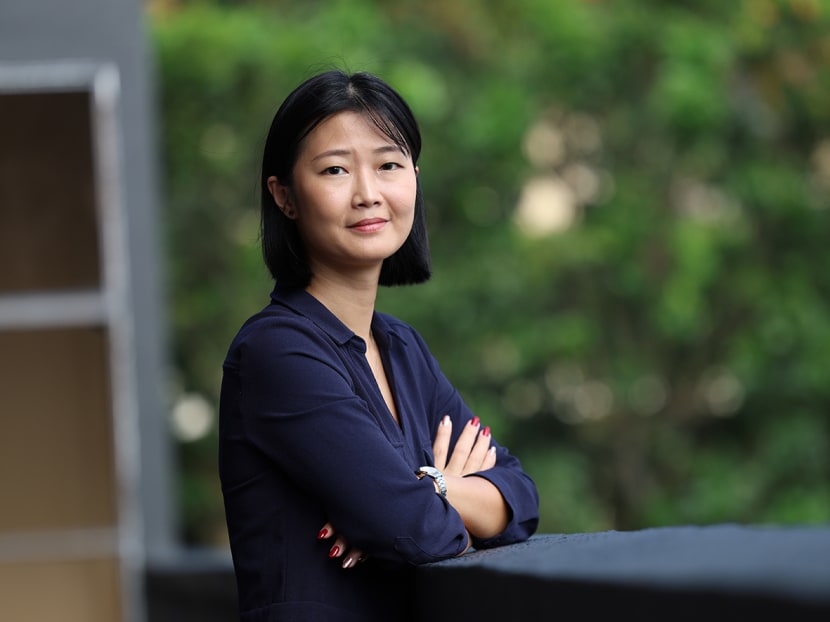
Ms Kaylee Kua, the new executive director of Daughters of Tomorrow.


This audio is AI-generated.
- At 37, Ms Kaylee Kua is the newly appointed executive director of Daughters of Tomorrow
- Daughters of Tomorrow is a local charity founded in 2014 that supports underprivileged women in being financially independent
- Many of its beneficiaries are women who face barriers to accessing well-paying jobs while bearing caregiving responsibilities
- Ms Kua is advocating for a more inclusive system of work and a more empathetic understanding of what poverty looks like in Singapore


SINGAPORE — Decades have passed but Ms Kaylee Kua still vividly remembers her growing up years, cramped in a three-room flat with her parents, grandparents and two elder siblings.
Money was tight so there were times when bills went unpaid and the authorities cut off the electricity and water supplies.
The family had to resort to using prayer candles for light, and collecting water in pails for bathing.
While Ms Kua was studying in university, she juggled four jobs — giving tuition, distributing flyers, working at the Inland Revenue Authority of Singapore, and as a laboratory officer at a blood bank — because she did not want to add to the family's financial woes.
Yet Ms Kua, 37, is clear that her experiences bear no comparison to the lives of many of the women she works with at Daughters of Tomorrow, a local charity founded in 2014 that aims to empower women from low-income families to achieve financial independence.
If anything, her growing up years have enabled her to better relate to the charity's beneficiaries; there are some, for instance, who have also had their utilities cut off after failing to pay the bills.
"The authorities never turn off your water 100 per cent; you get a dripping tap but we would have to collect pails of water for showering later," Ms Kua said.
"My siblings and I, we would just disturb each other and threaten each other when we quarrel, like 'I will pour away the water so you have no water to shower later'.
"Mental health is quite a challenge for many families right now. So in my work, we try to also give them a different perspective of how a seemingly negative situation can become positive and can be a strength for them, once they get through this period."
Ms Kua has been with the organisation for more than eight years, taking on various roles such as being its programmes manager.
This year, she was appointed as Daughters of Tomorrow's executive director.
While it is common to get “jaded” working in the social service sector, Ms Kua said she remains motivated as even if she cannot improve everybody's conditions, she is able to impact the world of the individuals who came for support.
SYSTEMIC BARRIERS
Around half of Daughter of Tomorrow’s beneficiaries are women who have attained secondary school level education or lower, and can only find work in fields like hospitality and retail, said Ms Kua.
As many of these jobs involve shift work and many women also bear “uneven caregiving responsibilities”, such jobs become inaccessible when low-income women have “no access to affordable alternative caregiving arrangements”, she added.
Even though more employers are open to flexible work arrangements since the Covid-19 pandemic, such arrangements are usually open only to professionals, managers, executives and technicians (PMET). Ms Kua believes that systemic change is needed to make work more inclusive.
She said: “How can we introduce this for non-PMET roles? How can we redesign work so that people can actually find all these other services and employment opportunities accessible for them?”
The charity runs a "poverty sensitisation" workshop that simulates the stressors that lower-income women face on a daily basis, to help employers become more aware of a possible employee’s life outside of work.
For example, one issue that many women face in returning to the workforce is maintaining regular attendance, since some mothers may have to take time off work whenever their children fall sick, with no one to outsource their caregiving responsibilities to.
"During the probation period, it’s challenging for both employers and employees because for the employers, of course they hire someone and expect the person to turn up," she said.
"But for the employees… (they are thinking) ‘I literally have no choice and in fact, I’m taking unpaid leave. I know that I will be paid less during that month."
WHAT POVERTY LOOKS LIKE IN SINGAPORE
One of the key areas Ms Kua would like to focus on as executive director is combatting biased narratives of what poverty looks like.
For instance, some Singaporeans may have preconceived notions that a person from a low-income background is likely someone who is “really skinny” or malnourished.
In contrast, Ms Kua said some who are in poverty may have “weight management issues”, which lead to health conditions such as diabetes and high blood pressure, since nutritious food tends to be more expensive.
“They could be wondering, ‘If you’re poor, why are you smoking?’ But… sometimes it's actually rather than spending thousands of dollars for mental health support, a pack of cigarettes is indeed cheaper to get the escape,” she said.
“Poverty doesn’t look like what a lot of people imagine… Poverty in Singapore may even look like you are living in a one-room rental flat with a huge TV that is donated to you and you keep the TV because that’s the only source of entertainment for your family.”
Ms Kua said that many Singaporeans do not understand how it can be “more expensive to be poor”, as underprivileged households tend to rack up higher medical bills and are unable to enjoy discounts from making purchases in bulk.
In Singapore’s hot climate, homes without air-conditioning can mean that getting a good night’s rest is especially difficult for a family, triggering health conditions such as ezcema flare-ups.
“It’s (comprised of) multifaceted things that if you just have a little bit more money, more resources, you would have never thought that this could be such a major thing in your life that just drains you mentally, physically and financially,” she added.
With Daughters of Tomorrow, Ms Kua is advocating for changes in workplace practices and a minimum salary of S$2,900 as a liveable wage.
She said that the charity has a three-year plan in place to ensure their own staff salaries “walk the talk” and meet this standard as well.
On her new appointment, Ms Kua said that she is excited to take on new responsibilities despite it being a “big challenge” as the way she can make change in the social service space will “look very different”.
“How can we tap the younger generation who are so passionate, who have access to more information and understand societal issues so much more? How can we leverage them, and let the new generations change society in the future?”
These are the questions she hopes to find answers for.
Related topics
poverty gender inequalityStay in the know. Anytime. Anywhere.

Subscribe to our newsletter for the top features, insights and must reads delivered straight to your inbox.
By clicking subscribe, I agree for my personal data to be used to send me TODAY newsletters, promotional offers and for research and analysis.





