
Deputy Attorney-General calls on apex court to interpret Constitution’s by-election provision
SINGAPORE — Deputy Attorney-General Hri Kumar Nair on Wednesday (Jan 16) called on the highest court of the land to interpret when a by-election is needed for a group representation constituency (GRC), under an article in Singapore’s Constitution.
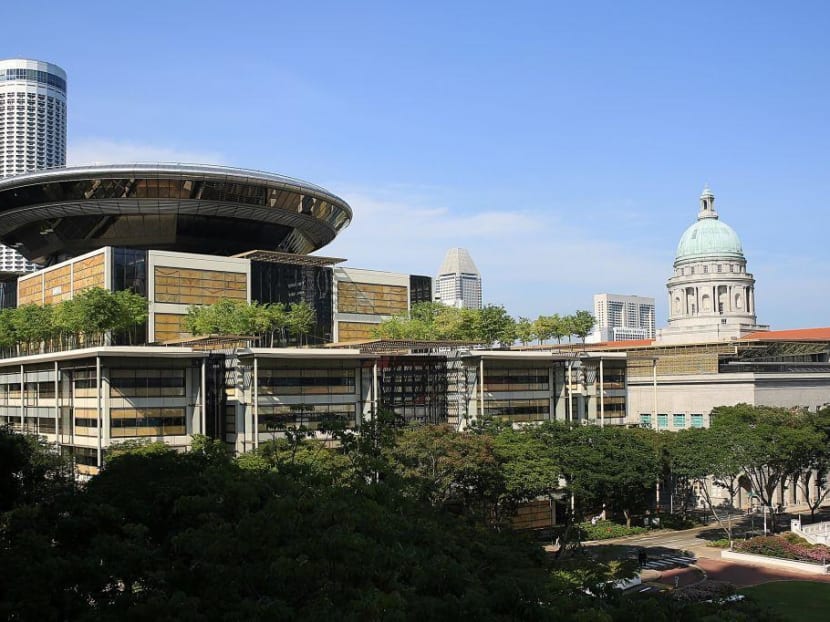
Representing the Attorney-General, Mr Hri Kumar Nair urged a five-judge panel to go further than dismissing the appeal of Dr Wong Souk Yee, a Marsiling-Yew Tee resident and Singapore Democratic Party member.



SINGAPORE — Deputy Attorney-General Hri Kumar Nair on Wednesday (Jan 16) called on the highest court of the land to interpret when a by-election is needed for a group representation constituency (GRC), under an article in Singapore’s Constitution.
To give effect to what Parliament intended, the article should require that a by-election be called when a seat becomes vacant in a single-member constituency, or when all seats become vacant in a GRC, he said.
Representing the Attorney-General, Mr Nair urged a five-judge panel to go further than dismissing the appeal of Dr Wong Souk Yee, a Marsiling-Yew Tee resident and Singapore Democratic Party member.
Dr Wong contends that the law requires a by-election to be called in the four-member Marsiling-Yew Tee GRC, after one of its Members of Parliament (MPs), Madam Halimah Yacob, vacated her seat to run for president of the country in 2017.
Dr Wong is relying on Article 49(1) in the Constitution, which states that whenever the seat of a member has become vacant for any reason other than the dissolution of Parliament, the vacancy shall be filled by election in the manner provided by any law relating to parliamentary elections.
The current provision was enacted more than three decades before the GRC scheme was introduced, Mr Nair said.
And Parliament’s specific intention for GRC vacancies was that no by-election would be called if a member vacates his or her seat, he added.
Based on the literal meaning of Article 49(1), there is a gap, or lacuna, “whereby no constitutional provision provides for the filling of vacancies in a GRC”, he said.
“In principle, (the court) should resolve any doubt that Article 49(1) should apply to GRCs only when all seats in the GRC were (vacated),” he said.
This could be done through either of two methods, a rectifying construction or an updating construction, Mr Nair said.
SUFFICIENT CERTAINTY?
However, Chief Justice Sundaresh Menon, one of the five judges, voiced his discomfort with Mr Nair’s request.
Mr Menon said that the court would have to be satisfied that there was a legislative drafting error by gaining “sufficient certainty” on how Parliament had intended for the article to be read.
“Do we have that certainty?” he asked.
Mr Nair pointed to statements made by then-first Deputy Prime Minister Goh Chok Tong in 1988, when debating amendments to the Parliamentary Elections Act which put to effect the GRC scheme.
At the time, Mr Goh said that he would “not want to provide for by-election to replace somebody who has vacated his office (in a GRC)”, because it would introduce “the possibility that one MP can hold the other two ransom”.
The Parliamentary Elections Act also states that for GRCs, no writ of election shall be issued to fill any vacancy unless all the members for that constituency have vacated their seats in Parliament, Mr Nair added.
“Not only was Parliament’s intention made clear… Parliament also gave reasons why it wanted that mechanism to apply,” he argued.
The case of Dr Wong, who is represented by lawyer Peter Low, is “entirely misconceived”, Mr Nair said.
Article 49(1) of the Constitution does not provide for any power to force a Member of Parliament to vacate his or her seat, he said.
Marsiling-Yew Tee’s three other MPs are National Development Minister Lawrence Wong, Mr Alex Yam and Mr Ong Teng Koon.
The apex court will issue its decision at a later date.
Stay in the know. Anytime. Anywhere.

Subscribe to our newsletter for the top features, insights and must reads delivered straight to your inbox.
By clicking subscribe, I agree for my personal data to be used to send me TODAY newsletters, promotional offers and for research and analysis.






