
Designs for migrant workers, diabetics at polytechnic showcase
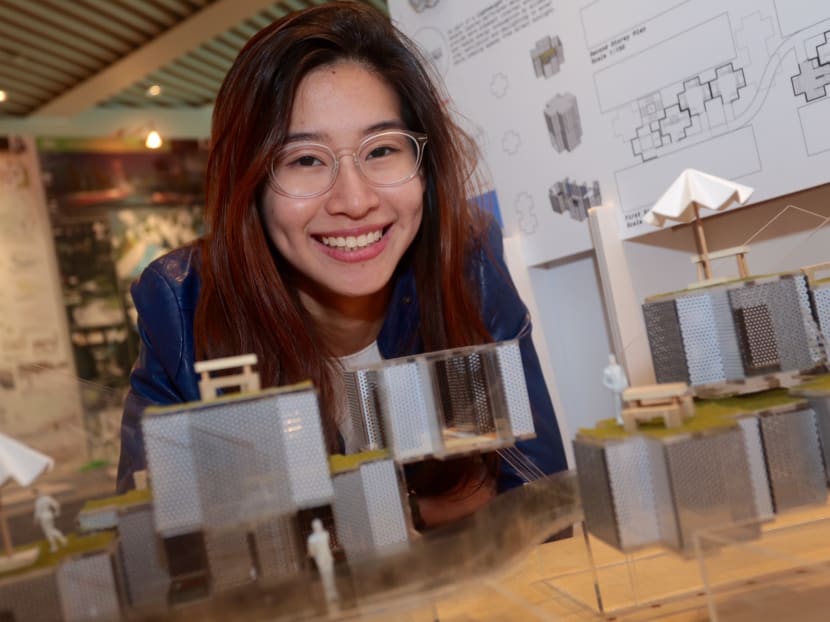
SINGAPORE — The Little India riot in 2013 got Ms Claudia Lim, an interior architecture and design student at Temasek Polytechnic, thinking about the living environment of migrant workers in Singapore.

SINGAPORE — The Little India riot in 2013 got Ms Claudia Lim, an interior architecture and design student at Temasek Polytechnic, thinking about the living environment of migrant workers in Singapore.
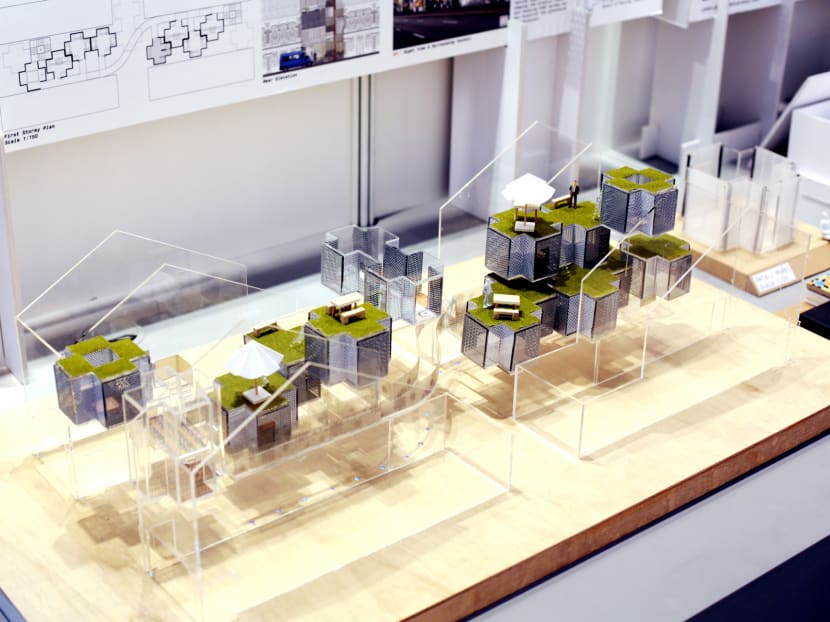
Realising that migrant workers might prefer living spaces that allowed them to interact with the community at large, she decided to design “social housing” for migrant workers as her final year project. The work features modular units that can be easily assembled and stacked on existing structures, with recreational spaces on the rooftops where residents can relax.
Her project is one of the 423 being showcased at The Design Show until tomorrow. Organised by Temasek Polytechnic’s School of Design, this year’s exhibition, which is open to the public, centres on innovative ideas to drive change and benefit the community.
Speaking at the showcase yesterday, Ms Lim, 20, said: “I realised that they need a lot more than a roof over their heads. They need a living space that can cater to their needs and lets them interact with their community. I did a lot of research on their culture, and asked many migrants what they would like to see in their ideal living space. This is how I came up with my idea.”
Her stackable housing units will be made of galvanised steel — a cost-effective option — and can be flexibly oriented to save space. They are designed to be narrow enough to fit in vacant spaces between shophouses in areas such as Little India, and can be elevated by structural beams 3m above street level so that people can still pass through the alleys underneath.
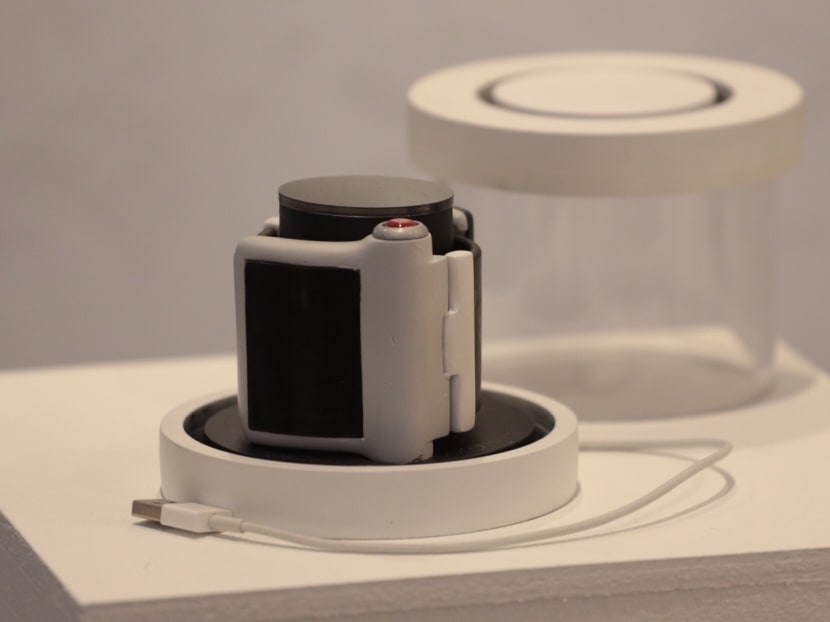
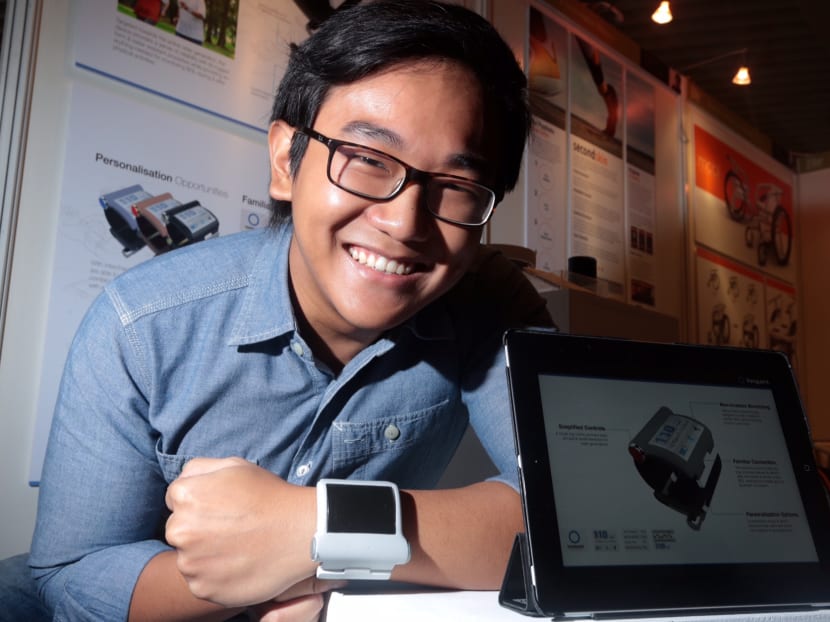
Another project showcased yesterday is a design for a mobile device for diabetics, which incorporates a needle-free blood-glucose monitoring system developed by researchers in India, as well as an application to remind the wearer of meal times and fitness sessions. The device, designed to be worn on the wrist, will also allow the wearer to connect with a community of people who share the same condition so that they can support each other and discuss their experiences.
Product and industrial design student Eddy Iswandi Yap, 21, said he was motivated by the accounts of patients driven to despair by the burden of managing their condition, which his mother, who works at Changi General Hospital, told him about.
“A lot of them also spend lots of money on strips to test their glucose levels every day. This is a cheaper solution. I just wanted to try and do something to help them out,” he said.
A needle-free blood-glucose monitoring system would eliminate the discomfort of having to prick one’s finger to draw blood for tests. The device would also track blood-sugar levels throughout the day so patients can plan their meals and activities better.
“Design is not only about aesthetics anymore,” said Mr Marcus Heng, a product and industrial design lecturer at Temasek Polytechnic. “Functionality is very important as well, and I think our students have given it their best shot and came up with some very creative designs.” JORDAN SIMPSON
Stay in the know. Anytime. Anywhere.

Subscribe to our newsletter for the top features, insights and must reads delivered straight to your inbox.
By clicking subscribe, I agree for my personal data to be used to send me TODAY newsletters, promotional offers and for research and analysis.






