
Dining group tests drones in restaurants
Fancy flying drones for a faster delivery system in a restaurant? That’s if you have at least a million dollars to spend on 40 of such robots. The Timbre Group, a popular chain of dining establishments here, said yesterday that it will be spending a ‘seven-digit sum’ on 40 drones at five of its venues, starting from the end of the year. Managing director Edward Chia said the drones are expected to improve productivity by about 25 per cent as they would replace the need for staff to shuttle between the kitchen and dining areas. Drinks and dishes are placed on trays on the drones, which are able to carry up to 700g. The drones then zip across the room to a docking station where waiters take the food and drinks and serve them to customers. Singapore-based company Infinium Robotics, which developed the robots, said there were plans to increase the drones’ load capacity to 2kg. The company took three years to develop the technology, which will be commercialised by year-end. TAN WEIZHEN, PHOTO: DON WONG
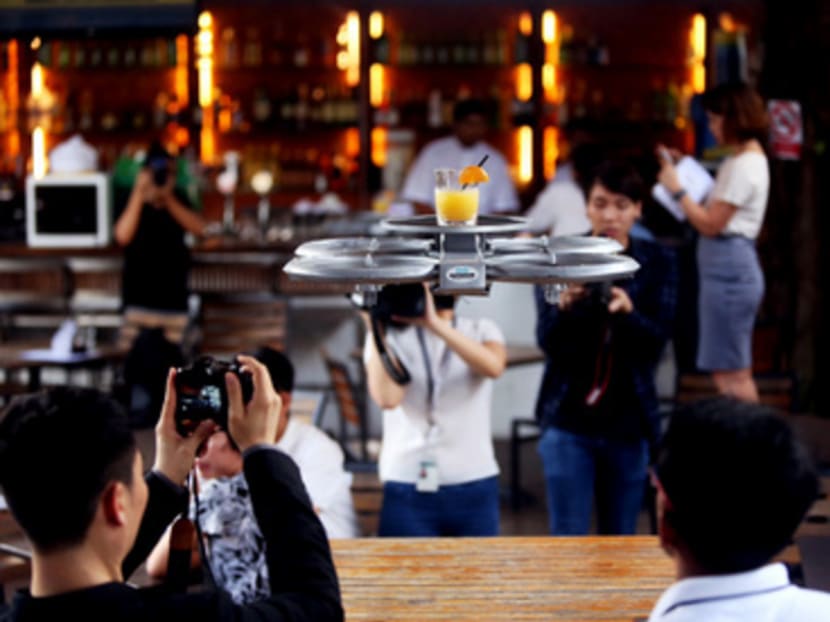
An Infinium-Serve flying robot taking off from a bar with a plate of snacks during a media demonstration at Timbre @ The Substation.

Fancy flying drones for a faster delivery system in a restaurant? That’s if you have at least a million dollars to spend on 40 of such robots. The Timbre Group, a popular chain of dining establishments here, said yesterday that it will be spending a ‘seven-digit sum’ on 40 drones at five of its venues, starting from the end of the year. Managing director Edward Chia said the drones are expected to improve productivity by about 25 per cent as they would replace the need for staff to shuttle between the kitchen and dining areas. Drinks and dishes are placed on trays on the drones, which are able to carry up to 700g. The drones then zip across the room to a docking station where waiters take the food and drinks and serve them to customers. Singapore-based company Infinium Robotics, which developed the robots, said there were plans to increase the drones’ load capacity to 2kg. The company took three years to develop the technology, which will be commercialised by year-end. TAN WEIZHEN, PHOTO: DON WONG
Stay in the know. Anytime. Anywhere.

Subscribe to our newsletter for the top features, insights and must reads delivered straight to your inbox.
By clicking subscribe, I agree for my personal data to be used to send me TODAY newsletters, promotional offers and for research and analysis.






