
Ex-president of S'pore thumbdrive inventor Trek 2000 jailed 2 months for role in falsifying firm’s financial accounts
SINGAPORE — A former executive of a publicly listed company that invented the thumbdrive was sentenced to two months’ jail on Monday (May 8) for his role in helping inflate the firm’s revenue and net profits for the 2015 financial year.
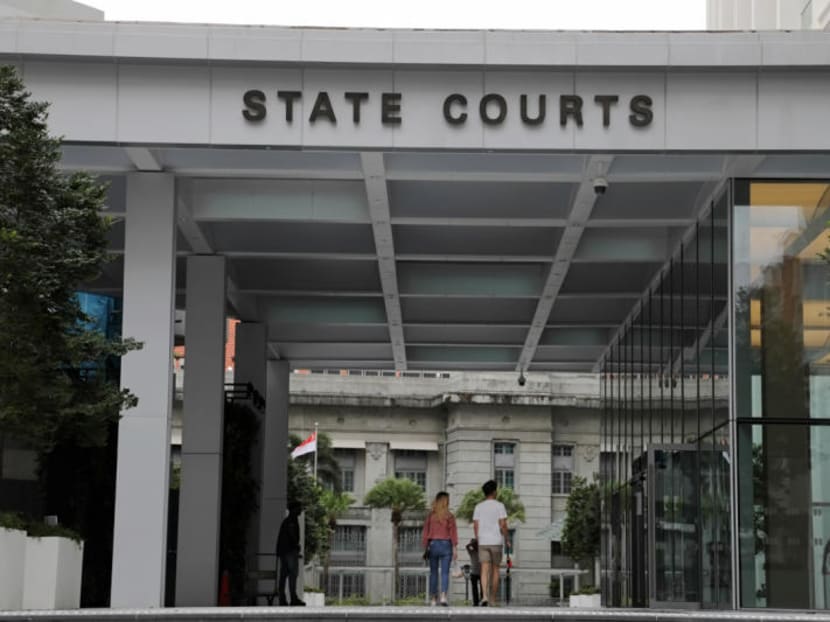
A view of the State Courts building in Singapore.

- Foo Kok Wah, 56, was sentenced to two months’ jail by a district court
- He had pleaded guilty to one charge for conspiring with Trek 2000’s to cheat the firm’s auditors Ernst & Young
- He also pleaded guilty one charge for instigating another employee to falsify documents
- Foo is the last of the four men to be sentenced in connection to the conspiracy to inflate Trek 2000’s revenue


SINGAPORE — A former executive of a publicly listed company that invented the thumbdrive was sentenced to two months’ jail on Monday (May 8) for his role in helping inflate the firm’s revenue and net profits for the 2015 financial year.
Foo Kok Wah, who used to be divisional president of Trek 2000, had pleaded guilty in a district court on Jan 30 this year to one charge of engaging in a conspiracy with three former executive directors of the firm to cheat the firm’s auditors Ernst & Young.
The 56-year-old also pleaded to one charge of instigating another employee to falsify documents.
A third charge of a similar nature was taken into consideration for the sentencing of Foo, who is the last of the four men to be sentenced in connection with the conspiracy to inflate Trek 2000’s revenue.
Rejecting calls by his defence lawyers for a fine instead of jail time, Principal District Judge Victor Yeo Khee Eng said a fine would have sent the wrong signal about the seriousness of the offence.
Said the judge: “Such offences clearly have the potential to affect the integrity of, and undermine public confidence, in the financial market and ultimately harm Singapore's reputation as a leading global investment hub and financial sector.”
The other executives involved are Henry Tan, Gurcharan Singh and Poo Teng Pin. Their current ages are listed in court documents as 65, 66 and 45 respectively.
Tan, who also goes by the name Henn Tan, is the founder of Trek 2000 and the creator of the thumbdrive. He was sentenced to 16 months' jail on Oct 11 last year for committing accounting fraud.
This came two years after he was fined S$80,000 on Aug 24 in 2020 for failing to disclose S$14 million in company transactions.
Singh, the former chief financial officer, was sentenced to 11 months' jail and a fine of S$20,000 on Dec 5 last year after he pleaded guilty to eight charges.
They include a charge of failing to make immediate announcements of interested person transactions, a charge of conspiring with others to falsify Trek 2000's financial statements and another charge of engaging in a conspiracy to cheat the company's auditors.
Singh was also guilty of three charges of instigating an employee to forge documents and two charges of abetting another to falsify documents.
As for Poo, the company’s former director, he was jailed for nine months and fined S$20,000 in June 2020.
The Malaysian had admitted to conspiring with Tan, Singh and Foo to inflate Trek 2000’s revenue and net profits for the 2015 financial year.
WHAT HAPPENED
The police said in a press release on Monday that the conspiracy between Tan, Singh and Poo to falsify Trek 2000’s financial statement took place between November and December 2015.
They did this by recording a fictitious sale worth US$3.2 million (S$4.2 million) to the Taiwan-based electronics company Unimicron Technology.
However, while Trek 2000 was being audited by Ernst & Young in February 2016, the accounting firm requested supporting documents for the fictitious sale.
As the three company leaders were unable to produce the requested documents, they decided to inform the auditors that it was Colite Technology, a green energy supplier in South Carolina in the United States, that was the counterparty to the fictitious sale, and not Unimicron.
They then roped Foo in to assist in addressing Ernst & Young’s queries.
This included preparing and submitting a document to the auditors that set out a false chronology of events relating to the fictitious sale.
To lend credence to the false chronology of events, Foo further instigated an employee to create a false tax invoice and delivery order reflecting that a sale was made to Colite.
However, the court heard on Monday that Ernst & Young was not satisfied with the explanations provided by the Trek 2000 management, and reported the matter to the Accounting and Corporate Regulatory Authority (Acra).
Acra, in turn, reported the matter to the Commercial Affairs Department of the Singapore Police Force.
MISPLACED LOYALTY
On Monday, Principal District Judge Yeo highlighted some of the salient points raised in a previous hearing by both the prosecution — comprising Deputy Public Prosecutors Suhas Malhotra, Ryan Lim and Sivanthan Jheevanesh — and Foo’s defence counsels R Thrumurgan and Haneef Abdul Malik of Trident Law Corporation.
The prosecution, which sought a jail term of at least two months, had told the court that this was a case of “conspiracy by the senior executives of the listed company to deceive its auditors” during a statutory audit.
The prosecution had also submitted that it was the aim of Foo and his co-conspirators to present a false picture of the group's finances to the market.
This, they said, was a fraud not only against the auditors, but against the investing public at large.
In seeking a lighter sentence for their client, the defence lawyers had argued that their client was a “mere salesman and a company man” for all his working life in Trek 2000.
Foo’s title, they said, was given to him to “create a veneer of authority or standing for the outside world”.
But in reality, it was the other executive directors — Tan, Singh and Poo — who had both the authority and ability to execute decisions relating to Trek 2000’s commercial, operational and financial matters.
The defence lawyers had also stated that Foo was motivated to participate in the conspiracy “by his misplaced loyalties” when the company, which facilitated the upbringing of his family, had a crisis, the judge noted.
Arguing that Foo’s culpability in the offence was lower compared to his co-conspirators, the lawyers said that their client did not deserve to be imprisoned and instead be given a fine of not more than S$20,000.
DAMAGING SINGAPORE’S REPUTATION
In delivering the sentence, Principal District Judge Yeo said that not much weight can be placed on the defence’s submission that their client was merely following instructions and motivated by misplaced loyalties.
While Foo was not involved in the initial plot, Principal District Judge Yeo said he had nevertheless made a conscious decision to perpetuate the elaborate fraud when he learned of it.
“He could have backed out of the plot, considering that he had already tendered his notice of resignation (at that point of time),” said the judge.
He added that Foo was neither “new to the workforce nor an inexperienced junior staff member of the company”.
“This was not a one-off act committed in the moment of impulse. And this was also not a case where the accused was coerced or misled into participating in the conspiracy, and defrauding the auditors.”
While the judge agreed that Foo was the least culpable of his co-conspirators, he said that he could not impose a fine as it would “send a wrong signal” that such serious offences committed by key personnel in a listed company could be dealt with by a mere financial penalty.
For conspiring to cheat Ernst & Young, Foo could have been jailed up to three years, or fined, or both.
For instigating an employee to falsify documents, Foo could have been jailed up to 10 years, or fined, or both.
Related topics
conspiracy thumbdrive cheatStay in the know. Anytime. Anywhere.

Subscribe to our newsletter for the top features, insights and must reads delivered straight to your inbox.
By clicking subscribe, I agree for my personal data to be used to send me TODAY newsletters, promotional offers and for research and analysis.






