
Explainer: Why did UK PM Boris Johnson quit and who might replace him?
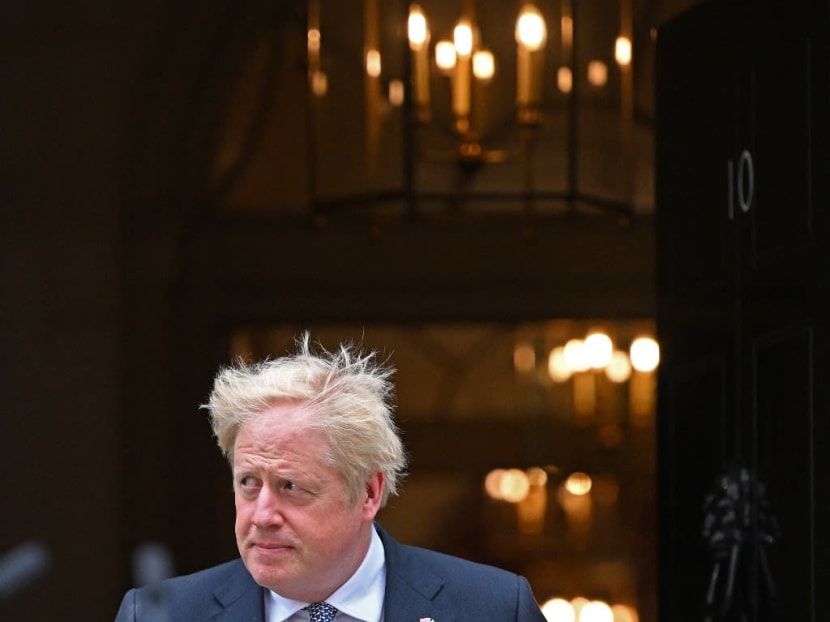

- British Prime Minister Boris Johnson announced he would step down after facing calls from dozens of colleagues to quit
- He said he plans to remain prime minister until a successor is chosen, but critics are calling for him to leave immediately
- It follows a flood of resignations from more than 50 members of government, triggered by two senior ministers who said they no longer have confidence in Mr Johnson


SINGAPORE — A decision by British Prime Minister Boris Johnson on Thursday (July 7) to step down in the face of increasingly insistent calls from parliamentary colleagues comes less than three years since he claimed the top job in an emphatic victory over his nearest rival.
The end of Mr Johnson's tumultuous term follows a series of scandals that have tarnished his reputation and culminated in a wave of mass resignations by his ministers and Conservative Party lawmakers.
Although Mr Johnson survived an earlier vote of no confidence, and was dubbed the "greased piglet" by British tabloids for his apparent ability to wriggle out of any scandal, he finally agreed he would walk away from a job he called "the best in the world".
The Conservatives will now have to elect a new leader, a process which could take weeks or months.
Mr Johnson said he planned to remain as prime minister until a successor was chosen.
Critics are calling for him to leave immediately, saying he has lost the trust of the party. They propose an interim prime minister be appointed.
When he leaves, he will become the third consecutive British prime minister to resign, rather than be voted out, in recent years, following Mrs Theresa May and Mr David Cameron, all on the Conservative side of politics.
Mr Johnson, who maintained a slightly dishevelled look with his trademark mop of blonde hair carefully unkempt, came to power in 2019 promising to deliver Brexit after playing a crucial role in pushing the "leave" vote.
Since Russia’s invasion of Ukraine, he has also maintained staunch support for the embattled nation and its president and extended billions of dollars in humanitarian and military aid to Ukraine.
TODAY takes a look at what led to his resignation, what happens next and what this means for the United Kingdom’s foreign policy.
WHAT LED TO HIS RESIGNATION?
The flood of resignations began on Tuesday with two of his highest-ranking ministers — finance minister Rishi Sunak and health minister Sajid Javid — who said they no longer had confidence in Mr Johnson to lead the country.
Mr Johnson initially remained defiant, citing his “colossal mandate” from voters in the 2019 election.
By Thursday morning, more than 50 members of the government had quit, largely to distance themselves from the growing controversies surrounding Mr Johnson.
The resignations came a week after a fresh scandal emerged last week when Conservative Member of Parliament (MP) Chris Pincher resigned from his role as deputy chief whip.
He told Mr Johnson he “drank far too much” at a private member’s club and “embarrassed myself and other people”.
Accusations soon surfaced that Mr Pincher, who held a government role in pastoral care, had groped men that evening at the private members' club.
It later emerged that Mr Johnson was briefed that Mr Pincher had been the subject of previous sexual misconduct complaints before Mr Johnson appointed him deputy chief whip.
Initially, ministers and Mr Johnson's spokesman insisted that the prime minister had not been aware of specific allegations against Mr Pincher. His spokesman later said Mr Johnson knew, but had forgotten.
This followed growing discontent among Conservative MPs since a damning report into boozy parties at his Downing Street residence and office that broke Covid-19 lockdown rules, including a gathering for his 56th birthday that he was fined by police over.
WHAT HAPPENS NEXT?
Mr Johnson said he has appointed a new Cabinet that will not seek to introduce new policies while the party chooses a new leader.
A timetable of succession is set to be announced next week but some in the party have called for him to go now.
Mr Keir Starmer, leader of the main opposition Labour Party, said he would call for a vote of no confidence in the government in Parliament if Mr Johnson does not step down immediately.
The announcement of his resignation has kicked off a scramble among contenders though there is no clear front-runner.
A snap YouGov poll of Conservative Party members found that defence minister Ben Wallace was the favourite to replace Mr Johnson, followed by junior trade minister Penny Mordaunt and Mr Sunak, the former finance minister.
Two other possible contenders are former Cabinet ministers Jeremy Hunt and Sajid Javid, who previously stood for leadership. Others include Foreign Secretary Liz Truss, Foreign Affairs Committee chair Tom Tugendhat, current finance minister minister Nadhim Zahawi and Attorney General Suella Braverman.
After internal votes are held within the Conservative Party, the winner becomes the leader of the party and is the de facto prime minister.
He or she does not have to call a snap election, but has the power to do so.
WHAT DOES IT MEAN FOR THE UK'S FOREIGN POLICY?
One of Mr Johnson’s proudest achievements was “getting Brexit done”.
But many commentators have said that Britain rejoining the European Union (EU) was unlikely after Mr Johnson steps down.
Even Mr Starmer, the Labour leader who had previously pushed for a second Brexit referendum, has said he will not revisit arguments over EU membership.
A new British prime minister will have the opportunity to improve personal relations with key European leaders, said Financial Times foreign affairs columnist Gideon Rachman.
“However, while this is certainly a possibility, it is not a given,” he said.
The Conservatives could also choose a Brexit supporter as the next prime minister who would prolong the confrontation with the EU over a new British law that would effectively override parts of a post-Brexit trade deal for Northern Ireland, he added.
Mr John Kampfner, executive director at independent policy institute Chatham House, said that Britain’s strong military and political support for Ukraine is a domestically popular stance that will continue after his resignation.
“Similarly, the harder line on China and the so-called ‘Indo-Pacific tilt’ should be seen as longer-term strategies,” he wrote in a commentary on the policy institute’s website.
“Trade deals will continue to be pursued, doggedly and at a frustratingly slow pace,” he added.
Related topics
Britain Boris Johnson brexit Conservative Party European Union Northern IrelandStay in the know. Anytime. Anywhere.

Subscribe to our newsletter for the top features, insights and must reads delivered straight to your inbox.
By clicking subscribe, I agree for my personal data to be used to send me TODAY newsletters, promotional offers and for research and analysis.






