
Explainer: 'Energy stick' nasal inhalers are catching on among S'pore's youths. What are they and what risks do they pose to one's health?
SINGAPORE — Priced under S$5 and boasting flavours such as "power mint" and "succulent grapes”, a new breed of nasal inhalers known as "energy sticks", which claim to give users an energy boost and relieve nasal congestion, is catching on among the youth here.
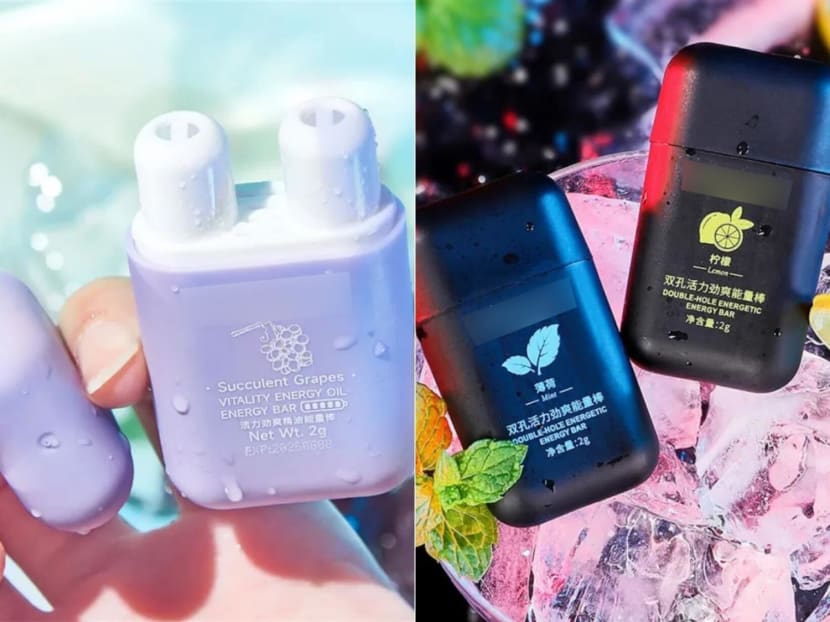
Examples of "energy sticks" that could be found on Lazada.


This audio is AI-generated.
- A new breed of nasal inhalers known as energy sticks now come in fruity flavours and claim to boost their users' energy levels
- The devices have caught the attention of health authorities, who are monitoring how these products are used
- Elsewhere, their increased use among youths have raised concern in Malaysia and China, leading to fears that it could be a gateway to vapes and e-cigarettes
- Two sellers in Singapore told TODAY that their clientele are mostly under 25, and some are as young as 12


SINGAPORE — Priced under S$5 and boasting flavours such as "power mint" and "succulent grapes”, a new breed of nasal inhalers known as "energy sticks", which claim to give users an energy boost and relieve nasal congestion, is catching on among the youth here.
Speaking to TODAY, two sellers of energy sticks in Singapore said that their clientele are mostly aged under 25, and some are as young as 12.
Many are also repeat buyers, or those who buy in bulk and resell the products to their schoolmates, they added.
Are these energy sticks really what they claim to be? These devices were put in the spotlight after two Members of Parliament asked the Ministry of Health (MOH) last week if it was monitoring their use among the youth, and whether such products should be treated like e-cigarettes and e-vaporisers or vapes.
The use of these electronic devices is illegal in Singapore.
In Parliament last Monday (March 4), Dr Janil Puthucheary, Senior Minister of State for Health, said that MOH and the Health Sciences Authority are “closely monitoring” the use of energy sticks, given its marketing on social media and availability of flavours that “target the young”.
He added that the authorities are seeking to ensure that they are not adulterated with harmful ingredients such as nicotine. The addictive substance is commonly found in vapes and e-cigarettes, as well as products that are used by people trying to quit smoking cigarettes.
Based on online reports, these energy sticks are widespread in Malaysia and have sparked concerns about its use by young people as a gateway to smoking and vaping.
To find out why these devices are raising eyebrows among experts, TODAY takes a closer look at what they are, their potential health risks, and why experts caution against their rising popularity among the young.
WHAT ARE ENERGY STICKS?
Often referred to as "energy sticks" or "energy bars", these nasal inhalers can be found on e-commerce platforms such as Shopee, Lazada and Carousell selling for around S$1.20 to S$4.50.
They typically come in compact, bright-coloured packaging and various listings of the inhalers boast flavours such as peppermint, peach and even alcohol-themed names such as “mango vodka”.
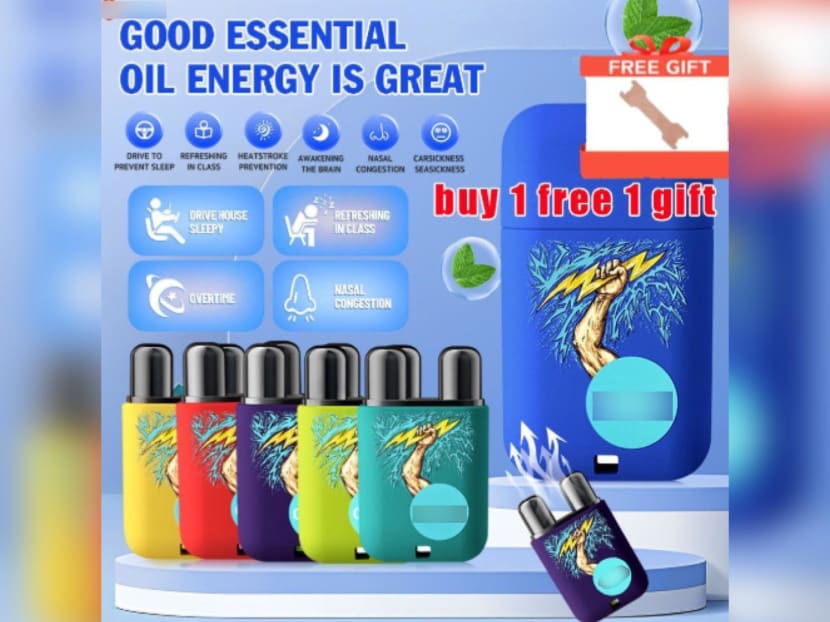
Given the numerous nasal decongestants that are already on the market for years, nasal inhaler products are not new, experts said.
Dr Ker Liang, the medical director of Aglow ENT (Ear, Nose and Throat) Centre, said the difference is that these energy sticks have rebranded the familiar product with “trendy, eye-catching designs”.
For example, Vicks, a common nasal decongestant, states on its packaging that it can clear a “stuffy nose” and make breathing “feel clear and cool" using menthol and camphor as active ingredients.
The advertising for energy sticks, on the other hand, go further in the claims. It would tout how such devices can be used for on-the-go refreshment when one is drowsy in class or while driving.
HOW SAFE ARE ENERGY STICKS?
A search for energy sticks on e-commerce sites by TODAY found that some sellers even ascribe various health benefits to their products. This includes helping users quit smoking, breathe "deeper" and manage their snoring.
Beyond these claims, though, there are many similarities shared by both types of nasal inhalers.
In terms of ingredients, Dr Puthucheary told Parliament that energy stick nasal inhalers contain substances similar to conventional nasal decongestant inhalers.
Doctors agreed with such an assessment, adding that studies on the medical benefits of ingredients in conventional nasal decongestants are limited. In both cases, excessive use may irritate the airways, they said.
Dr David Chin, an otorhinolaryngologist from Parkway East Hospital who treats diseases of the ear, nose and throat, said. “There is not a whole lot of difference in the concept behind ‘energy sticks’ and our traditional inhalers.
"Oil-based chemicals, be it menthol, essential oils… are breathed in and interact with receptors in the nose.
“The difference is the diverse ingredients now available, giving a variety of different scents and possibly different effects. The term ‘energy’ is probably more a marketing term than a description of a new technology.”
In the case of menthol, though studies have suggested that people felt that they breathed better after using the products, actual measurements of airflow did not show significant improvement, Dr Chin added.
Mr Sean Ang, a smoking cessation counsellor and pharmacist from Success Alliance Enrichment, also said that menthol triggers receptors in the nose to give the sensation of cool air, but it has no effect in opening blocked nasal airways.
Professor Eric Chan, from the department of pharmacy and pharmaceutical sciences at the National University of Singapore (NUS), said that there is unknown “quality control” of plant essential oils — another common inhaler ingredient — so there is a chance that the oils used may contain allergenic components that can bring adverse effects for “vulnerable consumers” such as pregnant women.
Professor Philip Eng, a senior consultant respiratory physician at Mount Elizabeth Hospital, also said that users of traditional products such as Vicks VapoRub, for example, should be wary about excessive usage.
He highlighted a 2016 study in the BMC Ear, Nose and Throat Disorders journal, which linked an 85-year-old woman’s contraction of a form of pneumonia that is “very difficult to diagnose” to her long-term application of Vicks VapoRub to her nostrils.
HOW LEGITIMATE ARE THE HEALTH CLAIMS?
In any case, established brands such as Vicks have to state the active ingredients on the packaging.
However, the experts noted that the same is not the case for energy sticks, which typically do not list out the ingredients clearly.
The production and monitoring of what goes into energy stick inhalers are unregulated areas, they added.
Dr Ker said: “It is very tempting to buy a simple device that is cheap and (claims to) provide many wonderful health benefits.
"We, as consumers, should exercise caution when purchasing products lacking ingredient transparency, especially when claiming medical benefits.”
She added that people with persistent nasal congestion or excessive tiredness should seek medical help, because the symptoms may signal undiagnosed rhinitis or sleep apnea, which are conditions that can be treated easily and safely.
Then, there are also the outlandish claims made by some online sellers about these devices.
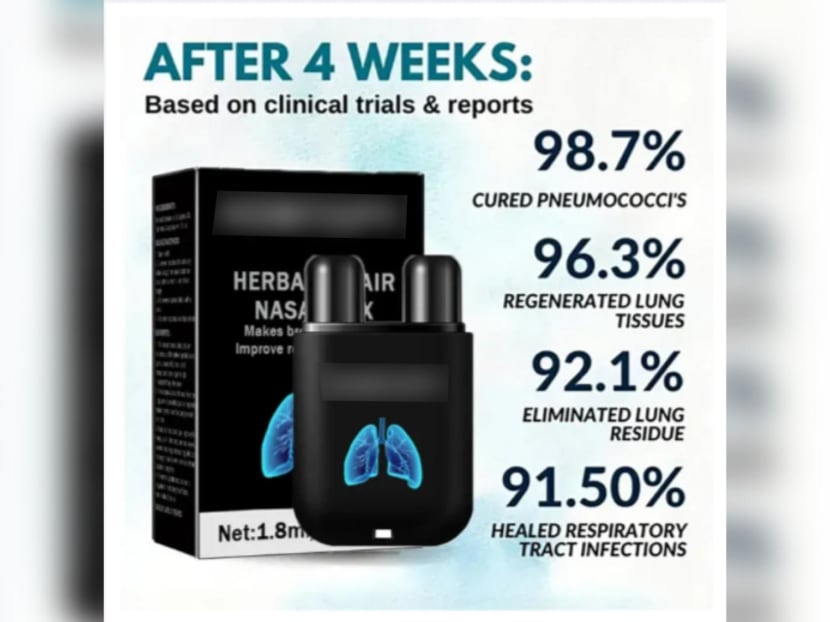
One listing on Lazada said that the nasal stick had “regenerated 96.3 per cent lung tissues” and “91.5 per cent healed respiratory tract infections” after four weeks, based on “clinical trials and reports”.
Such claims are misleading and some are “downright false”, Mr Ang the pharmacist said. There is no evidence that energy sticks can bring such benefits and advertisements saying clinical research has been done does not always mean research was done properly, if at all.
Dr Stephen Lee, a specialist and consultant at Raffles ENT Centre, said: “These energy stick nasal inhalers are not registered. Therefore, the actual ingredients are unknown and may differ depending on the source of these sticks."
Without knowing what goes into these inhalers, the experts cautioned that they may contain harmful substances similar to those in cigarettes and vaping devices, which could exacerbate respiratory conditions and lead to addiction.
Across the Causeway, Malaysia's health ministry said in a Feb 8 statement that it would take enforcement action to ensure that product advertisements of energy sticks are taken down from e-commerce sites in response to public complaints.
The energy sticks have also been trending in China since October last year, with some listings of such products on Chinese online shopping site Taobao having more than 10,000 sales to date.
In December last year, the Tianjin Consumers Association on its official WeChat account recommended the installation of signs warning about the health risks of energy sticks in primary and secondary schools in China.
WHAT ARE E-COMMERCE SITES DOING ABOUT THEM?
In response to TODAY’s queries, Carousell said that it is working closely with the authorities here to understand the harm of energy sticks and will look into further action following guidance from them.
Carousell uses both automated and manual moderation methods to detect prohibited items and users are encouraged to report prohibited items, which will be reviewed within 24 hours.
“We do not allow listings of medicinal and healthcare products or services that claim to treat or cure any condition that requires the attention of a registered medical or other qualified practitioners,” it said.
Lazada said that it fully complies with regulations set by the Singapore authorities and “continually (updates)” its algorithms to weed out and disable listings against its seller marketplace policy.
“Products that cannot be advertised according to local laws, regulations and advisories, including product listings that contain false, misleading or exaggerated statements are also not allowed,” Lazada added.
HOW POPULAR ARE ENERGY STICKS AMONG THE YOUTH?
Two energy sticks sellers told TODAY that most of their buyers are young and often between the ages of around 12 to 25.
An 18-year-old student, who wanted to be known only by his surname Goh, started selling them on e-marketplace Carousell around three months ago after seeing the product on a Chinese supplier's page.
He has since sold around 200 units at S$3.50 to S$4.50 each a month, with many repeat customers being students.
“So far sales have been increasingly high… to the point that it is overwhelming and customers are reserving the next batch of orders before new stock arrives,” he said.
Some buyers are secondary school students who buy 10 to 15 energy sticks at a time and distribute their bulk purchases in school.
The teenager said that he records usernames of young repeat buyers and prevents users under the age of 18 from continuing to make bulk purchases.
Mr Ang the pharmacist noted that many listings for energy sticks offer free lanyards and have flavours and colours “clearly targeted at the youth”.
“Combined with how trendy it is becoming, it could become cool to have such a device hanging around your neck and a ticket to being part of a community of users,” he added.
WHAT ARE THE RISKS TO YOUNG PEOPLE?
Dr Chin from Parkway East Hospital said that young people who use such devices may end up on a slippery slope towards more harmful habits.
Even if the inhalers do not contain addictive substances, the experts expressed concern that regular use of such products could be the gateway to other substances such as vapes.
“From a medical perspective, if these energy sticks do not contain additive ingredients, consumers may indeed not be addicted to the use of the inhalers," Prof Chan from NUS said.
“However, the same cannot be said from a socio-economic perspective, as consumers may end up with a habit or lifestyle that eventually gravitates them towards the use of vapes, e-cigarettes or smoking cigarettes."
Behavioural patterns such as frequent “hand-to-nose” actions may result in a physical dependence on the device, Mr Ang said.
“At the end of the day, if the harm becomes irreversible, we’re subjecting our youth to long-term respiratory conditions that might surface later in life. The risk isn’t worth it based on the claims, as there are much safer, well-researched products that can help."
Related topics
vape e-cigarettes inhaler VicksStay in the know. Anytime. Anywhere.

Subscribe to our newsletter for the top features, insights and must reads delivered straight to your inbox.
By clicking subscribe, I agree for my personal data to be used to send me TODAY newsletters, promotional offers and for research and analysis.





