
Explainer: How worried should we be about new coronavirus strain in UK, will vaccines work against it?
SINGAPORE — A new strain of the coronavirus that can spread more quickly has been identified in the United Kingdom, prompting British Prime Minister Boris Johnson on Saturday (Dec 19) to impose a lockdown in London and South-east England to curb its spread.
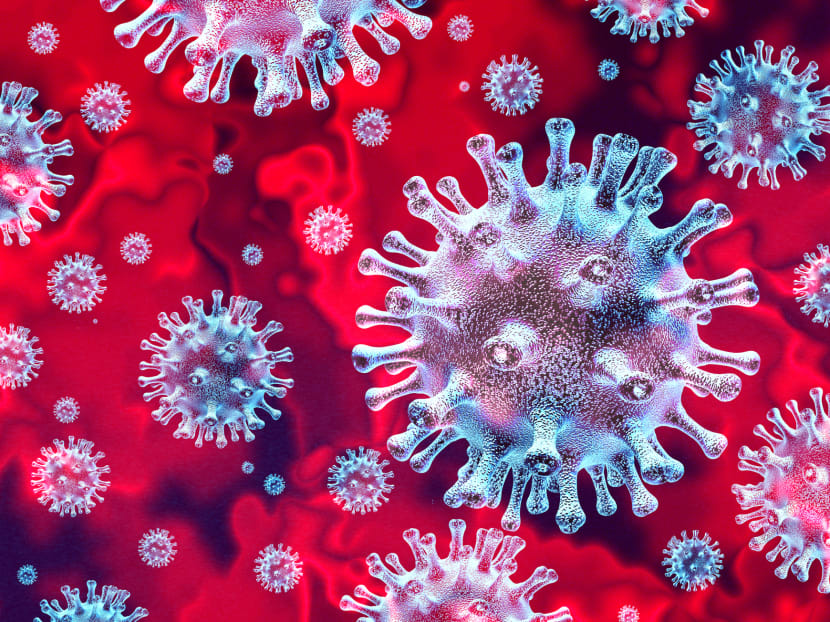
A 3D rendering of the coronavirus.



- A new strain of the virus that causes Covid-19 has been identified in south-east England, United Kingdom
- This strain of the virus may be more infectious
- There is no evidence that it may cause more severe disease or if vaccines will work against it
SINGAPORE — A new strain of the coronavirus that can spread more quickly has been identified in the United Kingdom, prompting British Prime Minister Boris Johnson on Saturday (Dec 19) to impose a lockdown in London and South-east England to curb its spread.
Mr Johnson at a televised briefing said early data suggests that the new strain could be up to 70 per cent more transmissible, adding that it appears to have contributed to the surge in cases in the southern and eastern parts of England.
British health minister Matt Hancock said last week there is no evidence to suggest that the new strain will cause more severe illness or that vaccines would no longer work.
Preliminary studies have found that the mutations change the spike protein on the surface of the virus — the part that helps it infect cells — and increase the protein’s ability to cling onto and enter human cells.
The new variant is believed to have first emerged in mid-September in London or Kent, towns in the south-east of England which have seen a surge in coronavirus infections.
Covid-19 cases in London alone have nearly doubled over the past week, with 60 per cent of these infections attributed to the new coronavirus strain.
TODAY finds out from infectious diseases experts if the vaccines will work against the new strain and whether people should be worried.
WILL VACCINES WORK?
Experts said they are optimistic the new strain will not affect the efficacy of the vaccine but some raised the possibility that it would.
Professor Gavin Smith from the Duke-NUS' Emerging Infectious Diseases Programme said none of the changes in this new strain are likely to make the vaccine less effective.
“While this looks like it could change the behaviour of the virus, which is of concern, in reality this new strain doesn’t change the effectiveness of current control measures,” he added.
Professor Ooi Eng Eong from Duke-NUS Medical School said the vaccines which have been licensed by the United States Food and Drug Administration contain the entire spike protein gene.
This means the immune response would not just target the part that is evolving but also other parts that remained genetically unchanged.
The deputy director of the emerging infectious diseases programme added: “The mutations are thus not going to impact the efficacy of the vaccine.”
Dr Ling Li Min from Mount Elizabeth Novena Hospital said to have a vaccine regardless of a strain change is better than nothing, but there is still a possibility that the new strain will affect the effectiveness of the vaccine.
Agreeing, Dr Leong Hoe Nam who is also from Mount Elizabeth Novena Hospital said that with all bets placed on the spike protein for the current vaccines, one mutation may be all that is needed to overcome them.
“In this fight against the virus, there is also an ongoing race. The race is to wipe out the virus with the vaccine before it can mutate against it,” he said.
“Previous immunity to the old version of Covid-19 may not confer protection against the new strain. There is always the constant threat.”
SHOULD PEOPLE BE WORRIED?
Dr Ling said until investigation confirms if the new strain can possibly defeat the body’s immune responses, including those encouraged by vaccines, people should prepare for the worst.
Dr Leong said: “We should be worried. Every time the virus mutates, it is like an earthquake. Does it help or does it hinder, or even kill more?
“It can ruin our entire vaccine endeavour by changing the spike protein we are targeting totally.”
Assistant Professor October Sessions of the National University of Singapore’s Saw Swee Hock School of Public Health said the occurrence of new mutations with increased epidemic potential is concerning and “deserves our full attention”.
But mutations happen frequently, Prof Sessions said, citing a study that has shown that the coronavirus mutates at least once a month.
Professor Gavin Smith from the Duke-NUS' Emerging Infectious Diseases Programme said when RNA viruses, which have ribonucleic acid (RNA) as their genetic material, such as the coronavirus make copies of themselves, they “make a lot of errors”.
“When we have a new virus that is infecting a lot of people, we do expect to see mutations emerge that change the behaviour of the virus,” he said. “(But) most mutations don’t change the virus in any significant way.”
Related topics
Covid-19 coronavirus mutation UKStay in the know. Anytime. Anywhere.

Subscribe to our newsletter for the top features, insights and must reads delivered straight to your inbox.
By clicking subscribe, I agree for my personal data to be used to send me TODAY newsletters, promotional offers and for research and analysis.






