
Foreign ownership of Hyflux will not affect S’pore’s water security: Masagos
SINGAPORE — Singapore’s water security will not be affected even if beleaguered water treatment firm Hyflux comes under foreign ownership, assured Environment and Water Resources Minister Masagos Zulkifli on Tuesday (Nov 20).
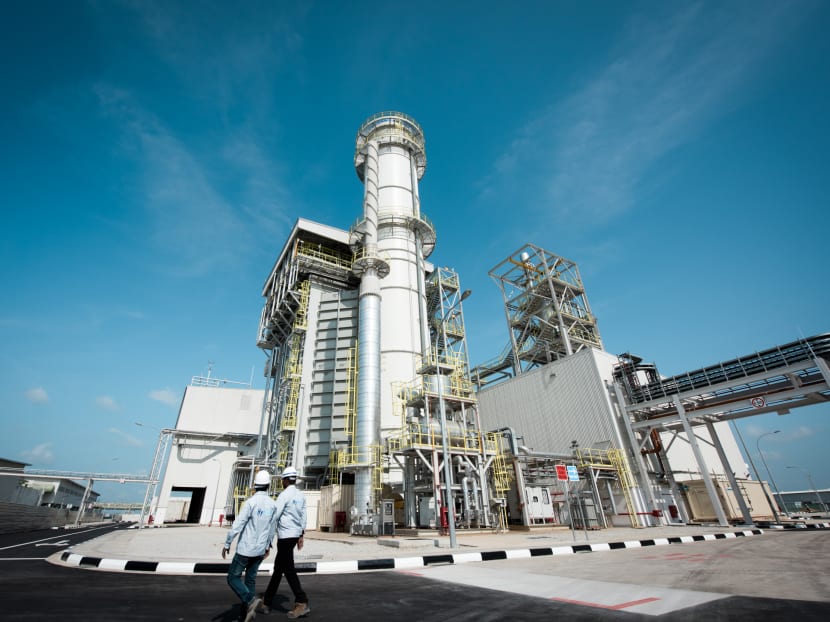
Hyflux's Tuaspring plant. Once regarded as the darling and trailblazer of Singapore’s entrepreneurial scene, Hyflux is undergoing a court-supervised reorganisation after chalking up a debt of S$2.95 billion as of March 31, 2018.



SINGAPORE — Singapore’s water security will not be affected even if beleaguered water treatment firm Hyflux comes under foreign ownership, Environment and Water Resources Minister Masagos Zulkifli said on Tuesday (Nov 20).
This is because there are “safeguards in place” through the design, build, own and operate (DBOO) arrangements for Hyflux’s two desalination plants, Tuaspring and Singspring, he said in a written reply to a parliamentary question by Mr Dennis Tan, Non-Constituency Member of Parliament.
There are four sources for Singapore’s water supply, known as the four national taps: Water from local catchment, imported water, NEWater which is high-grade reclaimed water treated from used water, and desalinated water which is sea water converted into drinking water. Hyflux owns Tuaspring via its subsidiary, and has a 30 per cent minority stake in SingSpring. The Singapore firm does not own or run any NEWater plants in Singapore.
Mr Tan had asked how Indonesian consortium SM Investments’ proposed S$530 million investment in Hyflux would have any impact on two of Singapore’s national taps — NEWater and desalinated water. He also asked if steps were taken to mitigate any potential impact on water supply and prices on consumers and businesses, and if there would be any risk to Singapore’s water security.
In response, Mr Masagos said that national water agency PUB “has been closely monitoring developments relating to Hyflux's debt situation and its business reorganisation”. While he said this is a commercial matter and that restructuring discussions are ongoing, “members can be assured that we will not allow our water security to be affected”.
The DBOO model allows the authorities to tap private sector expertise to deliver cost-effective solutions for NEWater and desalination, and they have welcomed participation from Singapore and foreign companies, he said.
He added: “Where we have allowed private sector participation via the DBOO model, safeguards are in place. PUB has adequate measures to ensure DBOO plants remain in operation and supply is not disrupted. It is a top strategic priority of the Government to keep our taps flowing.”
On Oct 18, Hyflux was handed a multi-million-dollar lifeline by SM Investments — made up of Salim Group and Medco Group — which will acquire 60 per cent of Hyflux for S$400 million, and grant a shareholder’s loan of S$130 million.
However, questions have been raised over whether the proposed investment would get approval from the authorities here. Besides having to get stakeholders — bank lenders, noteholders, preference share and perpetual securities holders — to agree to the scheme of arrangement, Government agencies such as PUB and the National Environment Agency will also need to give the green light.
This comes after Hyflux, once seen as the poster child of Singapore entrepreneurship, chalked up a debt of S$2.95 billion as of March 31, and the firm is now undergoing a court-supervised reorganisation.
Stay in the know. Anytime. Anywhere.

Subscribe to our newsletter for the top features, insights and must reads delivered straight to your inbox.
By clicking subscribe, I agree for my personal data to be used to send me TODAY newsletters, promotional offers and for research and analysis.






